
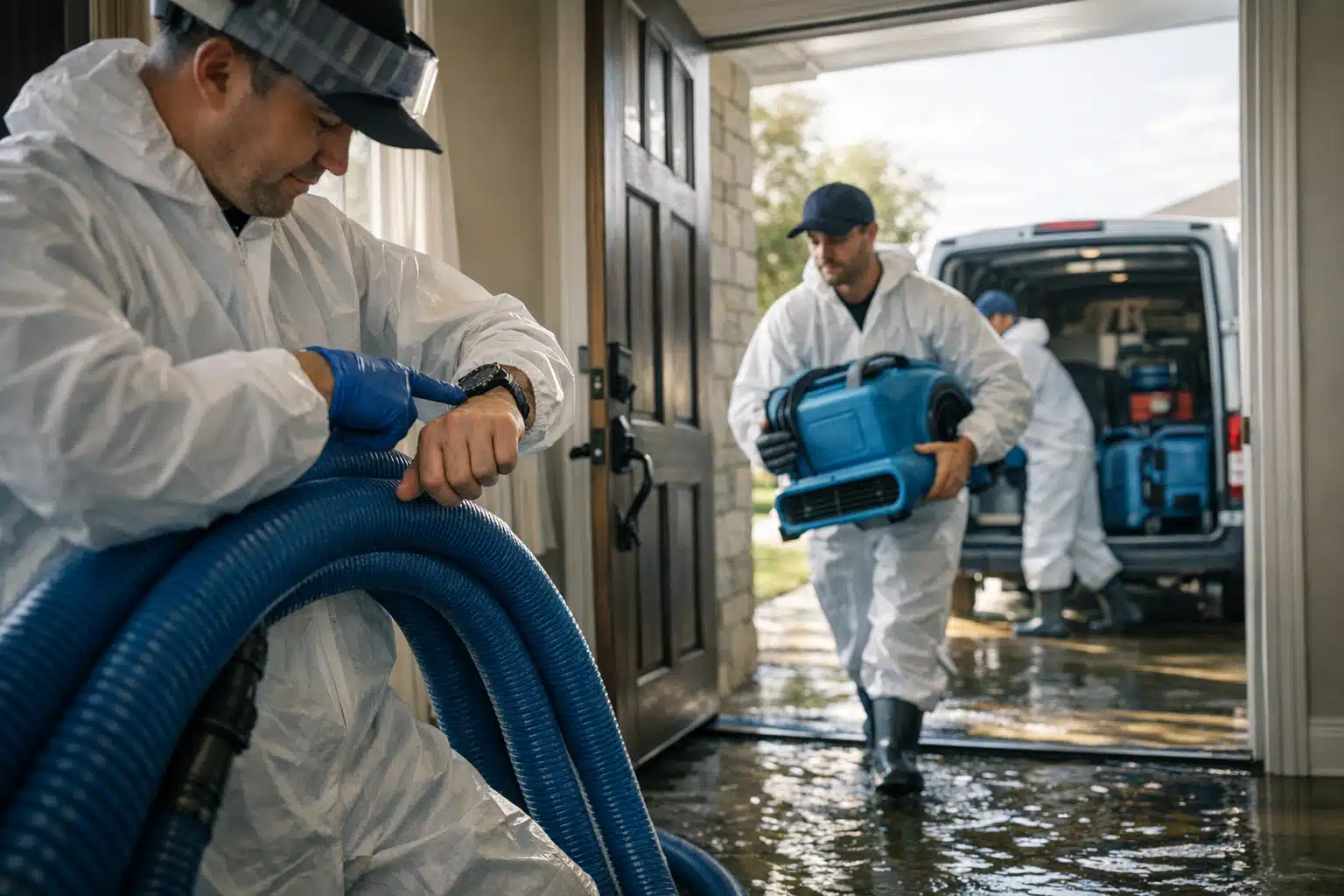
Most restoration pages rank fine but still miss the call. A homeowner standing in two inches of water does not want a paragraph about your 20 years of family values. They want to see that you can be at their door fast and prove you did the job right. That gap between ranking and calling is where restoration local seo content either earns the lead or loses it to the next listing.
Google rewards pages that answer the searcher’s real question. Scared homeowners ask different questions than Google’s algorithm. The fix is adding proof blocks to your local pages.
Below are 10 page sections built on evidence, not adjectives. Each one gives the homeowner a reason to trust you before they dial.
Why Proof-First Beats Polished Copy in Restoration Local SEO Content
Restoration marketing differs from general home services marketing in one way: urgency plus fear. A kitchen remodel lead browses for weeks. A sewage backup lead decides in minutes.
Trust content for restoration websites works because it removes doubt at the exact moment panic peaks. Photos of containment, timestamps on response, and real drying logs do more than any slogan.
These proof blocks also feed AI search. When ChatGPT or Google’s AI Overview summarizes “who responds fast to water damage near me,” specific documented details get pulled over vague promises.
The 10 Proof-First Page Sections to Add This Fall
Fall matters because storm season, frozen pipe prep, and insurance claim spikes hit now. Add one section per week and your pages are ready before the first freeze.
1. A Real Response Timeline, Not a “24/7” Badge
Everyone claims 24/7. Few show what the first 60 minutes look like.
Add a short numbered timeline tied to an actual job:
- Minute 0: Call answered by a live technician, not an answering service.
- Minute 8: Dispatch confirmed with truck number and ETA text.
- Minute 47: Crew on site in Aurora, water extraction started.
- Hour 3: Moisture mapping complete, drying plan documented.
Concrete minutes beat the word “fast” every time.
2. Drying Logs Explained in Plain Language
Homeowners have no idea what a moisture reading means. Show a real drying log screenshot, then translate it.
Example caption: “Day 1 reading was 42% moisture in the subfloor. Day 4 hit 14%, the dry standard. We did not pull equipment early.”
This one section answers the fear of hidden mold. It proves you dry to a number, not to a hunch.
3. Containment Photos With Before and After
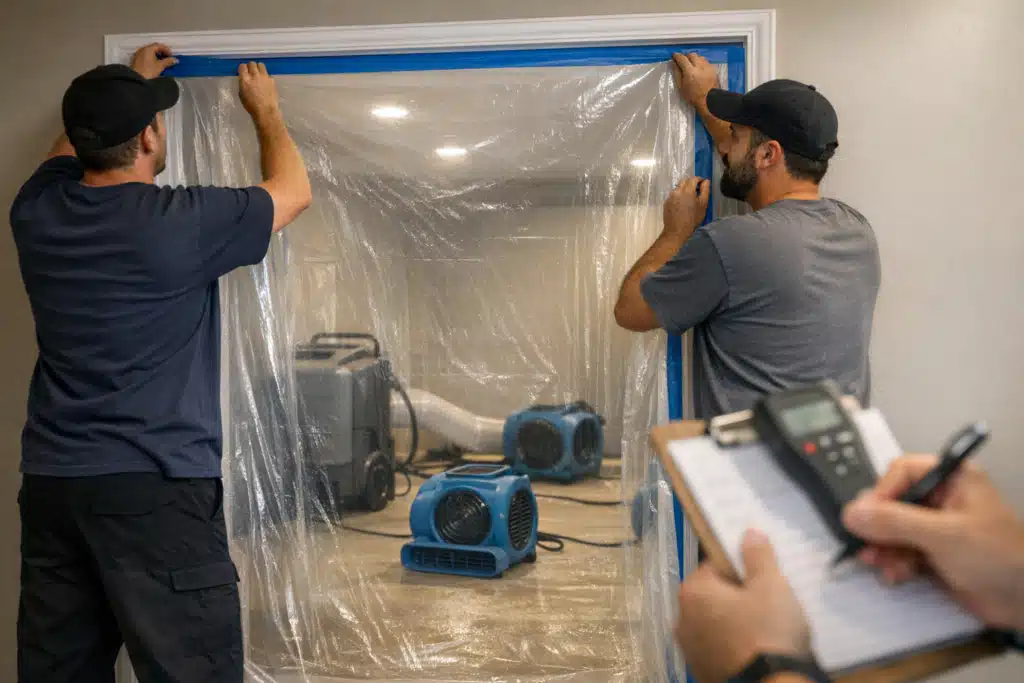
Containment separates a careful restorer from a guy with a shop vac. Show poly barriers, negative air machines, and zippered entries.
Label each photo: “6-mil containment set up to stop mold spores from reaching the nursery.” The homeowner sees you protected the rest of their house.
4. PPE and Safety Protocol Shots
A sewage or mold job scares people about health risks. Photos of technicians in Tyvek suits and respirators prove you take contamination seriously.
Safety photos quietly answer the question “is my family safe to be here?”
5. Documentation Screenshots for Insurance
Insurance dependency is a reality every restoration owner knows. Homeowners fear a denied claim more than the damage itself.
Show a sample moisture map, a Xactimate line item, or a photo log you submit to adjusters. Add a line: “We document every affected material so your claim holds up.”
This section converts because it removes the money fear.
6. A Local Job Map by Neighborhood
Generic city pages feel thin to Google and to readers. A map pinned with recent jobs by neighborhood proves you work the area.
List three or four named spots: “Water extraction in Washington Park. Basement flood in Highlands. Pipe burst in Capitol Hill.” Specific streets signal real local presence.
7. Honest Before-and-After With Scope Notes
Before-and-after photos are standard. Scope notes are not.
Under each pair, write what the job involved: “Removed 180 square feet of saturated carpet, treated subfloor, reset baseboards.” The detail separates you from stock-photo competitors.
8. A Review Recovery Section
One bad review during a slow month can sink a page’s trust. Address it head-on instead of hiding it.
Pull two or three recent reviews that mention response time or cleanup. Pair them with your public reply showing how you handled concerns.
Visible responses to real feedback build more trust than a perfect 5.0 with no replies.
9. Equipment and Method Transparency
Name your gear and why it matters. “We run LGR dehumidifiers because they pull more water from the air in cold basements.”
Homeowners cannot judge equipment, but specificity signals competence. It separates a stocked crew from a two-fan operation.
10. A Clear First-Call Expectations Block
Tell the reader exactly what happens when they call. People hesitate when they do not know what comes next.
- No pressure to sign before inspection.
- Free moisture assessment within the hour.
- We bill your insurance directly when covered.
- Written estimate before any demo starts.
This block lowers the barrier to picking up the phone.
How to Add These Sections Without Rebuilding Your Site
You do not need a new website. Start with your two highest-traffic service pages, usually water damage and mold.
Follow this order for the fastest return:
- Add the response timeline and first-call block first. These lift conversions immediately.
- Layer in drying logs, containment, and documentation photos next.
- Finish with the local job map and review recovery section.
Real photos from your own jobs outperform anything a designer can mock up. Ask crews to snap documentation shots on every job this fall.
Tracking Whether Proof Content Earns Calls
Set up call tracking on each page so you know which section-heavy page drives leads. Tag form fills by page too.
Watch time-on-page and scroll depth. If readers reach your drying log section and then call, that proof block is doing its job.
Proof Content Turns Local Rankings Into Phone Calls
Rankings get you seen. Proof blocks get you called. Restoration local seo content wins when it shows documented response times, drying logs, containment, and insurance paperwork that frightened homeowners search for.
Add these 10 sections before storm and freeze season peaks, and your pages will convert the traffic you already earn.
The Restoration Marketers builds proof-first local pages for restoration companies that want calls, not just clicks. Call or text us at 720‑885‑0749, or visit https://restorationmarketers.com to get started this fall.