

Why Storm Season Breaks Most Restoration Websites
When severe weather hits, restoration companies see 400-500% traffic spikes within 24 hours. Most websites crash under this pressure, losing thousands in potential revenue.
Your site needs conversion optimization for restoration before the next storm arrives. The difference between a prepared website and an unprepared one can mean capturing 200 leads versus 50 during peak demand periods.
These proven tactics will transform your restoration website into a lead-generating machine when customers need you most urgently.
Storm-Ready Landing Pages That Convert Emergency Traffic
Emergency visitors behave differently than regular website traffic. They scan pages in under 8 seconds and abandon sites that don’t immediately address their crisis.
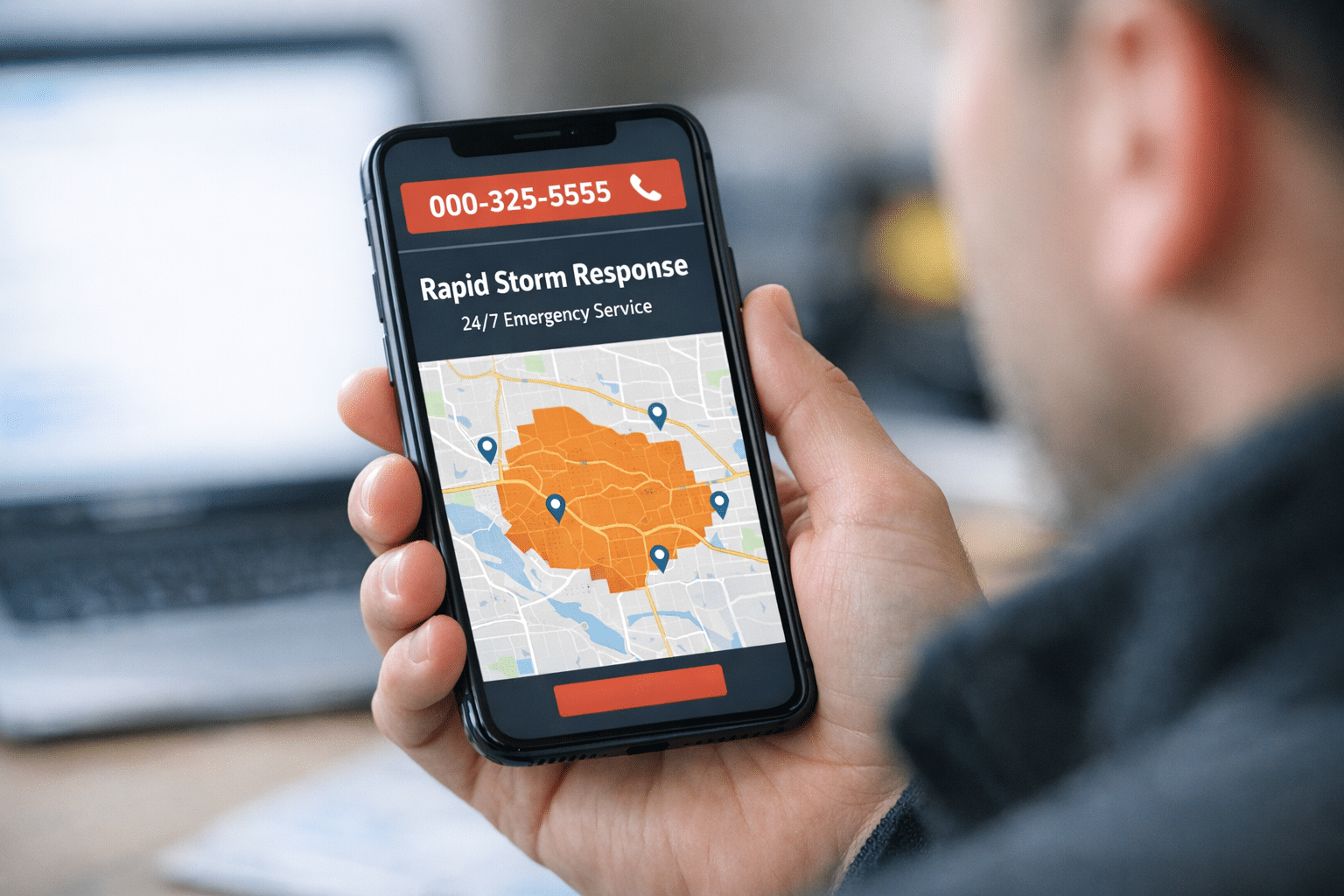
Create dedicated storm landing pages for each service type. Water damage requires different messaging than fire restoration or mold remediation.
Your storm landing pages need these conversion elements:
- Emergency phone number in the first 100 pixels
- Service area map showing immediate response zones
- Current response time estimate (updated hourly during storms)
- Before/after photos from recent similar disasters
- Insurance direct billing statement prominently displayed
Headlines That Stop Panicked Property Owners
Generic headlines like “Professional Water Damage Restoration” fail during emergencies. Stressed property owners need immediate reassurance.
Test these storm-specific headline formulas:
- “24-Hour Emergency Response: [City] Water Damage Experts”
- “Storm Damage? We’re En Route in 60 Minutes”
- “Insurance-Approved [Service] Starting Today”
Include your response time promise in every headline. Speed beats price during emergency situations.
Mobile-First Emergency Contact Forms
During storms, 85% of emergency calls come from mobile devices. Your contact forms must work flawlessly on smartphones with poor signal strength.
Optimize emergency forms with these elements:
- Maximum 4 fields: name, phone, address, damage type
- Auto-populate location using GPS when possible
- SMS confirmation sent within 2 minutes
- Backup phone number if form submission fails
Test your forms during actual storms. Many forms break when servers experience high traffic volumes.
Speed Optimization for Emergency Traffic Surges
Page load speed becomes critical during traffic spikes. Emergency visitors abandon pages that take longer than 3 seconds to load.
Storm season website tips include upgrading your hosting before peak season. Shared hosting plans collapse under emergency traffic volumes.
Content Delivery Networks for Storm Zones
CDNs distribute your website content across multiple servers. When local servers slow down during disasters, CDNs maintain fast loading speeds.
Configure CDN settings specifically for emergency traffic:
- Cache contact forms and phone numbers for instant loading
- Prioritize image compression for before/after galleries
- Set up automatic scaling during traffic spikes
Test CDN performance using tools like GTmetrix during normal periods. Fix bottlenecks before storms arrive.
Image Optimization That Maintains Trust
Property owners need to see your work quality, but large images slow loading speeds. Compress images without losing visual impact.
Use WebP format for 40% smaller file sizes. Include alt text describing specific damage types for better search visibility.
Trust Signals That Convert Emergency Visitors
Desperate property owners research restoration companies quickly but carefully. They fear hiring fly-by-night contractors who disappear after taking deposits.
Display licensing and insurance information prominently on every page. Emergency visitors check credentials before calling.
Social Proof for Crisis Situations
Traditional testimonials sound fake during emergencies. Storm-specific social proof builds trust faster:
- Recent Google reviews mentioning storm response times
- Photos of crews responding to similar recent disasters
- Live updates showing current job locations (with privacy protection)
- Insurance company partnerships and certifications
Update social proof weekly during active storm seasons. Fresh content signals that your business operates actively.
Emergency Credentials That Matter
Display certifications property owners recognize immediately. IICRC certification means more to insurance adjusters than generic business awards.
Create a dedicated credentials page linked from your main navigation. Include license numbers, bonding information, and insurance coverage limits.
Call Tracking That Reveals Your Best Traffic Sources
Storm season generates leads from multiple sources simultaneously. Without proper tracking, you can’t identify your highest-converting traffic during peak periods.
Set up unique phone numbers for each traffic source:
- Google Ads emergency campaigns
- Organic search landing pages
- Social media emergency posts
- Local directory listings
Track call duration and conversion rates by source. Emergency calls lasting under 2 minutes rarely convert to jobs.
Response Time Tracking for Competitive Advantage
Monitor how quickly your team answers phones during storms. Competitors who answer faster win more emergency jobs.
Set up automated tracking for these metrics:
- Average ring time before human answers
- Callback time for missed emergency calls
- Time from call to on-site arrival
Share response time data with your team daily during active storm periods. Fast response becomes a competitive advantage.
Local SEO Optimization for Storm-Related Searches
Emergency searches spike for terms like “water damage repair near me” and “storm restoration [city name]”. Your local SEO must capture these high-intent searches.
Update your Google Business Profile hourly during active storms. Post current availability, response times, and service area updates.
Emergency Content That Ranks Immediately
Create blog posts addressing specific storm damage types in your service area. Target long-tail keywords property owners search during emergencies:
- “Basement flooding after [recent storm name] in [city]”
- “Wind damage roof repair [neighborhood] emergency”
- “Power outage mold prevention [city] tips”
Publish emergency content within 6 hours of storm impact. Fresh, relevant content ranks faster during trending events.
Location Pages for Storm-Affected Areas
Create dedicated location pages for neighborhoods, zip codes, and municipalities in your service area. Update these pages during active weather events.
Include current road conditions, response capabilities, and estimated arrival times for each location. This hyper-local information converts emergency traffic effectively.
Email and SMS Follow-Up That Secures More Jobs
Many emergency leads don’t convert immediately. Property owners call multiple restoration companies before deciding.
Set up automated follow-up sequences triggered by form submissions:
- Immediate SMS confirmation with ETA
- 15-minute follow-up call attempt
- 1-hour email with emergency checklist
- 24-hour email with insurance claim guidance
Provide value in every follow-up message. Emergency checklists and insurance advice build trust while maintaining contact.
Measuring Storm Season Conversion Success
Track conversion metrics specific to emergency traffic patterns. Standard metrics don’t reveal storm season performance accurately.
Monitor these storm-specific conversion rates:
- Phone calls per 100 website visitors
- Form submissions during peak traffic hours
- Conversion rate by traffic source during emergencies
- Revenue per emergency website visitor
Compare storm season performance year-over-year. Identify which optimization changes improved emergency conversions.
Transform Your Emergency Response Into Competitive Advantage
Effective conversion optimization for restoration companies requires preparing systems before storms arrive. The companies that capture the most emergency leads optimize specifically for crisis situations.
Your website becomes your most valuable sales tool when severe weather strikes. These optimization tactics will help you capture significantly more emergency leads while competitors struggle with overloaded systems.
The Restoration Marketers specializes in storm season conversion optimization for restoration companies. Our emergency-focused strategies have helped restoration businesses capture 300% more leads during peak storm periods. Contact us at 123-456-7890 to optimize your website before the next storm season.