
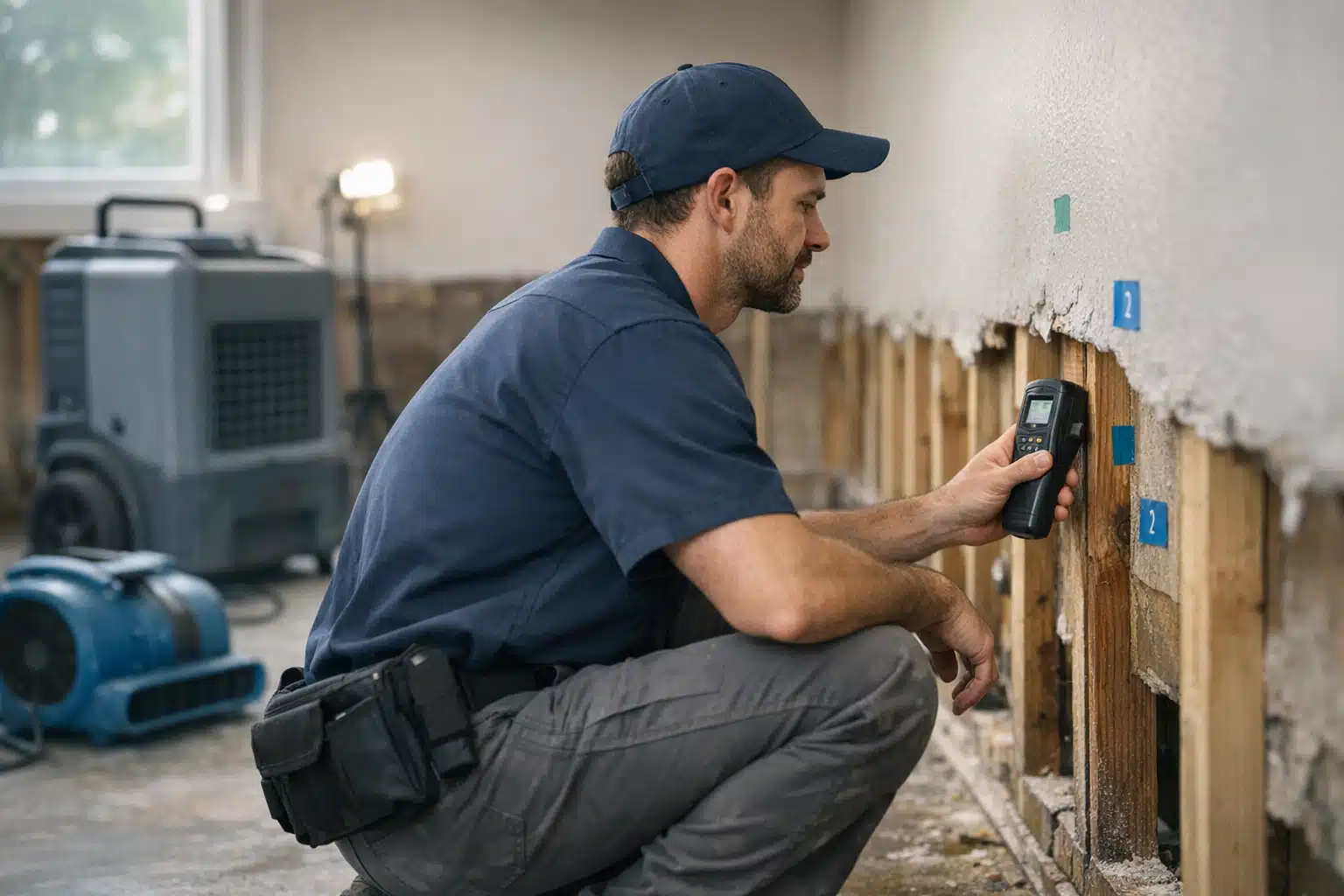
Most restoration companies sit on a goldmine of proof and never post a frame of it. Every job generates drying logs, moisture maps, and containment photos that prove the work was done right. These documents are some of the strongest restoration trust content examples you can publish, yet they rot inside job files and insurance folders.
Before-and-after shots have been copied so many times that homeowners scroll past them. What they have not seen is the data behind the dry-out. This post walks you step by step on turning operational paperwork into marketing assets that earn trust before the phone rings.
You will learn what to capture, how to strip out private details, and where to post it for the highest return.
Why Process Proof Beats Before-and-After Photos
Process proof means showing the technical work between the loss and the finished repair. It answers the question every insured homeowner secretly asks: did this crew actually know what they were doing?
Before-and-after photos show a result. Process proof shows competence. One builds hope; the other builds confidence.
Homeowners choose restoration crews based on trust, not price. When a panicked caller sees a drying log that proves you dried a structure to target moisture in four days, you stop competing on cost.
What Makes Restoration Different From General Home Services
A kitchen remodeler sells taste. A restoration company sells correctness under pressure. The buyer is stressed, insurance is involved, and mistakes mean mold claims later.
Your marketing has to answer a technical worry, not a design preference. That is why moisture data outperforms glossy reveal shots in this field.
Restoration Trust Content Examples You Already Own
You generate publishable proof on nearly every water, fire, and mold job. The documentation exists; it has never been framed for a homeowner audience.
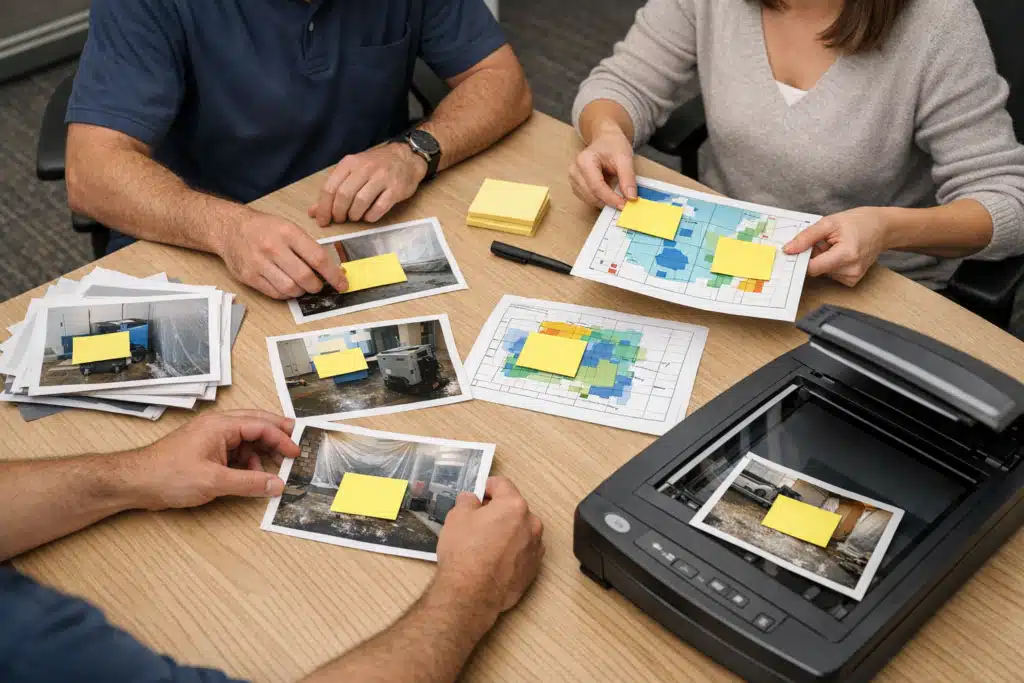
Here are assets worth turning into content:
- Drying logs that show daily moisture drops toward a dry standard
- Moisture meter readings on affected framing and subfloor
- Containment photos showing poly barriers and negative air setup
- Thermal camera images that reveal hidden water migration
- Air scrubber and dehumidifier placement shots with equipment counts
- Psychrometric readings proving you tracked humidity, not guessed
Each item answers a specific fear. A moisture reading at dry standard tells a buyer you will not leave rot behind their new drywall.
Drying Log Marketing Done Right
Drying log marketing means publishing your daily moisture documentation as proof you dry by measurement, not by calendar. A simple three-day chart showing framing moisture falling from 38% to 12% tells a stronger story than any slogan.
Turn one real log into a short carousel or a single annotated image. Add one line: “We do not remove equipment until the structure hits dry standard.”
Data that drops over time reads as honesty, because numbers are hard to fake.
How to Share Proof Without Exposing Private Details
This is where most owners freeze. They worry about privacy, insurance confidentiality, and liability. The fix is a repeatable scrubbing checklist applied before anything goes public.
Follow these steps on every image and document:
- Crop or blur house numbers, street signs, and mailboxes in every photo
- Remove claim numbers, carrier names, and policy IDs from log screenshots
- Delete the customer name field and replace it with a job type label
- Strip EXIF location data from files before uploading to social or your site
- Avoid interior shots that show family photos, mail, or personal belongings
- Get a signed media release when a recognizable space or face appears
Label the job by category instead of address. “Category 3 kitchen loss, two-story colonial” gives zero identifying data and still sets the scene.
A Safe Caption Formula
Pair each scrubbed image with a three-part caption that stays generic on identity and specific on technique:
- Loss type: “Supply line burst, finished basement”
- Action: “Set six air movers and two LGR dehumidifiers”
- Result: “Reached dry standard in 72 hours, no demo of flooring”
This structure proves skill without ever hinting at who the customer is.
Where to Publish Restoration Trust Content
Proof only works where buyers decide. Spread the same scrubbed assets across the channels that influence a hiring choice.
Prioritize these placements:
- Google Business Profile posts — moisture and containment shots that show up during local emergency searches
- Service landing pages — a drying log near the call button to lift conversion on water damage pages
- Review responses — reference the documented dry-out when thanking a reviewer
- Instagram and Facebook — short carousels for storm-season awareness
- Estimate follow-up emails — one proof image to win the undecided homeowner
Put your strongest moisture proof on the landing page that your Google Ads point to. A caller who already trusts you converts at a far lower cost per lead.
Timing Proof Around Storm Season
Publish containment and equipment content before your regional peak, not during the scramble. In freeze-prone markets, that means burst-pipe proof in late fall. In flood zones, moisture-mapping content ahead of the wet months.
Build a small library of 15 to 20 scrubbed assets during slow weeks. When demand spikes, you post from the shelf instead of shooting under pressure.
Turning Proof Into Higher-Trust Phone Calls
The goal is a caller who has already decided you are competent. That caller asks fewer price questions and books faster.
Tie each proof asset to a next step:
- Post a drying log carousel showing measured results
- End the caption with “Water damage? Call or text 720‑885‑0749 for same-day inspection”
- Match the landing page to the same proof style the caller saw
- Track which assets drive calls using a dedicated call tracking number per channel
Proof plus a clear next step is what separates a scroll from a booked job.
Measuring What Works
Tag your proof posts in your CRM or spreadsheet by asset type. After 60 days, compare call volume on posts with moisture data against generic ones.
Most owners find the technical content pulls better-qualified calls. Fewer tire-kickers, more insured losses ready to approve work.
Conclusion
Your drying logs, moisture readings, and containment photos are proof assets a competitor cannot copy because they come from your real jobs. Scrub the private details, caption with technique, and publish where buyers decide. Done right, this turns everyday paperwork into restoration trust content examples that win higher-value calls.
The Restoration Marketers builds these proof systems for water, fire, and mold companies that want better leads, not just more. Call or text us at 720‑885‑0749, or visit restorationmarketers.com to start converting your job files into booked work.