
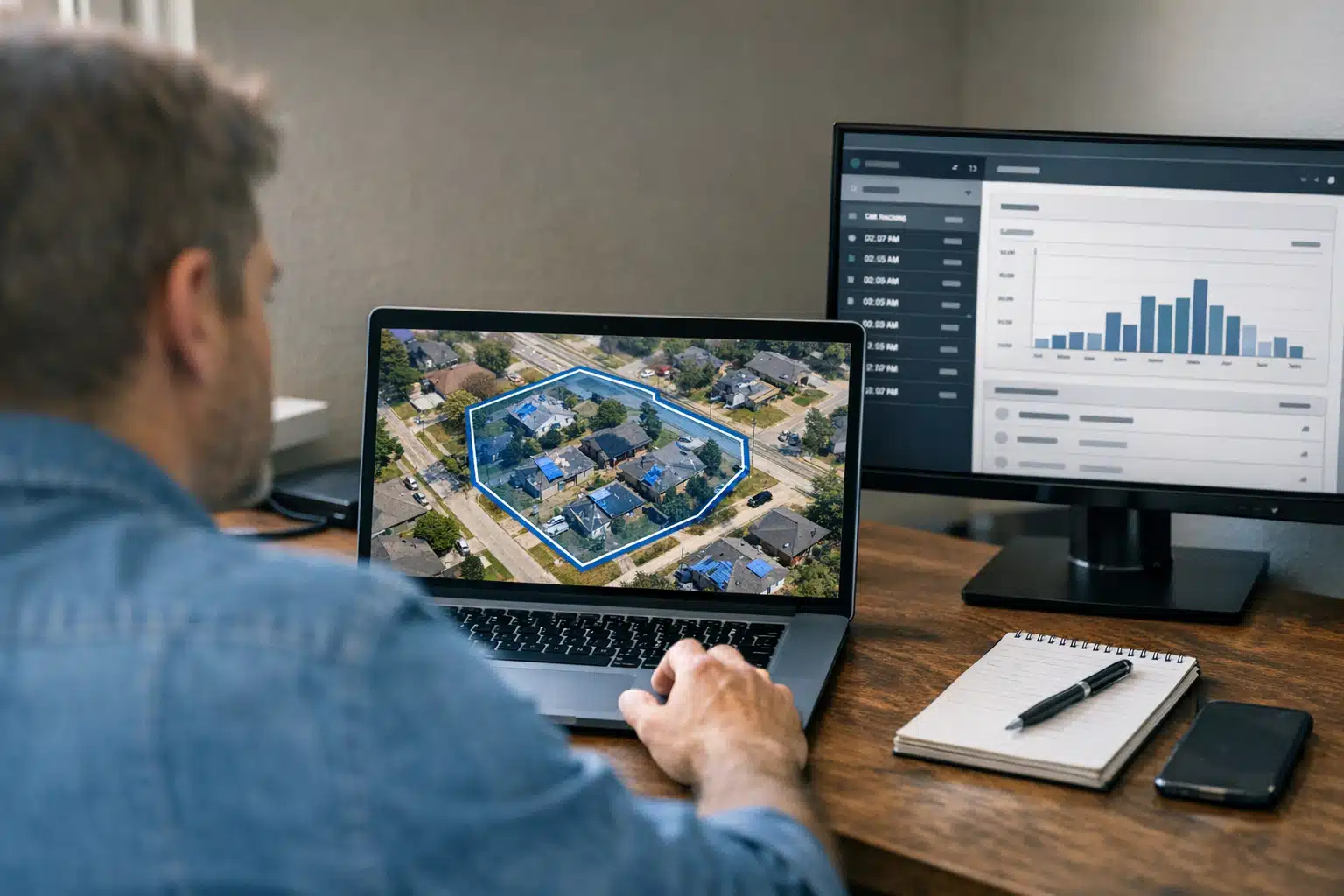
When a hailstorm rips through a single ZIP code, restoration leads spike for about 72 hours before drying up. Most restoration owners miss that window because their ads run county-wide, wasting budget on homes that were untouched. Geofencing fixes that problem by drawing a digital fence around the exact streets that flooded, burned, or lost roofing.
This article breaks down how geofencing works for water, fire, and storm damage companies. You will learn how to build zones after a disaster, time your ad spend, and track calls back to specific neighborhoods.
What Geofencing Means for Restoration Companies
Geofencing is the practice of drawing a virtual boundary around a physical area and serving ads only to phones inside it. When someone crosses that boundary, their device becomes eligible to see your ads on apps, websites, and social feeds.
For restoration work, the boundary is rarely a whole city. It is the four-block radius where a water main burst, or the subdivision a tornado clipped.
General home service marketing casts a wide net across a metro. Restoration demand behaves differently because damage clusters in tight geographic pockets after a specific event.
Why Restoration Damage Is Location-Specific
A burst pipe in one condo building creates leads inside that structure, not across town. A flash flood follows the path of a creek, soaking homes along one corridor.
Damage patterns are geographic, and geofencing matches your ad spend to those patterns. That precision is what separates disaster marketing from routine plumbing or HVAC campaigns.
How to Build a Geofence After a Storm Hits
Speed matters more in restoration than any other home service. The homeowner with three inches of water in the basement is calling someone within the hour.
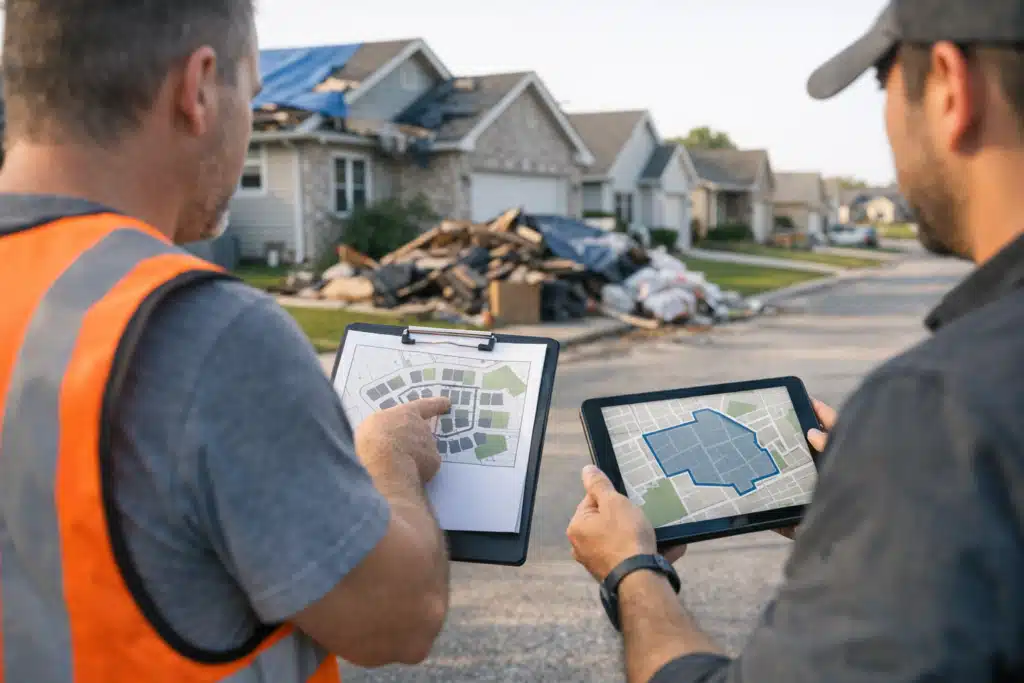
Here is a step-by-step method for launching a post-storm geofence:
- Pull the affected area from weather data. Use NOAA storm reports or local news maps to find exact hail swaths and flood zones.
- Draw tight polygons, not wide circles. Trace the damaged streets rather than a five-mile radius around your office.
- Layer in property age and value. Older neighborhoods flood more; higher-value homes carry larger claim tickets.
- Set your ad creative to emergency language. Lead with “24-hour water extraction near you,” not a general brand slogan.
- Launch within hours, not days. The lead window closes fast once competitors and adjusters arrive.
The first restoration company visible in a damaged zone wins a disproportionate share of the jobs. Geofencing puts you in front of homeowners before they open a search engine.
Timing Zones to the Disaster Calendar
Restoration demand rides seasonal patterns you can predict. Frozen pipe calls cluster in January. Wildfire smoke and structure loss peak in late summer across western states.
Build reusable geofence templates for each hazard your market faces. When the event hits, you activate the template instead of starting from scratch.
Retargeting Displaced Homeowners
Disaster victims often leave their homes. A family flooded out of their house may be staying in a hotel or with relatives across town.
Geofence conversion zones let you re-serve ads to people who entered a damaged area, even after they relocate. The technology tags the device inside the zone, then shows ads later wherever that phone travels.
This matters because the decision to hire a restoration firm rarely happens at the damaged property. It happens on a couch elsewhere, days later, on a phone.
Reaching People at Insurance Touchpoints
You can draw geofences around locations where disaster victims gather during a claim. Consider these spots:
- Insurance adjuster offices and claims centers
- Disaster recovery centers set up after federal declarations
- Hardware stores buying dehumidifiers and tarps
- Hotels near heavily damaged areas housing displaced families
Meeting homeowners at these touchpoints positions your brand during the exact moment they choose a contractor. That is placement no billboard can match.
Geofencing and Local Marketing Working Together
Geofencing performs best when paired with strong local marketing fundamentals. The ad drives awareness, but your Google Business Profile and reviews close the decision.
A homeowner who sees your geofenced ad will search your name before calling. If that search returns thin reviews or a broken landing page, the lead evaporates.
Landing Pages Built for the Fenced Zone
Send geofenced traffic to a page that names the affected area. A page titled “Flood Cleanup in Cedar Creek” converts better than a generic homepage.
Match the landing page to the neighborhood and the specific damage type. Include a click-to-call button above the fold for phones.
Tracking Leads Back to Each Zone
Restoration owners waste money when they cannot tie a call to a campaign. Geofencing solves attribution better than most channels because the boundary itself is the data point.
Set up tracking with these steps:
- Assign a call tracking number to each geofence. One number for the hail zone, another for the flood corridor.
- Watch foot traffic conversions. Location platforms report when a fenced device later visits your office or a job site.
- Compare cost per lead by zone. Kill fences that underperform and expand ones producing signed jobs.
- Tag leads in your CRM by source zone. This shows which disaster types return your best margins.
Zone-level tracking turns guesswork into a repeatable playbook for the next storm.
Common Mistakes That Drain Geofencing Budgets
Many restoration companies try geofencing once, see poor results, and quit. The failure usually traces to a few avoidable errors.
- Fences drawn too large. A ten-mile radius defeats the purpose and burns cash on unaffected homes.
- Slow activation. Launching four days after a storm means competitors already have the jobs.
- Generic ad copy. “We do restoration” loses to “Water removal in your neighborhood tonight.”
- No retargeting window. Dropping displaced homeowners after 24 hours misses the decision moment.
- Ignoring privacy limits. Location targeting has rules; a bad setup gets ads rejected.
Precision beats reach every time in disaster restoration advertising.
Conclusion
Geofencing gives restoration companies the ability to advertise inside the exact streets a disaster struck, then follow displaced homeowners until they decide. Pair tight zones, fast activation, and zone-level tracking with strong local marketing to capture leads competitors never see.
The Restoration Marketers builds geofencing campaigns for water, fire, and storm restoration firms that turn location data into signed jobs. Call or text us at 720‑885‑0749, or visit https://restorationmarketers.com to plan your next storm-season campaign.
Sources
- NOAA Storm Prediction Center – Storm Reports
- FEMA – Disaster Recovery Centers and Resources
- Federal Trade Commission – Consumer Privacy Guidance