
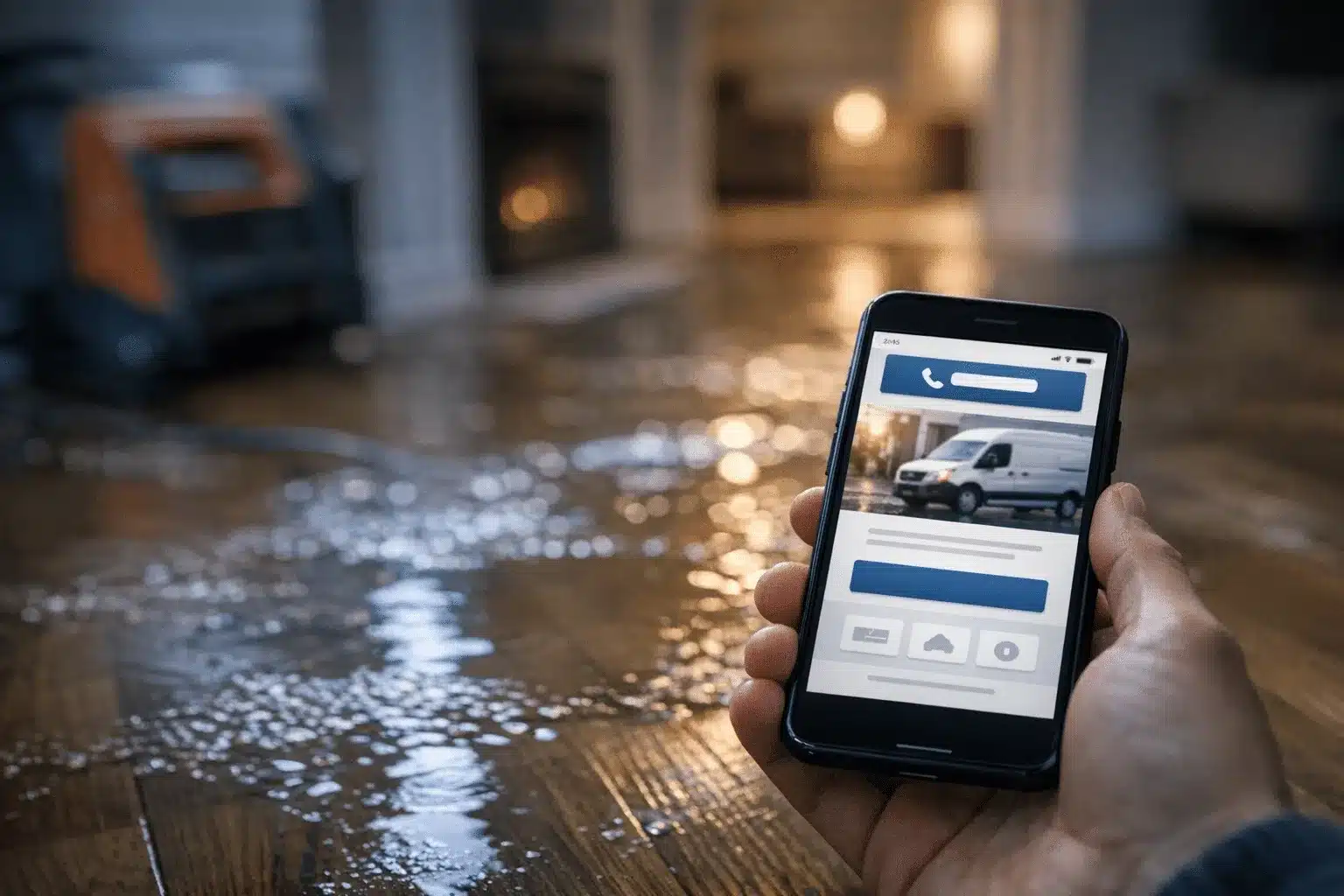
Why Standard Landing Pages Fail Emergency Restoration Services
When a homeowner discovers water damage at 2 AM, they need immediate help, not a beautiful website to browse. Landing page design for emergency restoration services must prioritize speed and trust over traditional marketing aesthetics. Most restoration companies lose 60% of potential emergency leads because their landing pages treat urgent disaster situations like routine home improvement projects.
Emergency restoration customers behave differently than other service buyers. They skip long forms, abandon pages that load slowly, and call the first company that appears trustworthy. Your landing page has 3-8 seconds to capture their attention before they move to your competitor.
This guide shows you how to build landing pages that convert emergency leads into paying customers, using design principles specific to disaster restoration marketing.
Essential Elements of Emergency Restoration Landing Pages
Emergency restoration landing pages need five core elements that standard service pages often miss. Each element addresses the unique mindset of someone facing property damage who needs immediate professional help.

Prominent Phone Numbers Above the Fold
Place your phone number in the header, hero section, and floating call button. Make the number at least 18px font size on mobile devices. Emergency callers should never need to scroll to find your contact information.
Use click-to-call buttons with the tel: protocol for mobile users. Add text like “Call Now – 24/7 Emergency Response” next to the number to reinforce availability.
Trust Signals for Stressed Property Owners
Display insurance logos, certifications (IICRC, RIA), and years in business prominently. Stressed homeowners need immediate reassurance that you can handle their insurance claim properly. Show Better Business Bureau ratings and Google review stars with review counts above 50 if possible.
Include photos of uniformed technicians with company trucks. Property owners want to see professional teams, not stock photos of people in hard hats.
Emergency Response Time Commitments
State your response time clearly: “On-site within 60 minutes” or “Emergency crews dispatched in 30 minutes.” Be specific about your service area radius. Avoid vague promises like “fast response” or “quick service.”
If you offer 24/7 service, mention it multiple times. Many restoration companies lose leads because visitors assume they’re closed after business hours.
Mobile-First Design for Emergency Restoration Traffic
Over 75% of emergency restoration searches happen on mobile devices. Property owners discover damage, grab their phones, and start searching immediately. Your mobile landing page experience determines whether they call you or your competitor.
Single-Column Layouts That Load Fast
Use single-column designs that eliminate horizontal scrolling. Stack elements vertically: phone number, headline, brief service description, trust elements, contact form. Keep the page width under 600px for optimal mobile viewing.
Compress images to reduce load times below 3 seconds. Emergency visitors abandon slow pages faster than other service shoppers. Test your page speed using Google PageSpeed Insights and aim for scores above 85 on mobile.
Large Touch Targets for Stressed Users
Make call buttons at least 48px tall with plenty of white space around them. Stressed property owners have shaky hands and limited patience for small buttons. Use high-contrast colors like bright green or orange for call buttons.
Space form fields at least 16px apart. Include only essential fields: name, phone number, and brief damage description. Long forms reduce emergency conversion rates by up to 40%.
Conversion-Focused Content for Emergency Situations
Emergency restoration content must balance urgency with authority. Property owners need immediate help but want confidence that you can solve their specific problem professionally.
Headlines That Address Immediate Concerns
Write headlines that acknowledge the emergency situation directly. Use phrases like “Water Damage Emergency Response” or “Fire Damage Restoration – Available Now” instead of generic service descriptions. Include your city name for local search relevance.
Address common fears in subheadings: “Insurance Claims Handled,” “Prevent Mold Growth,” or “Save Your Belongings.” Property owners want solutions to immediate worries, not company history.
Service-Specific Landing Pages
Create separate pages for water damage, fire damage, storm damage, and mold remediation. Each emergency type has different concerns and search terms. Water damage victims worry about mold growth; fire damage victims need content restoration services.
Include relevant equipment mentions: “Industrial dehumidifiers deployed immediately” for water damage or “Ozone generators for smoke odor removal” for fire damage. Specific equipment names build credibility with insurance adjusters who may visit your page.
Lead Capture Forms That Convert Emergency Visitors
Emergency restoration forms must balance lead qualification with conversion optimization. You need enough information to respond appropriately but not so many fields that stressed visitors abandon the form.
Three-Field Maximum Strategy
Limit forms to name, phone number, and damage type. Use dropdown menus for damage type with options like “Water/Flooding,” “Fire/Smoke,” “Storm/Wind,” and “Mold/Odor.” This helps you route leads to appropriate teams without requiring lengthy descriptions.
Place forms prominently but not aggressively. Many emergency visitors prefer calling over form completion. Position forms as secondary contact options below phone numbers.
Auto-Response Systems That Build Confidence
Set up immediate auto-responses that confirm form submission and provide next steps. Include estimated response times and emergency contact numbers. Property owners need reassurance that their request reached someone who can help.
Send follow-up texts within 15 minutes if possible. Emergency leads contact multiple companies simultaneously. First responders often win the job.
Local SEO Integration for Emergency Searches
Emergency restoration searches include location terms 85% of the time. Property owners search for “water damage repair near me” or “fire restoration [city name].” Your landing pages must capture these local search patterns.
Geographic Keywords in Strategic Locations
Include city and county names in page titles, H1 tags, and throughout content naturally. Use neighborhood names for larger cities. Add service area pages for surrounding communities if you travel beyond your primary market.
Mention local landmarks, major streets, or geographic features where appropriate. “Serving downtown [city] to [highway] corridor” helps with local search visibility and builds community connection.
Google Business Profile Integration
Link landing pages to your Google Business Profile through consistent NAP (name, address, phone) information. Use the same phone number across your website, Google listing, and all online directories. Inconsistent contact information hurts local search rankings.
Include schema markup for emergency services, 24/7 availability, and service areas. This helps search engines understand your emergency capabilities and display relevant information in search results.
Testing and Optimization for Emergency Conversion Rates
Emergency restoration landing pages require different testing approaches than standard service pages. Seasonal traffic patterns, weather events, and insurance claim processes affect conversion rates unpredictably.
Seasonal Performance Tracking
Monitor conversion rates during peak seasons like storm season, freeze periods, and holiday months. Emergency traffic surges create opportunities to test different headlines, offers, and form placements with larger sample sizes.
Track performance by traffic source: Google Ads, organic search, social media referrals, and direct visits. Emergency visitors from different sources may respond to different messaging approaches.
Call Tracking and Attribution
Use separate phone numbers for different landing pages to measure which pages generate the most calls. Emergency restoration businesses typically receive 3-5 calls for every form submission. Call tracking reveals your true conversion performance.
Record and analyze emergency calls to identify common questions or concerns. Use this information to add FAQ sections or address objections proactively on landing pages.
Common Emergency Landing Page Mistakes to Avoid
Most restoration companies make predictable landing page errors that reduce emergency conversions. These mistakes stem from treating emergency services like standard home improvement projects.
- Hiding contact information below company history or service descriptions
- Using stock photos instead of actual team and equipment photos
- Requiring detailed damage descriptions before providing contact information
- Failing to mention 24/7 availability prominently
- Using generic headlines that don’t address emergency situations
Review your current landing pages for these issues. Emergency visitors have zero patience for companies that don’t understand their urgent needs.
Measuring Emergency Landing Page Success
Track metrics that matter for emergency restoration businesses. Traditional e-commerce conversion tracking doesn’t apply to emergency service situations where phone calls outweigh form submissions.
Monitor call volume, form submissions, and page engagement time. Emergency pages should have higher bounce rates than standard service pages because visitors call immediately rather than browsing multiple pages. A 70% bounce rate with high call volume indicates a successful emergency landing page.
Emergency restoration marketing requires landing pages designed for stressed property owners who need immediate professional help. Focus on mobile optimization, prominent contact information, and trust-building elements that address insurance concerns.
The Restoration Marketers specializes in creating high-converting landing pages for disaster restoration companies. Our emergency-focused designs convert 35% higher than standard home service templates. Contact us at 123-456-7890 to optimize your landing pages for emergency lead generation.
Sources
- FEMA – Hazard Mitigation Planning
- IICRC – Institute of Inspection Cleaning and Restoration Certification
- Google Developers – Local Business Structured Data