
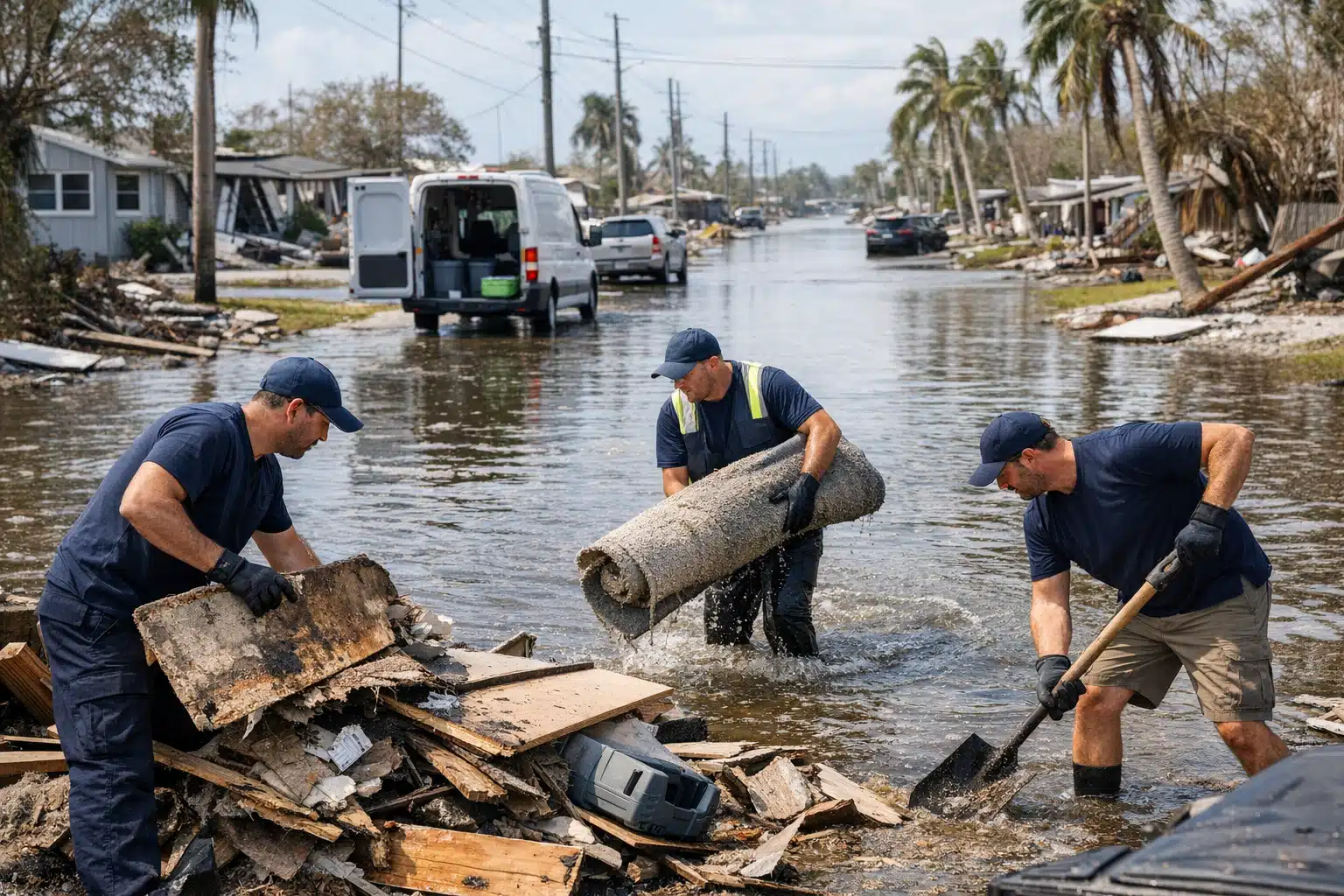
Why Most Restoration Companies Miss Revenue After Major Disasters
When Hurricane Ian hit Florida in 2022, restoration companies saw lead volumes spike 400% within 72 hours. Yet many businesses captured less than 30% of their potential revenue because their marketing systems couldn’t handle the surge.
A post-disaster marketing audit reveals exactly where your restoration company lost leads, wasted ad spend, and missed opportunities during high-demand periods. This systematic review helps you prepare for the next storm season and maximize every emergency call.
The audit process examines five critical areas: lead response times, website performance under traffic spikes, local search visibility, advertising efficiency, and competitor positioning during peak demand.
Conducting a Post-Disaster Marketing Audit: Lead Response Analysis
Fast response wins emergency restoration jobs. Your audit starts by measuring how quickly your team contacted leads during the disaster period.

Pull call logs and lead timestamps from your CRM for the 30 days following the disaster. Calculate average response times for phone calls, web forms, and emergency hotline inquiries.
Industry data shows restoration companies that respond within five minutes convert 70% more leads than those taking over an hour. Document which leads received callbacks after business hours and on weekends.
Emergency Call Tracking Metrics
Review these specific response benchmarks from your disaster period:
- Average time from lead submission to first contact attempt
- Percentage of calls answered live versus voicemail
- After-hours response protocol effectiveness
- Lead-to-estimate conversion rates by response time bracket
- Jobs lost due to delayed follow-up (tracked through customer feedback)
Document gaps where potential customers called competitors after waiting too long for your response. This data drives staffing decisions for future disasters.
Website Performance During Traffic Surges
Disaster periods create massive spikes in restoration website traffic. Your audit must identify technical failures that cost you leads during peak demand.
Use Google Analytics to examine site performance during the disaster timeframe. Look for pages with high bounce rates, slow loading times, or server crashes when traffic volume increased.
Emergency-specific landing pages perform 60% better than generic service pages during disaster periods. Check if your storm damage, flood restoration, or fire cleanup pages could handle the traffic surge.
Critical Website Elements to Audit
Focus your technical review on these conversion-critical areas:
- Contact form submissions versus completions (identify drop-off points)
- Mobile page load speeds during high-traffic periods
- Click-to-call button functionality across devices
- Emergency hotline visibility on all service pages
- Service area pages for disaster-affected zip codes
Many restoration websites crash under disaster traffic because they’re built for normal lead volumes. Your audit reveals whether hosting capacity matched actual demand.
Local SEO Visibility Assessment
Local search drives 85% of emergency restoration leads during disasters. Your audit examines how well your business appeared for location-based searches when demand peaked.
Check Google Business Profile insights for the disaster period. Review impression data, click-through rates, and direction requests for each affected service area.
Run searches for emergency terms like “water damage repair near me” and “fire restoration [city name]” using your exact business location. Document your ranking positions compared to pre-disaster baselines.
Local Search Performance Indicators
Emergency restoration searches increase 500% during active disasters. Your audit should measure these local SEO metrics:
- Google Business Profile views and website clicks during disaster period
- Local pack rankings for emergency restoration keywords
- Customer review volume and response rates
- Local directory listings accuracy across affected areas
- NAP consistency between online citations and actual service capacity
Many restoration companies lose local visibility because their business profiles list limited service areas or outdated contact information during emergencies.
Paid Advertising Performance Analysis
Disaster periods require different advertising strategies than normal operations. Your audit evaluates whether ad campaigns capitalized on increased search volume and emergency intent.
Review Google Ads and Facebook campaign data from 48 hours before the disaster through 30 days after. Focus on cost-per-lead changes, impression share, and conversion rates for emergency keywords.
Emergency restoration ads should pause non-urgent services and increase bids on disaster-specific terms. Check if campaigns shifted resources to capitalize on immediate demand.
Emergency Campaign Optimization Review
Examine these advertising elements from your disaster response:
- Keyword bid adjustments for emergency terms versus routine maintenance
- Ad copy relevance to specific disaster types (storm, flood, fire)
- Landing page alignment with emergency ad messaging
- Geographic targeting expansion to cover disaster-affected areas
- Budget reallocation from preventive services to emergency restoration
Most restoration companies waste ad spend during disasters by running generic campaigns instead of emergency-focused messaging that matches searcher intent.
Competitor Activity and Market Share Analysis
Disasters reveal how restoration companies stack up against local competition when demand surges. Your audit must identify which competitors gained market share and why.
Research competitor Google Ads during the disaster period using tools like SEMrush or SpyFu. Document which businesses dominated emergency search results and local listings.
Check competitor review volumes and response strategies. Companies that gained positive reviews during disaster response often capture more future emergency work.
Competitive Intelligence Gathering
Market leaders capture 40% of disaster restoration revenue in their service areas. Track these competitor metrics:
- Local pack positioning for emergency restoration searches
- Ad frequency and messaging during disaster period
- Review acquisition and management during high-demand times
- Service area expansion announcements or capacity increases
- Social media engagement and emergency communication strategies
Document which competitors appeared most responsive to emergency inquiries through online channels. This reveals gaps in your own digital presence during crisis periods.
Insurance Partnership and Referral Source Evaluation
Insurance relationships drive 60% of restoration company revenue, but disaster periods strain these partnerships. Your audit should examine referral source performance when claim volumes peaked.
Review lead sources during the disaster timeframe. Calculate conversion rates and job values from insurance referrals versus direct marketing channels.
Track which insurance partners increased referral volume and which reduced recommendations during high-demand periods. This data guides relationship priorities for future disasters.
Referral Channel Performance Metrics
Focus your referral analysis on these key indicators:
- Lead volume changes by insurance partner during disaster period
- Referral conversion rates compared to digital marketing leads
- Average job values from different referral sources
- Payment timeline variations between referral partners
- New insurance relationships established during disaster response
Diversified lead sources protect restoration companies when single channels fail during emergencies. Your audit reveals over-dependence on particular referral relationships.
Creating Your Action Plan from Audit Results
Raw audit data means nothing without concrete improvements for the next disaster cycle. Transform your findings into specific marketing upgrades that capture more emergency leads.
Prioritize fixes based on revenue impact and implementation difficulty. Address critical response time issues first, then tackle technical website problems that lost leads during traffic spikes.
Set measurable benchmarks for each improvement area. For example, reduce average lead response time to under two minutes or increase mobile page speed to under three seconds.
Implementation Priority Framework
Structure your improvements using this priority system:
- High Impact, Quick Wins: Emergency hotline setup, mobile site optimization
- High Impact, Long Term: Local SEO expansion, insurance partnership development
- Medium Impact, Quick Wins: Ad copy updates, review response automation
- Medium Impact, Long Term: Competitor monitoring systems, capacity planning
Schedule quarterly reviews to track improvement progress and prepare for seasonal disaster patterns in your service areas.
Maximize Your Restoration Marketing Impact
A thorough post-disaster marketing audit reveals exactly where your restoration company lost revenue during peak demand periods. Focus on lead response optimization, website performance under pressure, and local search visibility to capture more emergency work.
The best time to prepare for disaster marketing is immediately after reviewing your last disaster response. Companies that audit and improve between disasters dominate their markets when emergencies strike.
Ready to conduct a professional post-disaster marketing audit for your restoration company? The Restoration Marketers specializes in helping disaster restoration businesses optimize their lead generation and local SEO for maximum emergency response efficiency. Contact our team at 123-456-7890 to schedule your comprehensive marketing assessment.
Sources
- U.S. Small Business Administration – Disaster Assistance Programs
- FEMA – Business and Industry Emergency Management
- Google Business Profile Help – Manage Your Business Information
- U.S. Census Bureau – Statistics of U.S. Businesses