
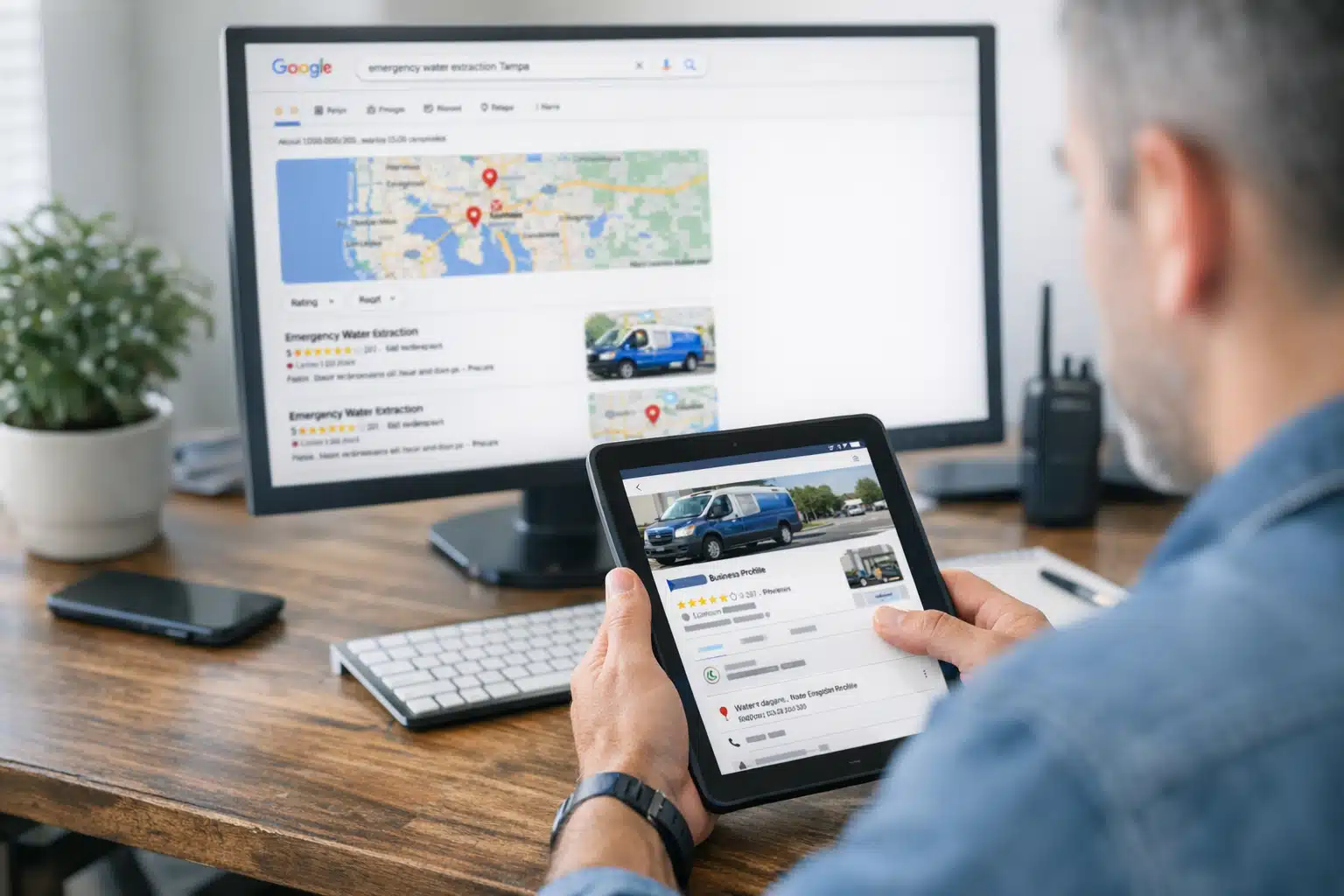
When a hurricane makes landfall, homeowners search “water damage near me” within hours of the wind dying down. A restoration company that ranks in the top three map results captures those calls. One that ranks on page two watches the work go to a competitor.
A strong local SEO strategy decides who gets found during that narrow window. This post breaks down exactly how restoration firms in storm zones can rank for emergency searches, prepare before the season hits, and recover leads that would otherwise disappear.
You will learn how to structure your Google Business Profile, build location pages that match storm-driven searches, and time your optimization work around forecast cycles.
Why a Local SEO Strategy Matters More in Hurricane-Prone Areas
A local SEO strategy for restoration companies means optimizing your online presence for emergency searches tied to specific cities, neighborhoods, and storm events. It differs from general home services marketing in one way: demand arrives in violent spikes, not steady streams.
A plumber gets calls year-round. A water damage crew in Tampa or New Orleans might book six months of revenue in the ten days after a single storm.
That concentration changes everything about how you rank. Search volume for “flood cleanup” and “storm damage repair” can jump 400% overnight in an affected metro. Your listing has to be ready before the storm, because you cannot build authority mid-crisis.
How Storm Searches Differ From Standard Restoration Searches
Homeowners in calm weather search phrases like “mold remediation cost” or “basement waterproofing.” They compare, they research, they wait.
Post-hurricane searches carry urgency and different language:
- “emergency water extraction [city]”
- “24 hour flood damage [neighborhood]”
- “tarp roof after hurricane”
- “standing water in house who to call”
Your pages must target the panic-phase keywords, not just the research-phase ones. Most restoration sites only rank for the calm-weather terms, which is why they vanish when it counts.
Optimizing Your Google Business Profile for Emergency Response
Your Google Business Profile drives the map pack results that appear above organic listings. In storm situations, most emergency calls originate from that map pack, not a website click.
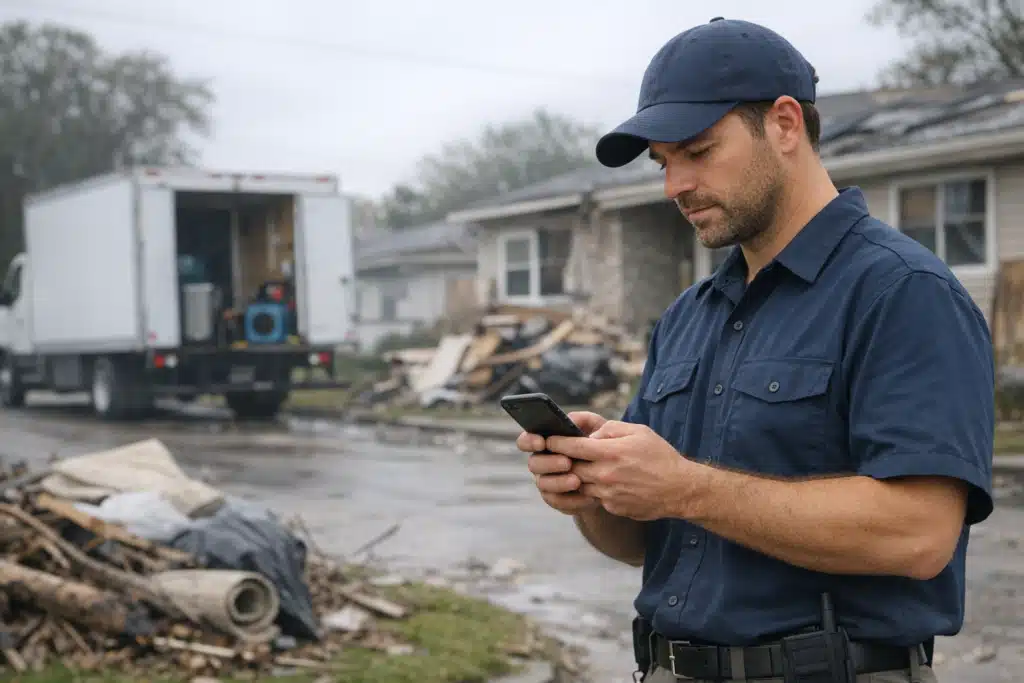
Set it up to signal round-the-clock availability and hyper-local coverage.
- Set hours to “Open 24 hours” if you run an emergency line. Restoration searches after midnight convert, and closed profiles get skipped.
- List every city and ZIP you serve in your service area, matching the counties a storm typically hits.
- Add “emergency water damage restoration” and “storm damage cleanup” as service categories, not just “general contractor.”
- Post updates during active weather events. A Google post titled “Now responding to flooding in Pinellas County” tells both searchers and Google you are active.
- Upload real job photos of extraction equipment, tarped roofs, and dry-out setups. Stock images hurt trust.
A profile updated during the storm outranks one that has sat idle since spring. Google rewards fresh activity when local demand surges.
Managing Reviews When Demand Overwhelms Capacity
Storm season creates a review trap. Crews get overloaded, response times slip, and frustrated homeowners leave one-star ratings that linger for years.
Protect your rating with a system:
- Send a review request by text within 24 hours of job completion, while gratitude is high.
- Respond to every negative review within 48 hours with a specific, calm reply.
- Never argue publicly. Acknowledge the delay, note the volume, and offer a direct line.
A steady flow of recent five-star reviews outweighs a handful of storm-season complaints. Volume and recency both feed your map ranking.
Building Location Pages That Rank Before the Storm
Location pages are individual website pages built for each city or region you serve. They are how you rank organically for “water damage [town name]” across an entire coverage area.
One page listing twelve cities will not rank. Twelve pages, one per city, each with local detail, will.
What Belongs on a Storm-Ready Location Page
- The city name in the title, headline, and URL
- References to local flood zones, past storms, or named hurricanes that hit the area
- Specific neighborhoods and ZIP codes served
- Response time promises tied to that location (“crews stationed 15 minutes from downtown Fort Myers”)
- Reviews from customers in that exact city
- A click-to-call button fixed to the top of the page
Reference the storms your community remembers. A Gulf Coast page mentioning recovery work after Hurricane Ian signals real local presence that a generic template cannot fake.
Publishing on a Pre-Season Schedule
New pages take weeks to earn ranking authority. Publishing in August, when the first named storm approaches, is too late.
Build and index location pages in the spring, before June 1. Google needs time to crawl, rank, and gather engagement signals before your traffic spike.
Treat SEO like hurricane prep: the work happens months before the first cloud forms.
Tracking Which Leads Come From Local Search
You cannot improve what you do not measure. Restoration owners waste budget when they cannot tell which channel produced each call.
Set up source tracking before the season starts:
- Use a call tracking number on your Google Business Profile separate from your website number.
- Tag website form submissions by landing page so you know which location page converted.
- Ask every caller how they found you and log it in your CRM.
- Compare lead volume week over week during and after storms to see which pages carried the load.
When you know a location page produced 40 calls after a storm, you know where to invest next year.
Local SEO Versus Paid Ads During a Storm Surge
Both channels win storm leads, but they behave differently. Here is how they compare for restoration firms in hurricane zones.
- Local SEO: Slow to build, free per click, dominates once ranked. Best for firms that prepare months ahead.
- Google Ads: Instant visibility, costs spike with demand, disappears when budget runs out. Best for filling gaps or entering new territory fast.
The smartest storm-zone firms run both. SEO carries the free volume, and paid ads scale up during the highest-demand days when cost-per-click still pays off.
A ranked map listing plus a targeted ad campaign captures both the organic and paid emergency searcher.
Bringing It Together for Storm Season
Winning storm-season leads comes down to preparation: an optimized Google Business Profile, city-specific location pages published before June, and lead tracking that shows what works. Restoration firms that build authority in the off-season own the map pack when a hurricane hits.
The Restoration Marketers builds local SEO strategy for restoration companies in hurricane-prone areas, so your phone rings first when the water rises. Call or text us at 720‑885‑0749, or visit https://restorationmarketers.com to prepare before the next storm season.
Sources
- NOAA – Hurricanes Resource Collection
- Google Business Profile Help – Improve Your Local Ranking
- FEMA – Flood Maps and Zones