

Why Fall Storms Change How Homeowners Search for Help
A single October downpour can push a restoration company’s phone from silent to nonstop in six hours. The homeowners calling you are not using the same words, and that difference decides whether your basement flooding Google Ads restoration budget converts or burns.
Some type “basement full of water.” Others type “sump pump stopped working.” Same wet basement, two different mindsets, two different buying moments.
This post gives you a decision rule for splitting campaigns by fall search language. You learn how groundwater patterns shift keyword intent, how to budget each campaign, and when separate ad groups book more mitigation jobs.
How Groundwater Patterns Rewrite Your Search Terms
Fall flooding has two triggers, and each one produces a different search phrase. One is surface water from heavy rain. The other is a failed mechanical system fighting a rising water table.
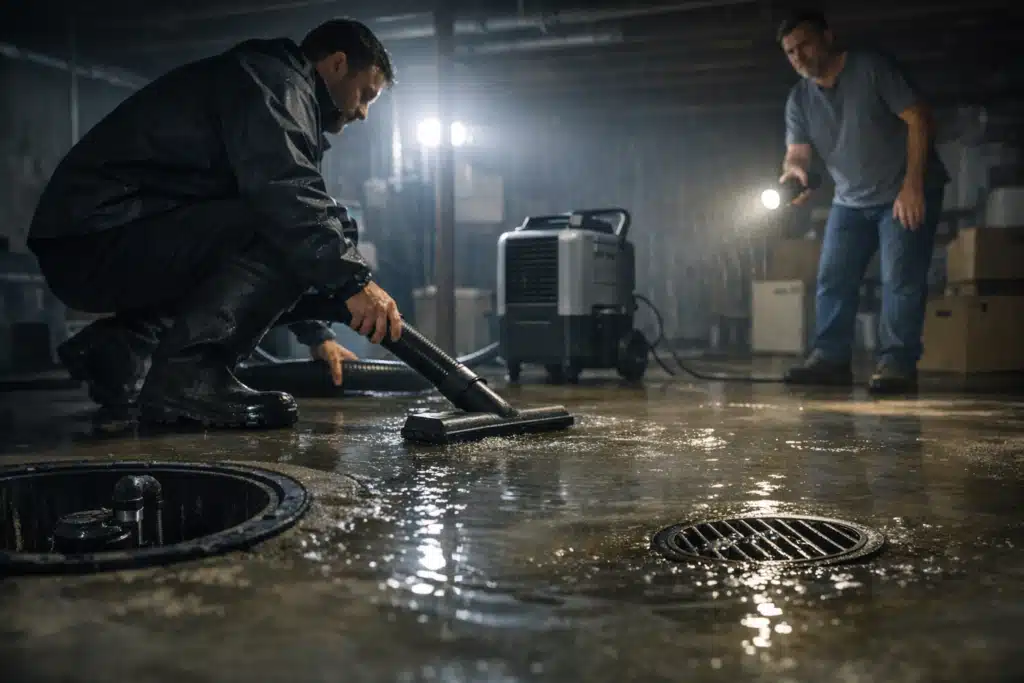
Surface flooding happens fast during storms. Homeowners panic and describe what they see: water on the floor, a flooded basement, water coming up the drain.
Mechanical failure happens quietly. The water table rises over weeks of autumn rain, the pump runs constantly, then the float sticks or the motor dies. That homeowner already knows the cause.
What Each Search Phrase Tells You About the Caller
- “Basement flooding” signals an active emergency. The person wants someone on-site now and has not diagnosed anything.
- “Sump pump failure” signals a diagnosed problem. The caller may want repair first, mitigation second.
- “Water in basement after rain” blends both and spikes within hours of a storm front.
- “Sump pump not working” climbs slowly across weeks as the water table rises.
That timing gap matters. Storm-driven searches surge and fade in 48 hours. Pump-failure searches build a steady trickle across the whole wet season.
Basement Flooding Google Ads Restoration: One Campaign or Two?
Split the campaigns when the two search types need different landing pages, bids, and call scripts. Keep them together when your volume is too low to feed two separate budgets.
Here is the practical reason. A “basement flooding” searcher wants a mitigation crew. A “sump pump failure” searcher may first want a plumber, then your drying equipment.
If you send both groups to one generic page, you lose the pump-failure caller. They see flood cleanup language and assume you do not fix pumps.
The Simple Decision Rule
- Under 30 clicks per week combined? Run one campaign with two tightly themed ad groups. Keep spend focused.
- Over 30 clicks per week, with pump-failure terms at 20% or more of volume? Split into two campaigns. Give each its own budget cap and landing page.
- Heavy storm season with daily rain events? Raise the basement flooding campaign budget for 72 hours, then pull it back.
This rule stops you from overbuilding. Most single-location restoration firms start with one campaign and split once pump-failure clicks prove they convert.
How to Structure Two Separate Campaigns
Each campaign needs its own keywords, ad copy, and landing page built for that caller’s mindset. Mixing them dilutes your Quality Score and raises cost per lead.
Basement Flooding Campaign Setup
- Keywords: emergency basement flooding, flooded basement cleanup, water in basement after storm.
- Ad copy: lead with response time. “Crew dispatched in 60 minutes” beats any feature list.
- Landing page: phone number above the fold, 24/7 badge, one-line form only.
- Bid strategy: maximize calls during active storm windows.
Sump Pump Failure Leads Campaign Setup
- Keywords: sump pump failure, sump pump not working, sump pump overflow cleanup.
- Ad copy: name both problems. “Pump failed? We dry the damage and stop the mold.”
- Landing page: explain that you handle water removal and drying after a pump quits.
- Bid strategy: steadier daily budget across the whole season.
The pump-failure page should address the caller’s hidden worry: mold and warped flooring. That reassurance converts a researcher into a booked job.
Budgeting for Fall Demand Spikes
Fall water damage demand is not steady, and a flat daily budget wastes money. You overpay on quiet days and run out of budget during the one storm that matters.
Watch your local forecast like a dispatcher. A soaking front 24 hours out is your signal to raise the basement flooding campaign cap.
A Seasonal Budget Pattern That Works
- Baseline weeks: keep the pump-failure campaign running at a steady daily spend.
- Storm forecast (24–48 hours out): double the basement flooding campaign budget.
- Storm day and day after: let it run hot; this is when calls convert fastest.
- Dry stretch: pull the flooding budget back, hold the pump-failure baseline.
This pattern matches spend to intent. You capture the panic searches when they peak and stay visible for the slow-burn pump failures all season.
Tracking Which Campaign Books Real Jobs
Clicks and calls mean nothing until you tie them to booked mitigation jobs. A pump-failure caller who only wants a plumber is not your customer, and your tracking should prove it.
Use call tracking numbers unique to each campaign. Record every call and tag the outcome in your CRM.
Metrics That Show the Truth
- Cost per booked job by campaign, not cost per click.
- Call-to-job rate for each search type. Flooding usually books higher.
- Average job value from each campaign source.
- Wasted-call rate for pump-failure leads who wanted repair only.
After four to six weeks, the data tells you whether splitting paid off. If pump-failure leads book jobs at half the rate but cost the same, fold that budget back into flooding.
Where Local SEO Backs Up Your Ads
Google Ads capture the storm spike, but your Google Business Profile captures the follow-up. Many flooded homeowners click your ad, then check your reviews before calling.
Keep your profile loaded with recent reviews that mention fast arrival. A storm-week reviewer saying “here in 45 minutes” converts the next panicked caller.
Post seasonal updates about fall flooding and pump failures. This signals relevance to Google and reassures the homeowner comparing you to two competitors.
The Answer for Most Restoration Owners
Split your campaigns only when pump-failure searches earn their own budget with booked jobs. Start with one well-built campaign, two ad groups, and separate landing pages. Then let the tracking data decide.
Fall demand rewards owners who match ad spend to storm timing and send each caller to the right page. Do that, and your cost per booked mitigation job drops while competitors overspend on generic ads.
Want this set up before the next fall storm season hits? The Restoration Marketers builds and manages split-intent Google Ads for restoration firms. Call or text us at 720‑885‑0749, or visit https://restorationmarketers.com.