
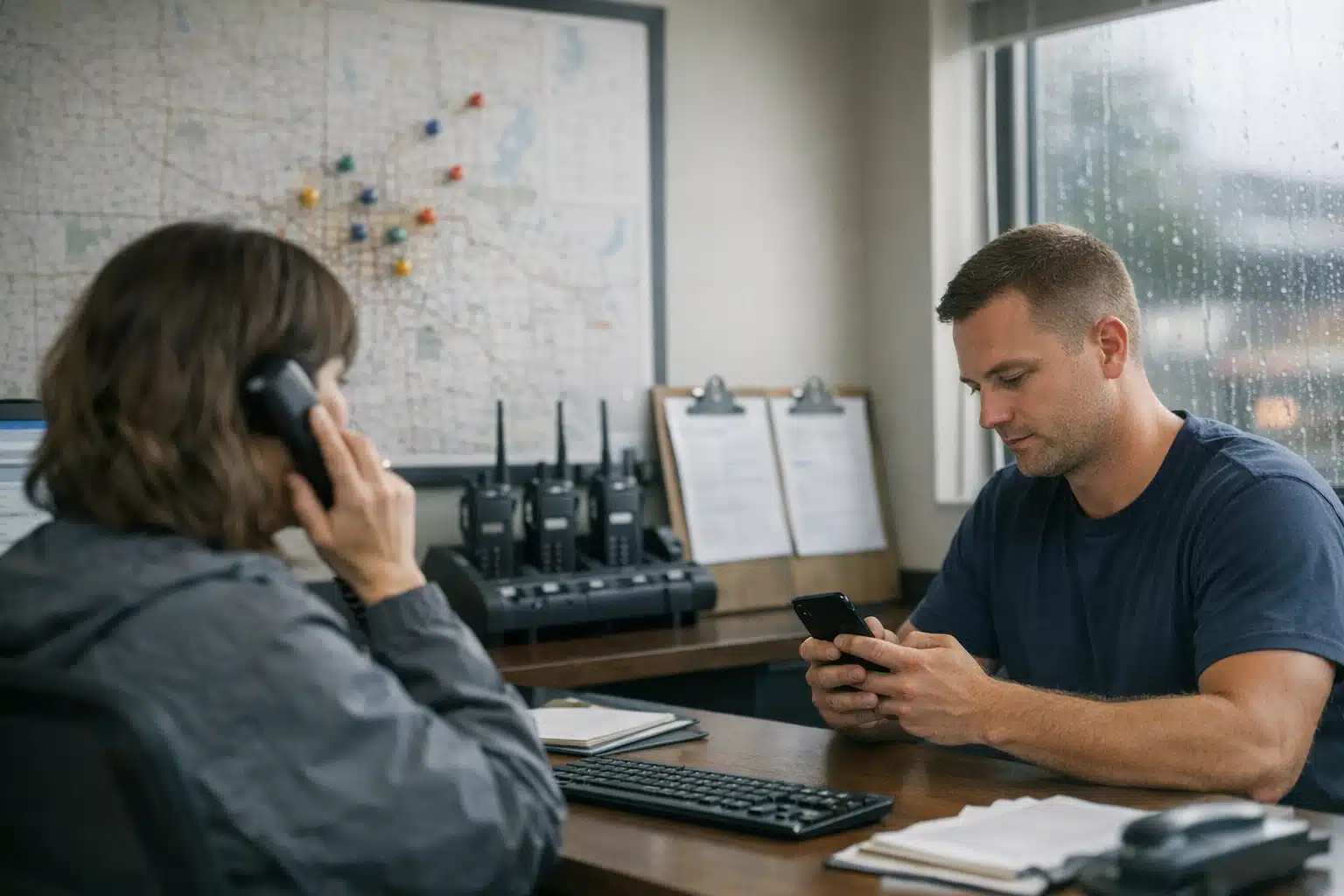
After a major storm, a restoration company can go from a 4.9-star rating to a 4.3 in under two weeks. The cause is rarely bad work. It comes from storm delay negative reviews restoration owners get when 80 calls hit a crew built to handle 12.
Surge conditions create a math problem no amount of hustle solves overnight. You triage by severity, and the homeowners who wait feel forgotten. That frustration lands on Google before your truck even leaves the driveway.
This post gives you the exact messages to send before arrival and the reply templates to post after a bad review. You get a reputation defense system built for storm season, not generic advice.
Why Storm Delay Negative Reviews Restoration Companies Get Are Different
Storm-season complaints are not quality complaints. They are timing and communication complaints. A homeowner with three feet of water does not care that you served 40 other families that day.
The review that hurts you most is usually written during the wait, not after the job. That means the fix happens before your crew arrives, through expectation-setting.
General home-services marketing ignores this. A plumber running one job at a time does not face a 700% call spike after a hailstorm. Restoration reputation management has to plan for surge triage as a normal event.
The Three Complaints That Spike After a Storm
- Delay accusations: “We called Monday, nobody came until Thursday.”
- Overbooking anger: “They took my deposit then pushed us back for a bigger job.”
- No-show claims: “The tech gave a window and never showed or called.”
Each one has a different root cause. Each one needs a different reply. Treating them the same makes you sound scripted and cold.
The Pre-Arrival Message That Prevents Bad Reviews
The single highest-return move in storm reputation management is a proactive text sent within one hour of the first call. It sets a realistic window and explains triage before frustration builds.
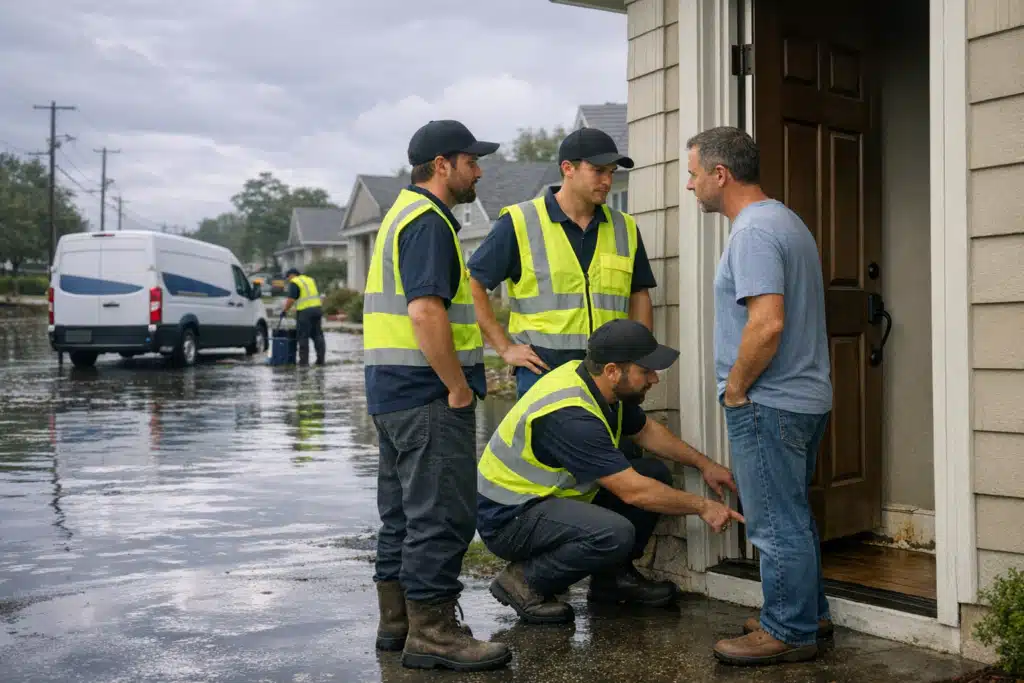
Send this before the customer has time to feel ignored. A homeowner who knows the plan waits. A homeowner in silence writes reviews.
Expectation-Setting Text Template
“Hi [Name], this is [Company] confirming we received your water damage call. Storm volume is heavy in [City] right now. We triage by flood severity and safety risk first. Your current window is [day/time range]. If your situation worsens, text this number and we will re-prioritize. We will text you a firmer arrival time the morning of your visit.”
This message does three things. It confirms they were heard. It explains why waiting is fair. It gives them a channel besides Google to voice urgency.
The Morning-Of Confirmation
Send a second text the day of arrival. Vague windows breed no-show accusations more than late arrivals do.
“Good morning [Name]. Your [Company] tech [First Name] is scheduled between [2-hour window]. He will call 30 minutes out. If plans changed, reply here.”
A two-hour window with a name attached kills most no-show reviews before they start.
How to Respond to a Review About Delays Without Sounding Defensive
When you respond to a review about delays, future customers are the real audience, not the angry reviewer. Prospects read your replies to judge how you handle pressure.
The wrong instinct is to explain how busy you were. That reads as an excuse. The right move is to validate, take ownership of communication, and show a fix.
The Four-Part Reply Formula
- Name the feeling without arguing the facts.
- Own the communication gap, not the triage decision.
- State what changed because of their feedback.
- Move it offline with a direct number.
Template: Delay Accusation Reply
“[Name], waiting days with water in your home is stressful, and our updates should have been clearer. Storm weeks push our schedule, but that is our job to communicate, not yours to guess. We have added same-day text windows to prevent this. Please call me directly at 720‑885‑0749 so I can make this right.”
Template: Overbooking Complaint Reply
“[Name], I understand how it felt to be moved back after we committed to you. We triage by flood and safety severity during storms, but you deserved a call the moment your window shifted. That call did not happen, and that is on us. I would like to talk it out at 720‑885‑0749.”
Template: No-Show Accusation Reply
“[Name], a missed window with no call is not the standard we hold. I want to find out what broke down on our end that day. We now send 30-minute heads-up calls before every arrival. Please text or call me at 720‑885‑0749 so I can review your file personally.”
Notice that no template blames the storm. Customers accept triage. They do not accept silence.
What Not to Do When Reviews Drop After a Storm
Panic responses do more damage than the original review. Under pressure, owners make the same mistakes.
- Do not dispute the timeline publicly. “You called Wednesday, not Monday” makes you look petty.
- Do not paste identical replies. Google and prospects both spot copy-paste.
- Do not beg for the review to be removed in the reply itself.
- Do not go silent for a week. A reply within 48 hours signals a company that listens.
Flag reviews that violate policy, like ones from people who were never customers. Google removes fake reviews, but only clear violations. A slow-response complaint from a real client stays up.
Rebuild Your Rating With a Post-Storm Review Push
The fastest way to bury a cluster of storm complaints is volume from happy customers. One 1-star review drags your average. Twenty new 5-star reviews restore it in weeks.
Ask for reviews at the moment of relief, not weeks later. The best window is right after the homeowner sees dry, restored space.
A Simple Recovery Sequence
- Train techs to say one line at job completion: “If we earned it, a quick Google review helps our small crew.”
- Send a review link by text within two hours of sign-off.
- Send one follow-up text 48 hours later if no review posts.
- Route unhappy replies to a manager before they reach Google.
This last step matters most during storm season. A private feedback path catches frustration before it becomes public.
Why This Belongs in Your Marketing Plan, Not Just Operations
Your star rating drives your cost per lead. A drop from 4.8 to 4.2 can raise ad costs and lower map-pack clicks in the same week.
Reputation is a paid-search and local-SEO asset. When storms flood your phones, protecting your rating protects the money you spend on Google Ads and Local Service Ads.
Restoration marketing that ignores surge reputation is leaving lead flow on the table. The companies that plan for storm complaints keep ranking when competitors slide.
Conclusion
Storm delay negative reviews restoration owners face are a communication problem, not a quality one. Pre-arrival texts, non-defensive reply templates, and a fast post-storm review push protect your rating when demand spikes. Handle the wait well, and one bad storm week will not cost you months of leads.
The Restoration Marketers builds reputation and lead systems for restoration companies that face seasonal surges. Call or text us at 720‑885‑0749, or visit https://restorationmarketers.com to protect your ratings before the next storm.