

One angry tenant review can drop your star rating faster than any storm season slowdown. For restoration companies, a single public complaint from someone who never signed your contract creates a strange problem. The property owner hired you, paid you, and was happy. Yet the tenant who lived in the unit is the one leaving one star.
This post breaks down the exact tenant negative review restoration response method that keeps your reputation intact. You will get word-for-word templates, confidentiality rules to follow, and a plan to protect your relationship with property managers who feed you repeat work.
Reputation is a lead-generation asset. When your Google rating slips, your cost per lead climbs. Handling this one scenario correctly protects both.
Why Tenant Reviews Create a Unique Reputation Risk
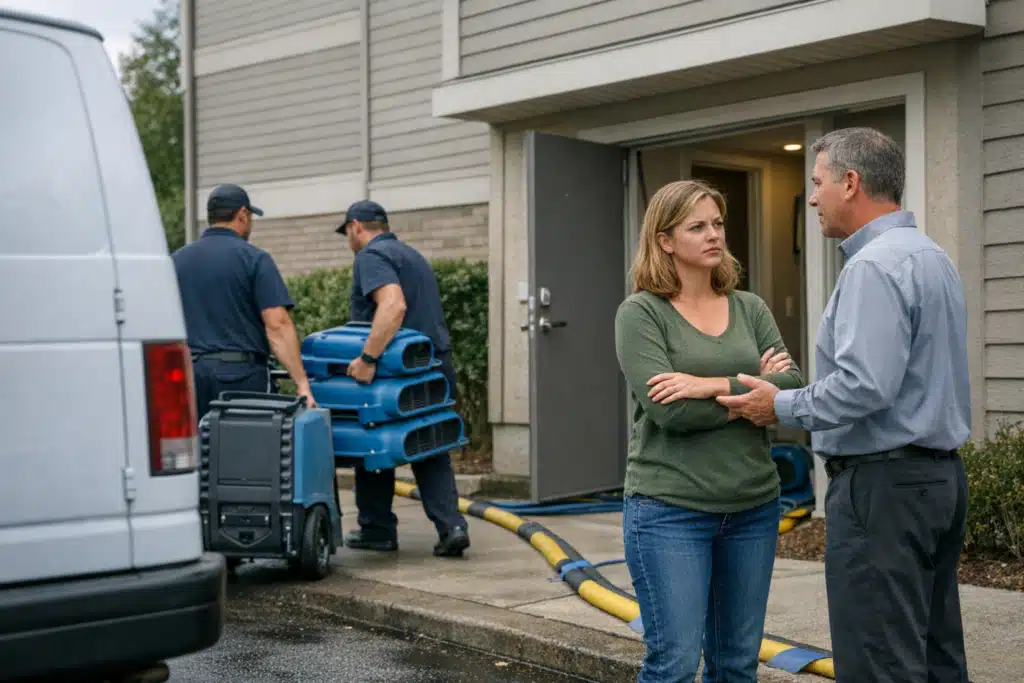
A tenant negative review restoration response is tricky because the reviewer was never your client. In most restoration jobs, your contract is with the property owner, a landlord, or a property management firm. The tenant occupies the space but has no direct agreement with you.
The person leaving the review has no paperwork tying them to your business. Still, their words show up on your public profile for every future customer to read.
The Three-Party Problem
Most restoration jobs involving rentals have three parties with different interests:
- The property owner or manager — your paying client who wants fast, quiet repairs
- The tenant — displaced by water, fire, or mold, and frustrated by the disruption
- Your company — stuck between satisfying the payer and calming the occupant
The tenant rarely blames the landlord in public. They blame the trucks in the driveway and the fans running for five days. That means your brand absorbs the anger that belongs elsewhere.
Why This Matters for Your Lead Flow
Property managers read reviews before hiring vendors. A reply that leaks job details or sounds defensive signals you cannot be trusted with sensitive accounts. A calm, confidential reply signals the opposite.
Every public reply is a sales pitch to the next property manager reading it.
The Rules You Must Follow Before You Respond
Before writing a single word, lock in the boundaries. Breaking these can cost you a client or expose you to liability.
- Never confirm who hired you. Do not name the landlord, management company, or insurance carrier publicly.
- Never share job specifics. No addresses, unit numbers, loss types, or scope details.
- Never argue facts in public. A back-and-forth buries your good reviews and raises your star count on the reviewer’s complaint.
- Never ignore it. Silence reads as guilt to anyone scanning your profile.
Your reply should acknowledge the human disruption without admitting fault or revealing the client relationship. That balance is what builds commercial trust.
Loop In Your Client First
Call the property manager before you post anything. A quick heads-up protects the relationship and often gives you facts you lacked.
Property managers hate being surprised by public disputes involving their properties. A 30-second call turns a risk into a loyalty builder.
Tenant Negative Review Restoration Response Templates
Here are three field-tested templates. Each protects confidentiality, acknowledges disruption, and signals you follow authorization rules. Adjust names and details, but keep the structure.
Template 1: Tenant Upset About Noise, Equipment, or Timeline
“Thank you for sharing your feedback. We know living alongside drying equipment and crews is stressful, and we take that seriously. Our work on any occupied property is coordinated with the property’s authorized decision-maker, and we follow the schedule approved for the job. If you’d like to talk through your concerns, please call us at 720‑885‑0749.”
This reply never names the owner. It hints that someone with authority approved the plan, which quietly defends your timeline.
Template 2: Tenant Claims Damage or Poor Work
“We appreciate you letting us know. We hold our crews to strict standards on every project. Because this involves a property we were authorized to work on, we’re not able to discuss specific details publicly. We’ve shared your concern with the appropriate party and would welcome a direct conversation at 720‑885‑0749.”
Notice the phrase “authorized to work on.” It tells future property managers you respect contract boundaries and privacy.
Template 3: Tenant Angry They Were Displaced
“Being displaced from your home is hard, and we’re sorry for the disruption you felt. Restoration after water or fire damage requires careful steps to keep the property safe for everyone. Decisions about access and timing rest with the property’s authorized representative. We’re happy to listen if you call us at 720‑885‑0749.”
This moves the timing decision to the owner without naming them. The tenant hears empathy. The property manager reading it sees a vendor who guards their decisions.
How a Property Manager Review Response Restoration Strategy Protects Repeat Work
A strong property manager review response restoration plan treats every public reply as account protection. Management firms send steady volume, and one mishandled tenant complaint can end that pipeline.
When a property manager sees you reply with discretion, they learn you will protect them too. That trust turns a one-time job into a vendor list spot.
Turn the Complaint Into Private Resolution
The public reply exists for the audience, not the reviewer. Real resolution happens offline. Follow this sequence:
- Post the confidential public reply within 24 hours.
- Notify the property manager by phone or text the same day.
- Offer the tenant a direct line to talk it out.
- Document the call outcome in your records.
- If resolved, politely ask the tenant to update their review.
Reviews that get updated after a kind phone call often turn from one star to four or five.
Build a Review System That Prevents the Problem
The best defense against tenant reviews is a steady stream of reviews from happy paying clients. When property managers and owners leave five-star feedback, one tenant complaint barely moves your average.
Ask the Right People at the Right Time
Request reviews from the parties who were satisfied. A few habits make this automatic:
- Send a review link to the property manager the day the job closes.
- Text the owner a direct Google review link, not a generic page.
- Ask adjusters you work with for feedback on your coordination.
- Time requests for the moment the client expresses relief.
Volume beats perfection. A company with 120 reviews at 4.7 stars survives a bad tenant review. A company with 11 reviews does not.
Track Where Negative Reviews Come From
Log every negative review by source: tenant, owner, adjuster, or passerby. After a few months, patterns appear. If tenant complaints cluster around one crew or one timeline issue, you have an operations fix, not a marketing problem.
This data also helps you brief property managers. Showing a manager you track and resolve tenant concerns makes you the easy choice for their next loss.
What Not to Do When a Tenant Leaves a Bad Review
A few moves can turn a small problem into a lasting one. Avoid these completely:
- Do not reveal the owner’s name to deflect blame onto the landlord.
- Do not post photos or job documents to prove your side.
- Do not copy and paste the same robotic reply to every review.
- Do not demand the review be removed in your public reply.
- Do not let an owner or manager post a reply from your account.
Each of these reads as unprofessional to the people who decide your next contract.
Conclusion
A smart tenant negative review restoration response protects client confidentiality, acknowledges the tenant’s disruption, and signals you respect authorization rules. Loop in the property manager, keep the public reply calm, and move resolution to a private call. Pair that with steady reviews from satisfied owners, and one angry tenant cannot sink your rating.
The Restoration Marketers helps restoration companies build review systems, respond to complaints, and win repeat work from property managers. Call or text us at 720‑885‑0749, or visit https://restorationmarketers.com to protect your reputation and grow your lead flow.