

A brown ring on a bedroom ceiling rarely triggers a panic call to a restoration company. It triggers a Google search. Homeowners type “small water spot on ceiling” or “ceiling stain but no active leak” long before they dial anyone, and that early moment is where ceiling stain water spot repair leads are won or lost.
Late August and September produce a strange gap in restoration demand. Summer storm damage has slowed, winter freeze jobs have not started, and homeowners are staring at ceiling discoloration they have ignored for weeks.
This article shows restoration owners how to capture late summer water leak searches, convert hesitant homeowners into paid inspections, and turn a $19 click into a $4,800 mitigation job.
Why Ceiling Stain Searches Signal High-Value Jobs
A ceiling stain search is a homeowner in denial. They suspect something is wrong but hope it is nothing serious.
That hesitation is the opening. The person searching “yellow water spot on ceiling not spreading” has an active problem they have not diagnosed yet.
Early-stage searchers convert into inspections, and inspections convert into mitigation contracts. A slow roof leak found in September becomes attic mold, drywall replacement, and an insurance claim by November.
Most restoration marketing chases emergency keywords like “flooded basement” or “water damage restoration near me.” That traffic is expensive and crowded with competitors bidding at $40 to $70 per click.
Ceiling stain and water spot terms cost less and face far weaker competition. You reach the homeowner before the crisis, which means you own the relationship before a competitor does.
How Restoration Intent Differs From Home Services Intent
A general handyman marketer treats “ceiling stain” as a painting or drywall job. A restoration marketer sees the moisture source behind it.
Your content should answer the question the homeowner asked, then reframe the risk. Example: “A dry-looking ceiling stain can still hide active moisture in the drywall above it.”
The goal is to move the reader from curiosity to concern to a booked inspection. That reframe is what separates restoration marketing from painter marketing.
Building Content for Late Summer Water Leak Searches
Late summer water leak searches spike because roofs have baked all summer and seals have failed. Homeowners notice stains once they turn on interior lights more in shorter evenings.
You need pages that match the exact phrasing worried homeowners use. Broad “water damage” pages will not rank for “small brown spot on ceiling after rain.”
Create dedicated pages for each specific search pattern:
- Ceiling stain pages: “What a Ceiling Water Stain Means and When to Worry”
- Water spot pages: “Water Spot on Ceiling With No Active Leak: 6 Causes”
- Location-specific pages: “Ceiling Water Damage Inspection in [City]”
- Seasonal pages: “Fall Roof Leaks and Ceiling Stains: What Homeowners Miss”
Each page should end with one clear next step: a low-pressure moisture inspection. Do not lead with “24/7 emergency water extraction” on a page about a faint stain.
Writing FAQs That Match Pre-Emergency Questions
FAQs feed both Google and AI answer engines. Structure them around real homeowner language, not restoration jargon.
Include questions your inspectors hear on every call:
- Can a ceiling stain appear without an active leak?
- How do I know if the moisture is still there?
- Will my homeowners insurance cover a slow ceiling leak?
- How much does a ceiling water inspection cost?
- Is a small water spot dangerous or just cosmetic?
Answer the insurance question honestly and early. Slow, gradual leaks are frequently denied by insurers, and homeowners who learn this fast act faster to prevent bigger damage.
Optimizing Google Business Profile for Early-Stage Leads
Your Google Business Profile pulls calls from map searches before anyone visits your website. It needs to speak to inspection intent, not just emergencies.
Add a service entry called “Ceiling Water Stain Inspection” with its own description. Most competitors only list “water damage restoration,” which misses early searchers entirely.
Post weekly updates during late summer targeting stain and leak topics. A short post titled “Noticed a Ceiling Stain This Month? Here’s Why” keeps your profile active and relevant.
Ask inspection customers for reviews that mention the exact problem. A review saying “found a hidden roof leak behind a small ceiling stain” ranks you for that phrase in map results.
Turning Reviews Into Pre-Emergency Proof
Reputation matters most when a homeowner is undecided. A hesitant person reads reviews before booking a paid inspection.
Prompt customers to describe the stakes. Reviews that reference “caught it before mold spread” reassure the next nervous homeowner.
If you have earned negative reviews after a busy storm season, respond calmly and factually. Future inspection customers judge you by how you handle criticism, not by its absence.
Running Google Ads for Ceiling Stain Water Spot Repair Leads
Paid search lets you capture ceiling stain water spot repair leads immediately, before your content ranks. The trick is bidding on low-panic terms your competitors ignore.
Structure a September campaign around inspection intent:
- Target phrases like “ceiling stain inspection,” “water spot on ceiling causes,” and “should I worry about a ceiling stain.”
- Set a modest daily budget since these keywords cost less than emergency terms.
- Write ad copy that lowers the barrier: “Not Sure If It’s a Leak? Book a Ceiling Moisture Inspection.”
- Send clicks to a matching landing page, never your homepage.
Track every lead by source so you can prove which keyword produced the mitigation job. A $22 inspection lead that becomes a $5,000 job is a number worth defending in your budget.
Google Ads vs Local SEO for Early Leak Searches
Both channels capture pre-emergency intent, but they work on different timelines:
- Google Ads: Instant visibility, predictable cost per lead, stops when budget stops.
- Local SEO: Slower to build, compounds over time, produces leads at near-zero marginal cost.
Run ads now to capture this September’s searches. Build content in parallel so next fall you rank organically and cut ad spend.
Converting Inspection Leads Into Mitigation Contracts
Capturing the lead is half the work. Fast response and clear inspection framing close the rest.
Answer inspection calls within the first ring during late summer. A homeowner who was on the fence will call a competitor if you go to voicemail.
Follow this sequence on every ceiling stain inquiry:
- Confirm the symptom and when they first noticed it.
- Book a same-week moisture inspection, not a vague callback.
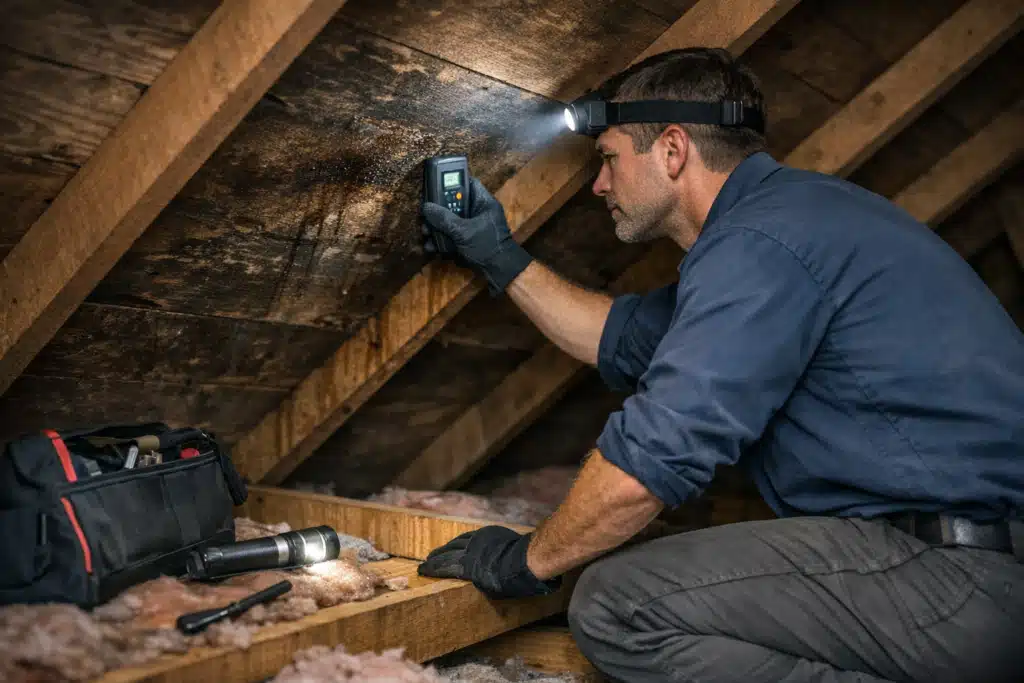
- Use a moisture meter on-site to show hidden readings.
- Explain the mitigation path and insurance realities plainly.
- Provide a written scope before you leave the home.
The moisture meter reading is your best closing tool. A homeowner who sees elevated moisture behind a “dry” stain stops hesitating instantly.
Putting It Together for This September
Effective restoration marketing starts before the crisis, when a homeowner is quietly worried about a ceiling stain. Capture that moment with dedicated pages, honest FAQs, a stain-focused Google Business Profile, and low-cost ads that book inspections.
Those early inspections become your highest-margin mitigation jobs by fall. Start now, and next September you own the search results instead of renting them.
The Restoration Marketers builds local SEO and paid campaigns that capture ceiling stain water spot repair leads before they become big claims. Call or text 720‑885‑0749 or visit https://restorationmarketers.com to plan your late-summer campaign.