
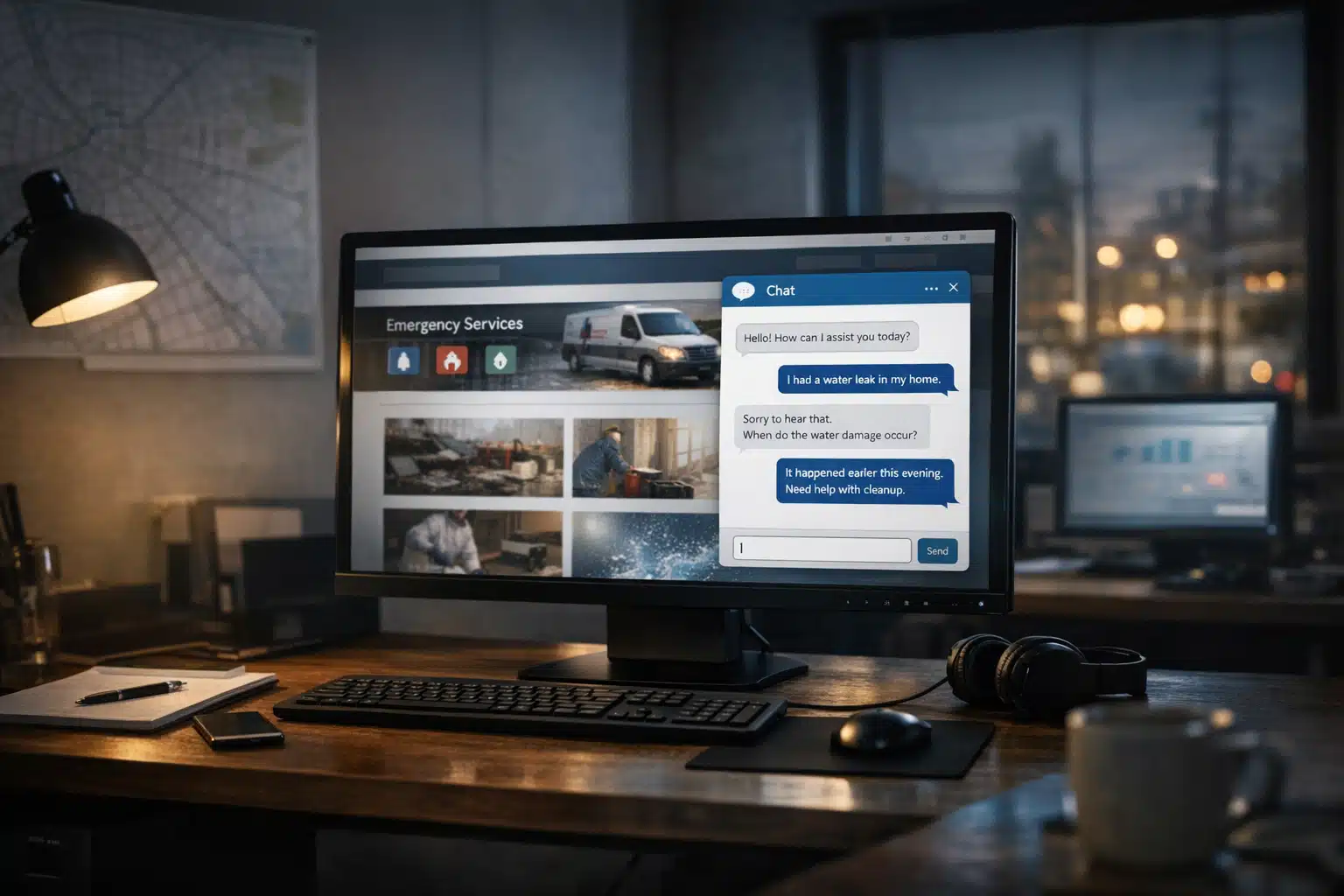
Restoration companies lose potential customers every minute their phones go unanswered during emergencies. When a pipe bursts at 2 AM or storm damage strikes on weekends, property owners need immediate answers. Chatbots integration on your restoration website captures these urgent leads when your team sleeps.
Smart restoration businesses now deploy automated chat systems that qualify leads, schedule emergency visits, and provide instant damage assessment guidance. These tools work around the clock to convert website visitors into paying customers.
Why Chatbots Integration Transforms Restoration Lead Generation
Traditional restoration marketing relies on phone calls and contact forms. Both methods fail during peak emergency periods when call volume spikes and customers abandon slow-loading forms.
Chatbots solve this timing mismatch. They respond within seconds to capture contact information before frustrated customers click away to competitors.
Water damage leads convert at the highest rates when contacted within 15 minutes of inquiry. Fire damage customers make hiring decisions within the first hour after initial contact. Automated chat systems keep you first in line for these high-value emergency jobs.
Emergency Response Automation
Program your chatbot to ask specific questions that help your team prepare for each job:
- What type of damage occurred? (water, fire, mold, storm)
- When did the damage start?
- What’s the affected square footage?
- Is water still actively leaking?
- Do you need emergency board-up service?
These qualifying questions let you dispatch the right equipment and crew size before arriving on-site. Better preparation means faster job completion and higher profit margins.
Setting Up Lead Qualification for Restoration Services
Generic business chatbots ask broad questions like “How can we help?” Restoration-specific bots dig deeper into damage details that affect your pricing and response time.

Your chatbot should categorize leads into three buckets: emergency response, insurance claims, and routine restoration. Each category gets different follow-up sequences and response timeframes.
Emergency Triage Questions
Structure your bot’s question flow to identify genuine emergencies first. Start with safety concerns:
- Is anyone in immediate danger from structural damage?
- Are electrical systems exposed to water?
- Is the building secure from weather exposure?
Emergency cases get forwarded directly to your on-call technician. Non-emergency leads enter your regular follow-up sequence for next-business-day contact.
Insurance Documentation Prompts
Train your chatbot to collect insurance information upfront. This data helps you prepare accurate estimates and speeds up the claims process:
- Insurance company name
- Policy number (if available)
- Claim number (if already filed)
- Preferred adjuster contact method
Customers appreciate when restoration companies handle insurance paperwork efficiently. Your chatbot demonstrates this capability before the first phone call happens.
Programming Customer Engagement Responses for Different Damage Types
Each restoration service requires different response strategies. Water damage demands immediate action to prevent mold growth. Fire damage involves safety assessments and content cleaning. Storm damage focuses on structural integrity and weather protection.
Your chatbot’s personality should match the urgency level of each situation. Water damage responses sound more urgent than routine carpet cleaning inquiries.
Water Damage Response Scripts
Water damage chatbots need to communicate speed and expertise. Sample opening message:
“Water damage spreads quickly. Our emergency response team can be on-site within 2 hours to begin extraction and drying. Let me gather a few details to dispatch the right equipment.”
Follow up with practical advice that builds trust: “Turn off electricity to affected areas if safe to do so” or “Remove standing water with mops or towels if possible.”
Fire Damage Consultation Approach
Fire damage conversations require more sensitivity. These customers face significant property loss and emotional stress. Your bot should acknowledge this difficulty:
“We understand fire damage creates overwhelming situations. Our certified technicians handle both structural repairs and content restoration to get your life back to normal.”
Focus on comprehensive service capabilities rather than just speed of response.
Integrating Chatbots with Your Existing CRM and Scheduling Systems
Standalone chatbots create data silos that hurt your follow-up efforts. Smart restoration companies connect their chat systems directly to existing customer relationship management tools.
This integration automatically creates new customer records, schedules follow-up calls, and assigns leads to specific technicians based on location and expertise.
Automated Lead Distribution
Set up geographic routing so chatbot leads go to the right service areas. A water damage call in your northern territory gets assigned to technicians who cover that region.
Time-based routing handles after-hours inquiries. Emergency calls during business hours go to your dispatch team. Weekend emergencies route to on-call supervisors.
Calendar Integration Benefits
Connect your chatbot to scheduling software so customers can book non-emergency appointments directly. Mold inspections, estimates, and follow-up visits get scheduled without phone tag.
Customers prefer scheduling flexibility, and automated booking reduces your administrative workload. Your office staff focuses on complex situations while the chatbot handles routine appointment setting.
Measuring Customer Engagement Success Metrics
Track specific metrics that matter for restoration lead generation. Generic “chat engagement” numbers don’t show business impact.
Focus on conversion rates from chat inquiry to scheduled appointment. Monitor response times during peak emergency periods. Measure customer satisfaction scores for chat interactions versus phone-only leads.
Key Performance Indicators
Your restoration chatbot dashboard should track:
- Chat-to-phone-call conversion rate
- Average time from chat start to lead qualification
- Emergency response dispatch time after chat completion
- Insurance claim approval rates for chatbot-generated leads
Compare these metrics against traditional phone and form-based leads to measure true ROI.
Customer Satisfaction Tracking
Send post-job surveys that ask about initial contact experience. Customers who started with chatbot interactions often report feeling more prepared and informed throughout the restoration process.
Track repeat business rates from chatbot leads. Satisfied customers refer friends and family, creating compound value from your initial chat investment.
Advanced Features for Restoration Industry Chatbots
Basic question-and-answer bots serve entry-level needs. Advanced restoration chatbots include photo upload capabilities, damage assessment tools, and real-time technician availability updates.
Photo upload features let customers share damage images before your team arrives. Visual assessment helps you bring appropriate equipment and provides documentation for insurance claims.
Visual Damage Assessment
Train customers to take useful photos through chatbot prompts:
- Wide-angle shot showing full damage area
- Close-up of specific damage details
- Photos of any safety hazards
- Images of water source or fire origin (if safe to access)
These photos help your estimators prepare accurate quotes and identify potential complications before arriving on-site.
Real-Time Technician Tracking
Connect your chatbot to GPS tracking systems so customers receive accurate arrival time estimates. Emergency situations create anxiety, and precise timing information reduces customer stress.
Send automated updates when your technician is 30 minutes away, then 10 minutes away. This communication style matches what customers expect from rideshare and delivery apps.
Common Implementation Mistakes to Avoid
Many restoration companies launch chatbots without testing emergency scenarios. Your bot needs different responses for active flooding versus week-old water damage discoveries.
Don’t over-automate the sales process. Complex insurance claims and large commercial jobs require human expertise. Use chatbots for lead capture and qualification, not final pricing or contract negotiations.
Response Time Expectations
Set clear expectations about when human follow-up occurs. Emergency chatbot leads should trigger immediate phone calls. Non-emergency inquiries get next-business-day contact promises.
Train your chatbot to give specific timeframes: “Our emergency team will call you within 15 minutes” or “Expect a follow-up call tomorrow morning between 8-10 AM.”
Technical Backup Plans
Plan for chatbot failures during high-traffic periods. Storm seasons can overwhelm automated systems with inquiry volume.
Program fallback options that capture contact information even when full chat features don’t work. A simple “Leave your name and number for emergency callback” form prevents lead loss during system outages.
Restoration companies that master chatbots integration see measurable improvements in lead capture rates and customer engagement scores. These automated systems work continuously to grow your business while you focus on completing jobs and serving existing customers.
Ready to implement chatbot technology that’s built for restoration companies? The Restoration Marketers specializes in automated lead generation systems designed for water damage, fire restoration, and emergency response businesses. Contact us at 123-456-7890 to discuss how chatbots can increase your lead conversion rates.
Sources
- U.S. Small Business Administration – Customer Service Growth Strategies
- National Institute of Standards and Technology – Disaster Community Resilience
- Institute of Inspection, Cleaning and Restoration Certification – Professional Standards