

The Hidden Cost of Poor New Service Launch Strategy
Restoration companies lose an average of $47,000 in potential revenue during the first six months of launching a new service due to ineffective marketing approaches. Most contractors assume their existing customer base will naturally discover and request additional services like biohazard cleanup or reconstruction work.
This assumption costs businesses significantly when emergency situations arise and customers turn to competitors who have properly marketed their full service range. A strategic new service launch requires different tactics than promoting established offerings.
The following marketing strategies will help restoration companies capture immediate market share while building long-term awareness for their expanded services.
Market Research: Understanding Demand Before Your New Service Launch
Smart restoration companies validate demand before investing in equipment and training. Google Keyword Planner reveals monthly search volume for specific restoration services in your market.
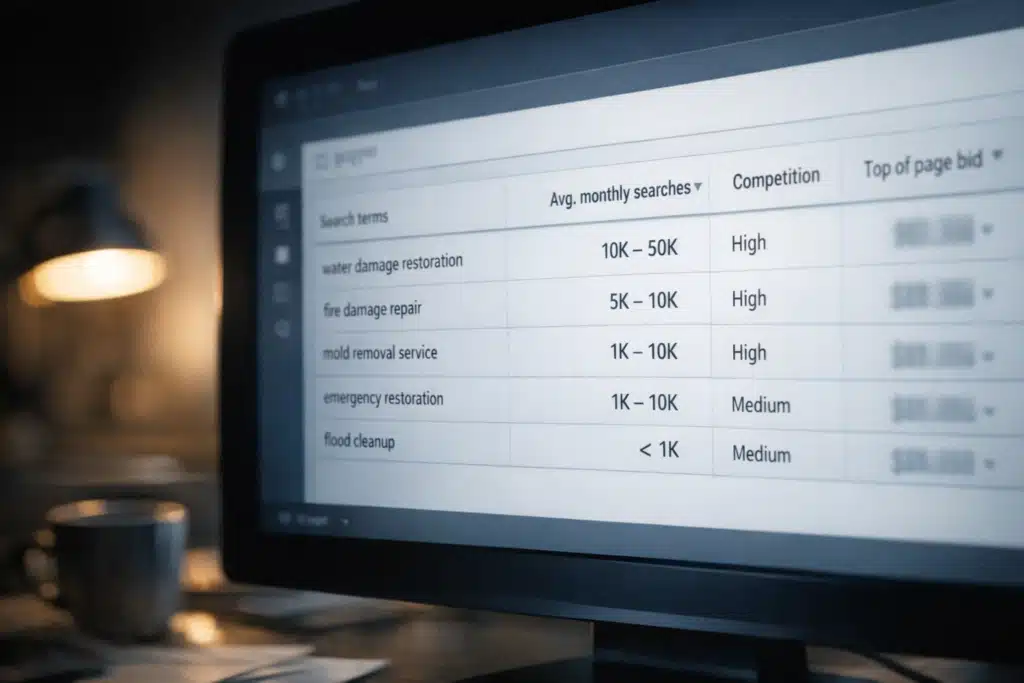
Search for terms like “mold remediation [your city]” or “fire damage restoration near me” to gauge local demand. Numbers below 100 monthly searches may indicate limited market opportunity.
Insurance Partner Feedback
Insurance adjusters provide direct insight into service gaps in your market. Call your top three insurance contacts and ask which restoration services they struggle to find reliable providers for.
Document their responses and prioritize services with the highest adjuster frustration levels. These represent your best opportunities for immediate market penetration.
Competitor Service Analysis
Review competitor websites and Google Business Profiles to identify service offerings and pricing approaches. Look for companies that list services without dedicated landing pages or detailed descriptions.
These gaps represent opportunities to capture market share through superior online presentation and faster emergency response messaging.
Google Business Profile Optimization for New Services
Your Google Business Profile drives 67% of emergency restoration leads, making service visibility critical for launch success. Add new services immediately to your profile’s services section.
Include specific service terms customers search for during emergencies. Use “water extraction” instead of “water damage services” and “smoke odor removal” rather than “fire restoration.”
Emergency Service Hours
Set your business hours to “Open 24 hours” for emergency services like water damage and fire restoration. Google prioritizes businesses with emergency availability in local search results.
Add a phone number that connects directly to an emergency response line. Customers calling during off-hours should reach a person, not voicemail.
Service-Specific Posts
Publish Google Business Profile posts highlighting your new services with emergency response messaging. Include before-and-after photos from training scenarios or equipment purchases.
Use action-oriented headlines like “24/7 Mold Emergency Response Now Available” with direct phone numbers prominently displayed.
Landing Page Strategy for Service-Specific Conversions
Each new service requires a dedicated landing page optimized for emergency conversions. Generic service pages convert 23% fewer emergency leads compared to service-specific pages.
Structure landing pages with emergency response messaging above the fold. Include response time guarantees and direct phone numbers within the first 150 pixels of the page.
Emergency Response Elements
Emergency restoration customers need immediate reassurance about response times and availability. Include these elements prominently:
- Response time guarantee: “On-site within 60 minutes” or similar commitment
- 24/7 availability: Large phone number with “Call Now” button
- Insurance direct billing: “We handle insurance paperwork”
- Equipment photos: Show professional-grade restoration equipment
- Certification badges: IICRC, EPA, or industry certifications
Local SEO Integration
Include your city name and surrounding areas in page titles and headers. Use schema markup to help Google understand your service areas and emergency availability.
Add customer review snippets specific to the new service or similar emergency situations. Social proof reduces customer hesitation during crisis decision-making.
Paid Advertising Launch Strategy
Google Ads campaigns should begin before you officially launch the new service. Start campaigns two weeks early to optimize ad performance and landing page conversions.
Set initial budgets 40% higher than projected to capture maximum impression share during the launch period. Reduce spend after the first month based on conversion data.
Emergency Keyword Targeting
Focus ad spend on high-intent emergency keywords that indicate immediate need. Target phrases like “emergency water removal” and “fire damage cleanup” rather than general terms.
Use location extensions and call extensions on all ads. Emergency customers often call directly from search results rather than visiting websites.
Seasonal Budget Adjustments
Weather patterns drive restoration service demand in predictable cycles. Increase water damage ad spend 200% during spring flood season and fire damage spend during dry summer months.
Monitor local weather forecasts and temporarily boost ad budgets 48 hours before predicted severe weather events.
Email Marketing to Existing Customers
Current customers represent your most cost-effective source of new service leads. Send targeted emails announcing new services with exclusive early-access pricing or priority scheduling.
Segment your email list by previous service types. Send mold remediation announcements to past water damage customers and reconstruction offers to fire damage clients.
Educational Content Series
Create email series that educate customers about situations requiring your new services. Send monthly emails about hidden water damage signs or fire safety prevention tips.
Include clear calls-to-action for emergency situations with dedicated phone numbers for each service type. Educational content positions your company as the expert before emergencies occur.
Insurance Partnership Development
Insurance adjusters influence 73% of restoration service selection decisions. Schedule face-to-face meetings with local adjusters to introduce new service capabilities.
Bring service capability documentation, response time commitments, and pricing structures. Adjusters appreciate contractors who simplify their claim resolution process.
Preferred Vendor Applications
Apply for preferred vendor status with insurance companies that frequently require your new services. Preferred vendor relationships generate consistent lead flow without advertising costs.
Complete applications immediately after launching new services. Processing times often exceed 90 days, delaying potential referral opportunities.
Performance Tracking and Optimization
Track new service performance separately from existing offerings to identify optimization opportunities. Use unique phone numbers for each marketing channel to measure lead source effectiveness.
Monitor cost-per-lead and conversion rates weekly during the first month. Emergency services typically show higher conversion rates but fluctuating lead volume.
Key Performance Indicators
Focus measurement efforts on metrics that directly impact revenue growth:
- Response time to inquiries: Target under 5 minutes for emergency calls
- Conversion rate by lead source: Track Google Ads, SEO, and referral performance
- Average job value: Compare new service profitability to existing offerings
- Customer acquisition cost: Include marketing spend and sales time investment
- Repeat customer rate: Measure cross-selling success to existing clients
Monthly Optimization Reviews
Conduct monthly performance reviews focusing on lead quality and conversion improvements. Adjust ad targeting, landing page messaging, and response protocols based on actual results.
Document successful tactics for future service launches. Effective restoration marketing strategies often apply across multiple service offerings with minor modifications.
Building Long-Term Service Awareness
Emergency restoration services require ongoing awareness building between crisis periods. Customers must remember your expanded capabilities when disasters strike months after your launch.
Implement year-round marketing activities that maintain service visibility without requiring emergency-level advertising budgets.
Content Marketing Strategy
Publish monthly blog content addressing common situations that require your new services. Write detailed guides about insurance claim processes and emergency response procedures.
Share content across social media platforms with local community groups where property managers and business owners gather online.
Community Engagement
Participate in local business organizations and property management associations to build referral relationships. Offer educational presentations about disaster preparation and response.
Sponsor community events during seasons when your new services experience peak demand. Spring home shows for water damage services and fall safety events for fire prevention.
Effective new service launch campaigns require coordinated marketing across multiple channels with emergency response messaging that builds immediate customer confidence. Success depends on consistent performance measurement and rapid optimization based on actual lead conversion data.
The Restoration Marketers specializes in launch strategies that generate qualified emergency leads from day one while building sustainable long-term growth. Our restoration-focused approach delivers measurable results that directly impact your bottom line. Contact us at 123-456-7890 to discuss your new service marketing strategy.
Sources
- U.S. Bureau of Labor Statistics – Administrative and Support Services
- IICRC – Standards
- Google Ads Help – Location Extensions