

Why the First 60 Seconds Decide Who Wins the Job
Restoration jobs are won on the phone, not on your website. A flooded homeowner calls three companies in five minutes and hires the first one that sounds calm and ready. A tight restoration lead response script turns that panicked caller into a booked inspection.
Most restoration owners lose jobs they already paid for. You spent money on Google Ads, ranked in the map pack, earned the click — then a rushed phone answer sends the lead to a competitor.
Below you get word-for-word scripts for water, fire, and mold calls. You also get the insurance-versus-out-of-pocket branching and a soft way to book the inspection without pressure.
What Makes Restoration Call Handling Different
Restoration calls are emotional emergencies, not price shopping. A homeowner with two inches of standing water is scared, not comparing quotes. That changes how you open every call.
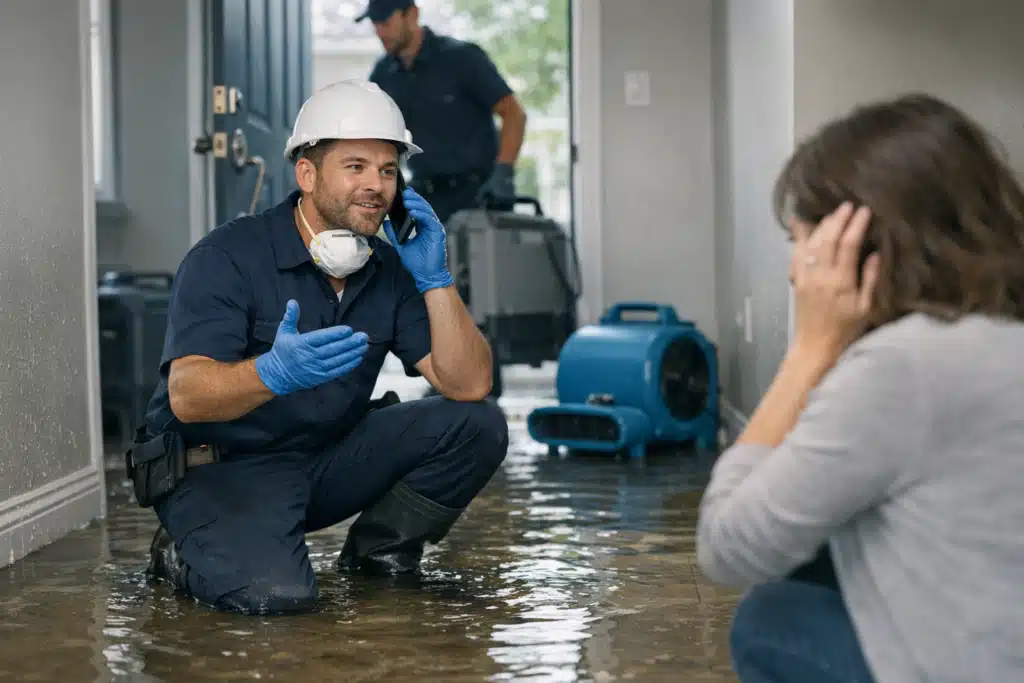
General home services training tells reps to sell features. Water damage call handling works the opposite way. Your first job is to lower the caller’s panic, then take control.
The caller wants to hear three things fast: you understand the emergency, you can come now, and you have done this before.
The 60-Second Framework Every Call Follows
Every script below uses the same four-beat structure. Memorize the beats, not the exact words.
- Acknowledge the emergency in the first sentence.
- Ask two safety questions to take control.
- Set the timeline so they stop calling competitors.
- Book the inspection before you hang up.
Answer within three rings. A caller who reaches voicemail is already dialing the next company on the list.
Water Damage Lead Response Script
Water damage is the highest-volume call for most restoration firms. It also spikes during storm season, when your phone rings faster than your team can pick up. Speed and structure matter most here.
The Opening Line
“Thanks for calling [Company]. This sounds like an emergency, so let me help you right away. Is anyone in the home in danger right now?”
That single question does two jobs. It shows you take the situation seriously and it puts you in control of the call.
The Two Safety Questions
Ask both before anything about pricing or scheduling.
- “Have you been able to shut off the water source?”
- “Is the water anywhere near electrical outlets or your breaker panel?”
If they cannot shut off the water, walk them to the main valve on the call. That one act earns trust no ad campaign can buy.
Setting the Timeline
“Here’s what happens next. I can have a technician at your door within [X] hours to stop the damage from spreading. Standing water gets worse by the hour, and mold can start within 24 to 48 hours.”
Give a real arrival window, not “as soon as we can.” Vague timing sends nervous callers back to Google.
Fire and Smoke Damage Script
Fire calls come after the trucks leave and the shock sets in. The homeowner is exhausted and displaced. Your tone shifts from urgent to steady and reassuring.
The Opening Line
“I’m so sorry this happened. You’re in the right place, and we handle fire and smoke damage every week. First, is your family safe and somewhere dry tonight?”
That opener acknowledges loss without dwelling on it. It also signals competence by naming the exact damage type.
What to Cover Next
- Confirm the fire department has cleared the property.
- Warn against re-entering to grab belongings before an assessment.
- Explain that soot becomes permanent on surfaces the longer it sits.
“Smoke residue turns acidic and starts etching metal and glass within days. The faster we assess it, the more we save.”
This creates urgency without pressure. You are protecting their belongings, not chasing a sale.
Mold Remediation Script
Mold callers are worried about health, not water. They found a spot behind the drywall and they are anxious about their kids or a pre-existing condition. Answer the fear first.
The Opening Line
“Thanks for calling. Mold is something we test and treat all the time, and it’s usually more fixable than people expect. Can you tell me where you’re seeing it and about how large the area is?”
That reframes panic into a manageable next step. It also gathers the size detail your estimator needs.
Handling the “Is It Toxic?” Question
Never diagnose mold type on the phone. Say this instead:
“I can’t identify the type over the phone, and I wouldn’t want to guess about your health. That’s exactly what our inspection tests for, and I can get someone out to sample it this week.”
Honesty about limits builds more trust than false certainty. It also books the inspection naturally.
The Insurance vs. Out-of-Pocket Branch
This question decides how the rest of every call goes. Ask it the same way every time, no matter the damage type.
“Are you planning to file this with insurance, or handle it out of pocket?”
If They Say Insurance
Reassure them the claim is routine and you work with adjusters daily.
- “We document everything the adjuster needs, so you’re not stuck proving the damage.”
- “We can start mitigation before the claim closes, which most policies cover as emergency work.”
- Never quote a total. Say the inspection determines scope, and insurance sets the rest.
If They Say Out-of-Pocket
Price sensitivity is real here, but do not lead with a number.
“Totally understandable. Every job is different, so the inspection gives you an exact figure with no surprises. The visit itself is free, and there’s no obligation to move forward.”
A free, no-obligation inspection removes the biggest reason people hang up.
How to Book the Inspection Without Sounding Pushy
The soft close assumes the appointment rather than asking for it. You offer two times, not a yes-or-no question.
“I have a technician near you this afternoon around 2, or tomorrow morning around 9. Which works better for you?”
That two-option choice moves the call forward. It feels like scheduling, not selling.
Lock the Details Before Hanging Up
- Repeat the address and confirm the spelling.
- Confirm the best callback number in case the tech runs early.
- Send a text confirmation while they are still on the line.
- Give the technician’s name so a stranger isn’t showing up unannounced.
Texting the confirmation on the call proves you follow through. It also cuts no-shows during busy storm weeks.
Track Every Call to Improve the Script
A script only works if you measure it. Record calls and review your booking rate weekly.
- Track calls answered within three rings versus missed.
- Log which calls booked an inspection and which did not.
- Tag each lead by source: Google Ads, map pack, or referral.
When you see which sources convert, you spend ad budget where it earns jobs. That connects your phone script to your marketing return.
Bringing It Together
The best restoration lead response script acknowledges the emergency, takes control with safety questions, sets a real timeline, and books the inspection with two time choices. Match your tone to the damage type, ask the insurance question early, and confirm by text before hanging up.
Your ads and rankings only pay off if the phone call converts. The Restoration Marketers helps restoration companies capture more leads and turn calls into booked jobs. Call or text us at 720‑885‑0749, or visit https://restorationmarketers.com to get started.
Sources
- U.S. Environmental Protection Agency – Mold Cleanup in Your Home
- Federal Emergency Management Agency – Flood Water Damage Cleanup
- Insurance Information Institute – Settling insurance claims after a disaster