

Why Restoration Companies Miss Community Goldmines
Most water damage and fire restoration businesses wait for disasters to drive their marketing. They spend thousands on Google Ads targeting “emergency water removal” while ignoring the community events happening every weekend in their service areas.
Local events marketing creates year-round brand awareness that pays off when emergencies strike. When a homeowner’s basement floods at 2 AM, they call the company they recognize from last month’s home and garden show.
Smart restoration companies use community events to build relationships before disasters happen. This approach transforms seasonal lead fluctuations into steady business growth through strategic community presence.
How Local Events Marketing Builds Trust Before Emergencies
Emergency restoration services face a unique marketing challenge. Customers need your services during their worst moments, often making decisions under extreme stress.
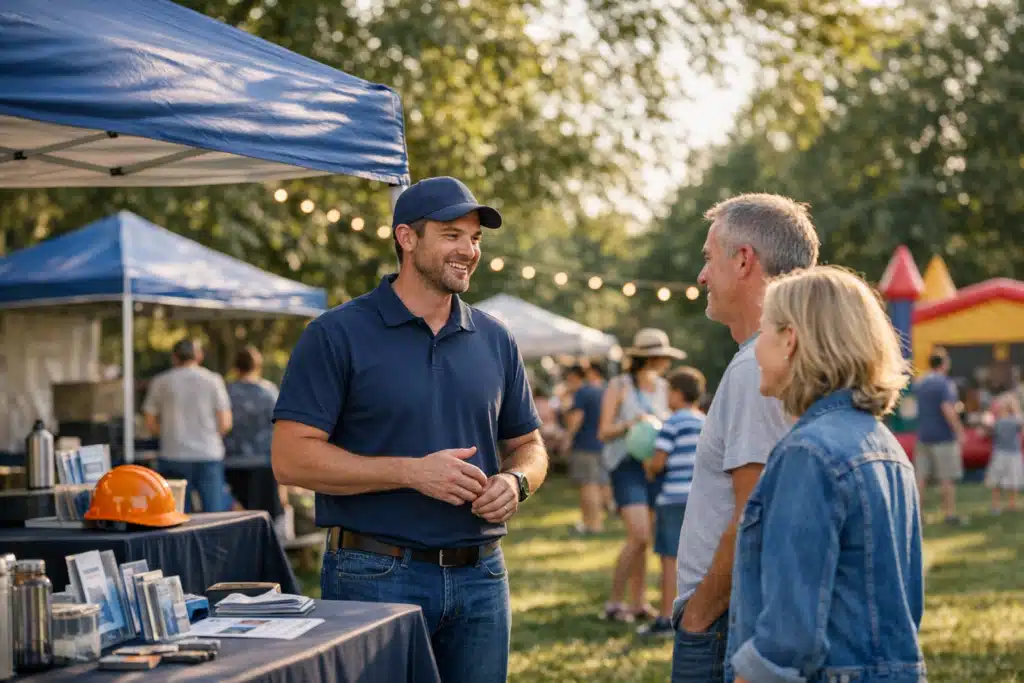
Community event participation creates familiarity that emergency situations demand. A homeowner who met your team at a local festival trusts your company more than a random Google search result.
This pre-disaster relationship building reduces customer acquisition costs significantly. Restoration companies with strong community presence convert 40% more leads than those relying solely on paid advertising.
Target High-Value Community Gatherings
Not every community event offers restoration marketing value. Focus your efforts on gatherings that attract property owners and decision-makers:
- Home and garden shows – Direct access to homeowners planning renovations
- Real estate networking events – Connect with agents who refer restoration services
- Chamber of Commerce meetings – Build relationships with insurance agents and contractors
- Neighborhood festivals – Increase brand recognition in your primary service areas
- Business expo events – Target commercial property managers and facility directors
Each event type requires different messaging and materials. Home shows emphasize prevention and maintenance, while business expos focus on emergency response capabilities.
Converting Event Contacts Into Restoration Leads
Collecting business cards at events means nothing without systematic follow-up. Most restoration companies fail to convert event contacts because they lack structured nurture campaigns.
Event leads need different messaging than emergency leads. These contacts aren’t facing immediate disasters, so aggressive sales tactics backfire quickly.
Create value-based follow-up sequences that educate rather than sell. Send seasonal maintenance tips, insurance claim guidance, and disaster preparedness checklists.
Design Event Materials That Generate Calls
Generic restoration brochures waste event opportunities. Your materials should address specific concerns that drive people to seek restoration services:
- Seasonal risk calendars – Show when different disasters typically occur locally
- Insurance claim checklists – Provide value while positioning your expertise
- Emergency contact cards – Include QR codes linking to your emergency phone line
- Before/after project galleries – Demonstrate restoration quality with visual proof
Each piece should include clear contact information and specific calls-to-action. “Call for free water damage assessment” works better than “call for more information.”
Measuring Event Marketing Return for Restoration Companies
Event marketing ROI extends beyond immediate lead generation. Restoration companies often see event benefits months after participation through increased brand recognition and referral volume.
Track both short-term and long-term metrics to understand true event value. Immediate measures include contact collection and follow-up engagement rates.
Long-term tracking reveals the real power of community presence. Monitor organic search volume for your company name and direct website traffic patterns following event participation.
Calculate True Event Investment Returns
Most restoration companies only track direct event costs like booth fees and materials. This incomplete analysis misses labor costs and opportunity expenses that affect real ROI.
Include these factors in your event marketing calculations:
- Staff time costs – Calculate hourly wages for event participation and preparation
- Material design and printing – Include both initial costs and per-event usage
- Transportation and setup – Factor in vehicle costs and equipment transport
- Follow-up campaign expenses – Include email marketing and direct mail costs
Compare these total costs against the lifetime value of customers acquired through event marketing. Factor in average job values and repeat business rates for accurate ROI calculations.
Seasonal Event Strategies for Maximum Impact
Restoration marketing effectiveness varies dramatically by season. Spring home shows generate more immediate leads, while fall business events build relationships for winter storm season.
Align your event calendar with disaster patterns in your market. Participate in pre-season events when property owners plan maintenance and upgrades.
Weather-related disasters create predictable marketing windows. Position your company at spring cleaning events before storm season and winter preparedness fairs before freeze damage periods.
Match Event Messaging to Seasonal Risks
Generic restoration messaging fails to connect with seasonal concerns. Tailor your event presentations to address specific risks property owners face during different times of year:
- Spring events – Focus on storm damage prevention and flood risk assessment
- Summer gatherings – Emphasize fire damage restoration and smoke removal services
- Fall networking – Discuss winter preparation and pipe freeze prevention
- Winter seminars – Address heating system maintenance and indoor air quality
Seasonal messaging creates relevance that generic sales pitches cannot match. Homeowners remember companies that provide timely, useful information.
Partnering with Other Vendors for Broader Reach
Solo event participation limits your networking potential and increases costs. Strategic vendor partnerships multiply your reach while reducing individual expenses.
Partner with complementary service providers who share your target market. Insurance agents, contractors, and property managers all serve property owners who might need restoration services.
Joint event participation creates cross-referral opportunities that extend beyond single events. These relationships generate leads throughout the year, not just during disaster seasons.
Build Referral Networks Through Event Partnerships
Event partnerships should create ongoing business relationships, not just cost-sharing arrangements. Focus on vendors whose clients regularly need restoration services:
- Plumbing contractors – Often discover water damage during routine service calls
- Insurance agents – Process claims that require restoration documentation
- Property management companies – Handle multiple properties with recurring maintenance needs
- HVAC technicians – Identify air quality issues that suggest hidden damage
Develop formal referral agreements with event partners. Clear expectations and mutual benefits create stronger long-term relationships than informal arrangements.
Measuring Long-Term Community Investment Returns
Event marketing benefits compound over time through increased community recognition and trust. Restoration companies with consistent event presence often see gradual increases in direct calls and website traffic.
Track community awareness through brand recognition surveys and online mention monitoring. Increased local brand awareness reduces customer acquisition costs across all marketing channels.
Monitor referral source changes as your community presence grows. Established restoration companies often see shifts from paid advertising dependence to organic referral growth through sustained event participation.
Local events marketing creates sustained business growth through community relationship building. Restoration companies that invest consistently in community presence reduce emergency-driven marketing dependence while building predictable lead flow.
Strategic event participation requires careful vendor selection, seasonal message alignment, and systematic lead nurturing. Done correctly, community marketing transforms occasional customers into long-term advocates.
Ready to build community presence that generates restoration leads year-round? The Restoration Marketers develops comprehensive local marketing strategies that connect your restoration company with property owners before emergencies strike. Contact us at 123-456-7890 to discuss community marketing opportunities in your service area.
Sources
- U.S. Census Bureau – Annual Business Survey
- FEMA – National Response Framework
- Insurance Information Institute – Property Insurance Statistics