
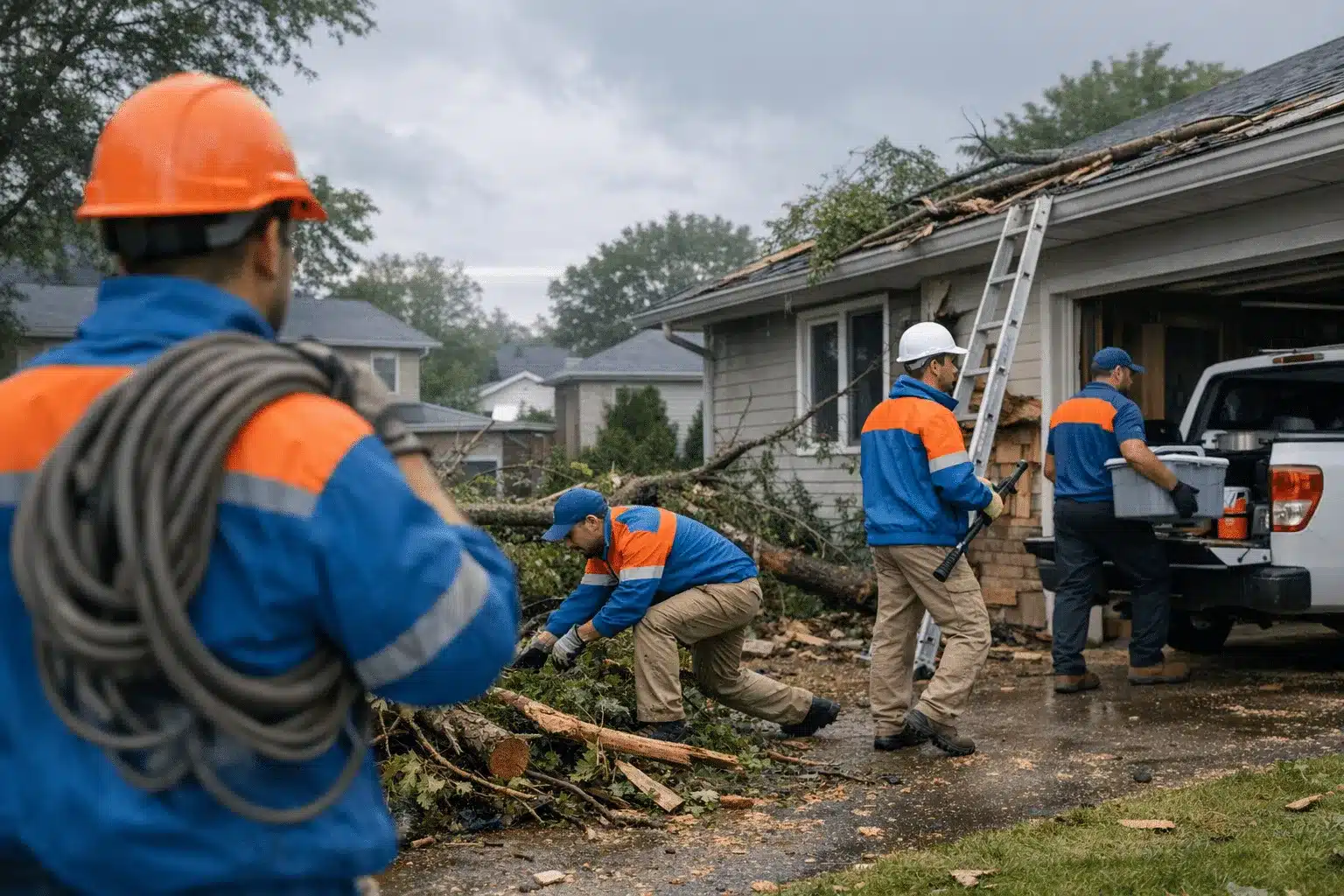
Spring Storm Season: Your Biggest Revenue Opportunity
Spring brings severe weather across the United States. This creates massive demand spikes for restoration services. Your spring storm marketing strategy determines whether you capture those high-value emergency leads or watch competitors take them.
Smart restoration companies prepare their marketing months ahead. They adjust ad budgets, optimize local search presence, and streamline lead response systems. The difference between prepared and unprepared businesses can mean hundreds of thousands in lost revenue.
This marketing checklist walks you through every step. You’ll learn how to position your restoration business for maximum visibility when storms hit your service area.
Optimize Your Local SEO Before Spring Storm Marketing Season
Local search drives 76% of emergency service leads. When water damage or storm cleanup emergencies happen, property owners search for “restoration company near me” within minutes.
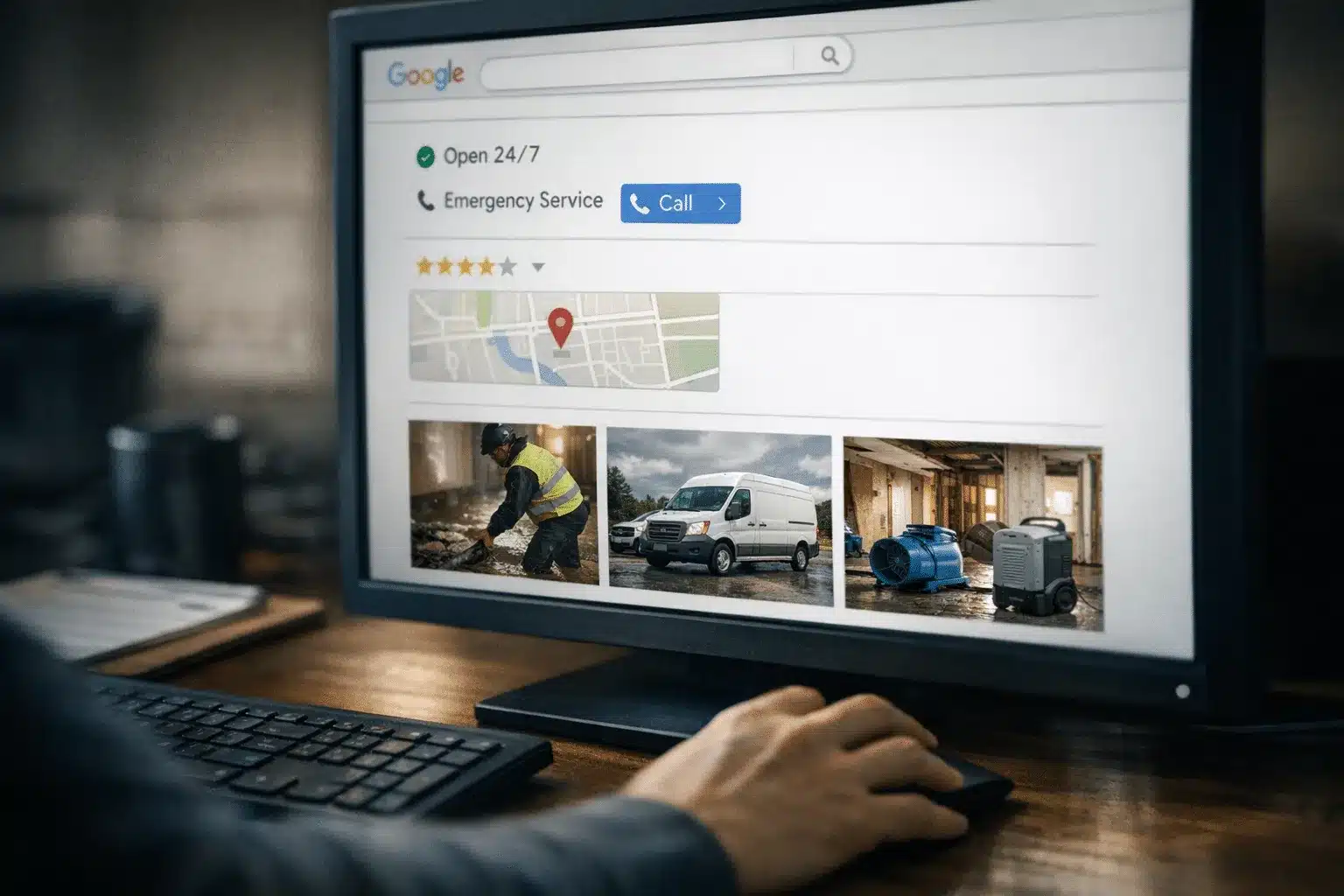
Your Google Business Profile becomes your most valuable marketing asset during storm season. Emergency searchers see your listing first if it’s properly optimized.
Google Business Profile Emergency Optimization
Start with your business hours and contact information. Set your profile to show 24/7 availability during storm season. Add emergency phone numbers that route directly to live operators.
Upload photos that show your storm response capabilities. Include images of your equipment, team in action, and before/after restoration work. Property owners want proof you can handle their emergency.
Update your business description with storm-specific keywords. Mention “emergency water damage,” “storm cleanup,” and “24/7 restoration services.” These exact phrases match what people search during emergencies.
Local Citations and Directory Listings
Emergency leads come from multiple search platforms. Yelp, Angie’s List, and HomeAdvisor all drive restoration leads during storm season.
Verify your business information across all major directories. Inconsistent phone numbers or addresses hurt your local search rankings. Use identical business names, addresses, and phone numbers everywhere.
Focus on restoration-specific directories like the Institute of Inspection, Cleaning and Restoration Certification (IICRC) member directory. These listings carry more weight for emergency restoration searches.
Scale Your Pay-Per-Click Campaigns for Storm Season
Google Ads become essential during severe weather events. Restoration lead generation costs drop when you target storm-related keywords at the right time.
Emergency restoration searches have different patterns than regular home service searches. People search at all hours, often from mobile devices, and need immediate response.
Emergency Keyword Strategy
Build separate ad campaigns for storm-related keywords. Target phrases like “emergency water extraction,” “storm damage repair,” and “flood cleanup services.” These keywords convert higher during weather events.
Set up location-based campaigns around your service areas. When storms hit specific counties or cities, increase bids for those geographic targets. Weather patterns are predictable enough to plan ahead.
Use negative keywords to avoid irrelevant clicks. Add terms like “DIY,” “tutorial,” and “prevention” to your negative keyword lists. Emergency leads don’t waste time on educational content.
Budget Allocation and Bidding
Plan to increase your ad spend by 200-400% during active storm periods. Emergency restoration keywords cost more, but they convert at much higher rates than regular searches.
Set up automated bid adjustments for severe weather conditions. Many PPC platforms allow weather-based bidding rules. When precipitation or wind speeds exceed certain levels, your bids automatically increase.
Monitor competitor activity closely during storm season. Other restoration companies increase their bids too. Set maximum cost-per-click limits to avoid budget overruns while staying competitive.
Create Storm-Ready Landing Pages
Emergency searchers need different information than regular restoration prospects. Your landing pages must address immediate concerns and drive phone calls, not email inquiries.
Speed matters more than design during emergencies. Your pages must load in under three seconds on mobile devices. Property owners won’t wait for slow-loading websites when water is actively damaging their homes.
Emergency Landing Page Elements
Put your phone number prominently at the top of every page. Use large, clickable phone number buttons that work on mobile devices. Include “Call Now” or “Emergency Line” text to make the action clear.
Show your response time commitment clearly. State “On-site within 60 minutes” or similar timeframes. Emergency prospects choose restoration companies based on speed of response.
Include trust signals specific to emergency services. Display your insurance certifications, IICRC credentials, and 24/7 availability prominently. Emergency prospects need confidence you can handle their situation.
Content That Converts Emergency Leads
Address immediate concerns first. Explain your water extraction process, temporary board-up services, or emergency tarping capabilities. Property owners need to know you can stop additional damage.
Use bullet points to list your emergency services:
- 24/7 water extraction and drying
- Emergency board-up and tarping
- Mold prevention and remediation
- Insurance claim documentation
- Temporary storage and pack-out services
Include a simple contact form as a backup to phone calls. Some property owners prefer to submit requests online, especially during late-night emergencies. Keep forms short with just name, phone, and emergency type.
Prepare Your Lead Response System
Storm season lead volume can increase by 500-1000% overnight. Your normal lead response process won’t handle this surge without preparation.
The first restoration company to respond wins 78% of emergency jobs. Your lead response time becomes your biggest competitive advantage during storms.
Phone System and Call Routing
Set up dedicated storm season phone lines that bypass normal business hour restrictions. Route emergency calls to multiple team members to ensure someone always answers.
Use call tracking numbers on all your storm season marketing campaigns. This lets you measure which campaigns generate the most emergency leads. You can adjust budgets based on actual lead performance.
Train your team on emergency call scripts. Emergency prospects ask different questions than regular restoration inquiries. They want immediate response times, insurance information, and damage prevention advice.
CRM and Lead Management
Configure your customer relationship management system for high-volume periods. Set up automated lead assignments based on geography or service type to speed response times.
Create emergency lead categories in your CRM. Storm-related leads have different follow-up requirements than regular water damage calls. Track lead sources to identify your most effective storm season campaigns.
Set up automated follow-up sequences for leads you can’t immediately serve. During peak storm periods, you may need to refer overflow leads to partner companies. Maintaining these relationships builds long-term referral opportunities.
Monitor Weather Patterns and Activate Campaigns
Successful restoration marketing requires timing your campaigns with weather events. You can’t run storm season budgets year-round, but you need to activate quickly when severe weather threatens your service areas.
Weather forecasting gives you 3-7 days advance notice for most storm systems. This timeline allows you to adjust campaigns, increase budgets, and prepare your team for lead volume surges.
Weather Monitoring Tools
Use National Weather Service alerts and commercial weather services to track severe weather in your markets. Set up automated alerts for precipitation, wind speeds, and severe weather warnings.
Monitor regional weather patterns beyond your immediate service area. Storm systems often affect multiple markets as they move across regions. You can prepare campaigns as storms approach your territory.
Track seasonal weather trends in your markets. Some regions have predictable storm seasons, while others see more random severe weather events. Historical data helps you plan marketing budgets and staffing levels.
Campaign Activation Triggers
Establish clear criteria for activating storm season campaigns. Examples include severe weather warnings, rainfall exceeding one inch per hour, or wind speeds above 40 mph.
Create activation checklists for your marketing team:
- Increase Google Ads budgets by predetermined amounts
- Activate storm-specific ad campaigns
- Update website emergency messaging
- Brief call center staff on expected volume increases
- Confirm equipment and crew availability
Set up automatic campaign rules where possible. Many advertising platforms allow weather-based automation. Your campaigns can increase budgets and activate keywords based on weather conditions without manual intervention.
Track Performance and Optimize
Storm season provides concentrated data about your marketing effectiveness. The high lead volumes and short time periods make it easier to identify which campaigns drive the most profitable business.
Track metrics that matter for restoration lead generation: cost per lead, lead-to-job conversion rates, and average job values. Emergency leads often convert at higher rates and generate larger project values than regular inquiries.
Key Metrics to Monitor
Focus on speed-to-lead metrics during storm season. Track how quickly you respond to emergency inquiries and correlate response times with conversion rates. Faster response almost always means higher conversion.
Monitor lead quality by source during storm events. Google Ads, organic search, and directory listings may perform differently during emergencies than normal periods. Allocate future budgets based on actual lead quality, not just volume.
Calculate return on ad spend for storm season campaigns separately from regular marketing metrics. Emergency restoration jobs typically have higher values, which justifies higher cost-per-click rates during storm periods.
Post-Storm Analysis and Planning
Document campaign performance within 48 hours of each storm event. Lead data becomes less reliable as time passes, especially during high-volume periods when your team focuses on service delivery.
Identify bottlenecks in your lead response process. Storm season reveals weaknesses in phone systems, staff availability, and lead management processes. Address these issues before the next weather event.
Update your storm season playbook based on each event’s results. Successful restoration marketing improves through continuous optimization of campaigns, budgets, and response processes.
Conclusion
Spring storm marketing preparation determines your restoration company’s revenue during peak season. Optimized local SEO, weather-triggered PPC campaigns, and fast lead response systems capture emergency leads when property owners need immediate help.
The restoration companies that plan ahead dominate their markets during storm season. Start preparing your campaigns now, before severe weather hits your service area.
Ready to maximize your spring storm lead generation? The Restoration Marketers specializes in seasonal campaign optimization for disaster restoration companies. Contact us at 123-456-7890 to discuss your storm season marketing strategy.