
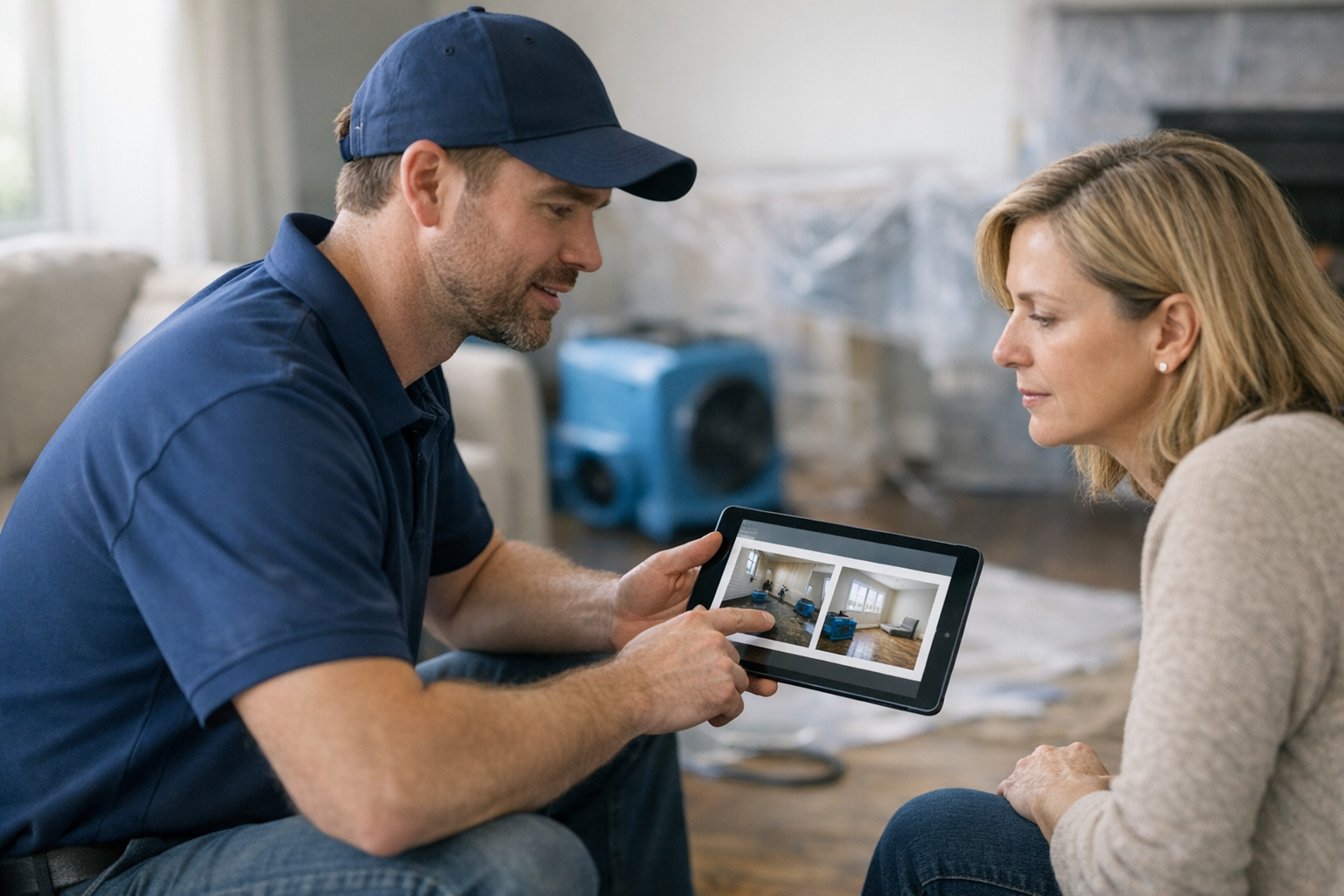
Why Client Communication Makes or Breaks Restoration Projects
Restoration companies lose 23% of potential repeat business due to poor client communication during emergency response situations. When water damage strikes at 2 AM, homeowners need updates, not silence.
The gap between initial contact and project completion spans weeks or months. Without proper communication systems, clients feel abandoned during their most vulnerable moments.
Smart restoration companies use specific tools and techniques to transform anxious property owners into loyal advocates who refer neighbors and leave five-star reviews.
Digital Client Communication Platforms That Work for Restoration
Modern restoration projects demand real-time updates across multiple communication channels. Text messaging reaches clients 40% faster than phone calls during emergencies.
Project Management Apps with Client Portals
BuilderTREND and CompanyCam let clients view progress photos and timeline updates without calling your office. Property owners can see moisture readings, equipment placement, and drying progress through secure portals.
These platforms automatically send milestone notifications when extraction completes, when drying begins, and when reconstruction starts. Clients know what happens next without wondering.
Automated Text Message Systems
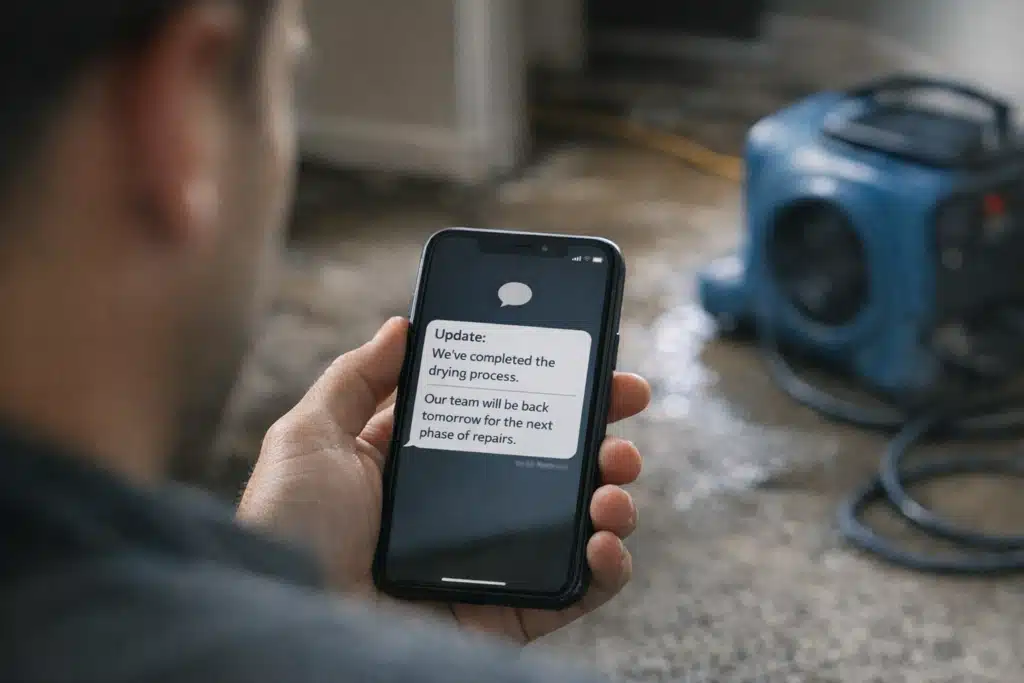
ServiceTitan and Housecall Pro send automatic arrival notifications, completion updates, and appointment reminders via SMS. Emergency restoration calls often interrupt normal schedules.
Set up automated sequences that explain your process:
- Day 1: “Extraction complete. Drying equipment installed. Expect 3-4 days of drying time.”
- Day 3: “Moisture levels decreasing. Equipment removal scheduled for Friday.”
- Day 5: “Drying complete. Reconstruction begins Monday.”
Video Documentation Tools
Restoration tools like Encircle capture damage documentation with embedded video explanations. Record yourself explaining the scope of work while filming damaged areas.
Insurance adjusters receive visual proof of necessity. Clients understand why certain repairs cost more than expected.
Communication Strategies for Different Project Phases
Emergency response communication differs completely from reconstruction phase updates. Tailor your approach to match client stress levels and information needs.
Emergency Response (First 24 Hours)
Clients experience peak anxiety during initial damage assessment. Call within 15 minutes of receiving their inquiry, even if you cannot arrive immediately.
Use this script framework: “I received your water damage call. I can arrive by [specific time] to assess and begin extraction. Here’s what happens when I arrive: [list 3 immediate steps].”
Send a text with your arrival window, truck description, and direct phone number. Panicked homeowners often miss calls but read every text message.
Active Restoration (Days 2-14)
Daily updates prevent the “what’s happening” phone calls that consume office time. Share specific progress metrics, not vague status reports.
Instead of “drying is progressing well,” send: “Moisture levels dropped from 40% to 15% today. Target is 12% or below. Equipment removal scheduled for Thursday morning.”
Reconstruction Phase (Weeks 2-8)
Weekly photo updates work better than daily texts during rebuilding. Clients see walls going up, flooring installed, and painting completed.
Schedule progress calls every Friday afternoon to discuss next week’s work and address concerns before the weekend.
Managing Insurance Communication Triangles
Restoration projects involve three parties: property owner, insurance company, and your crew. Miscommunication between any two parties stalls the entire project.
Creating Shared Documentation
Use platforms like Xactimate Mobile to generate real-time estimates that both insurers and clients can access simultaneously. No more “the adjuster said” versus “the contractor said” confusion.
Send weekly triangle updates to all parties with identical information: scope changes, timeline adjustments, and additional damage discoveries.
Proactive Scope Change Communication
Hidden damage appears in 67% of water restoration projects. Call clients immediately when you discover additional problems, before continuing work.
Explain the new damage, estimated cost impact, and timeline changes in one conversation. Follow up with written documentation to the insurance adjuster within two hours.
Client Communication Metrics That Drive Business Growth
Track specific communication KPIs to identify improvement opportunities and reduce callbacks from confused clients.
Response Time Benchmarks
Emergency calls: 15 minutes maximum initial response time. Non-emergency inquiries: 4 hours maximum response time during business hours.
Restoration tools like CallRail track these metrics automatically and send alerts when response times exceed targets.
Client Satisfaction Correlation
Companies that send daily project updates receive 31% higher satisfaction scores than those using weekly communication schedules. More frequent updates create confidence, not annoyance.
Measure update frequency against final reviews and repeat business rates to find your optimal communication cadence.
Technology Integration for Seamless Client Updates
Connect your moisture monitoring equipment to client communication platforms for automatic progress updates based on actual readings, not manual estimates.
IoT Sensor Integration
Modern dehumidifiers and air movers connect to smartphone apps that track drying progress. Share this data directly with clients through automated dashboards.
Clients see moisture levels dropping in real-time instead of wondering whether equipment is working properly.
Scheduling Integration
Connect your project management calendar to client communication tools. When you reschedule a crew visit, clients receive automatic notifications with new arrival times.
Weather delays, material shortages, and crew scheduling changes get communicated immediately instead of creating surprise delays.
Training Your Team for Consistent Client Communication
Individual crew members need communication scripts and authority levels to avoid conflicting information reaching clients during project execution.
Standard Operating Procedures
Create specific communication protocols for common situations: equipment malfunctions, additional damage discoveries, and timeline changes.
Crew leaders should know exactly when to call the office versus when to communicate directly with clients about minor issues.
Client Communication Handoffs
Document all client conversations in shared systems when transitioning between emergency response, drying, and reconstruction phases. New team members can review previous discussions.
Use standardized handoff calls where outgoing and incoming team members speak with clients together to ensure continuity.
Measuring Communication ROI
Effective client communication reduces callbacks by 40% and increases referral rates by 28%. Track these metrics to justify investment in communication technology and training.
Monitor review sentiment analysis to identify communication gaps that damage your reputation. Address negative feedback patterns before they impact your lead generation efforts.
Companies with systematic client communication approaches complete projects 15% faster than those relying on ad-hoc updates and phone tag.
Transform Client Relationships Through Strategic Communication
Restoration companies that master client communication create competitive advantages that paid advertising cannot replicate. Satisfied clients become your most effective marketing channel.
Ready to implement communication systems that boost client satisfaction and drive referrals? The Restoration Marketers helps restoration companies build comprehensive marketing strategies that include client retention and reputation management. Call 123-456-7890 to discuss how improved communication fits into your overall growth strategy.
Sources
- U.S. Small Business Administration – Customer Service Best Practices
- Bureau of Labor Statistics – Construction and Extraction Occupations
- Institute of Inspection, Cleaning and Restoration Certification – Industry Standards