
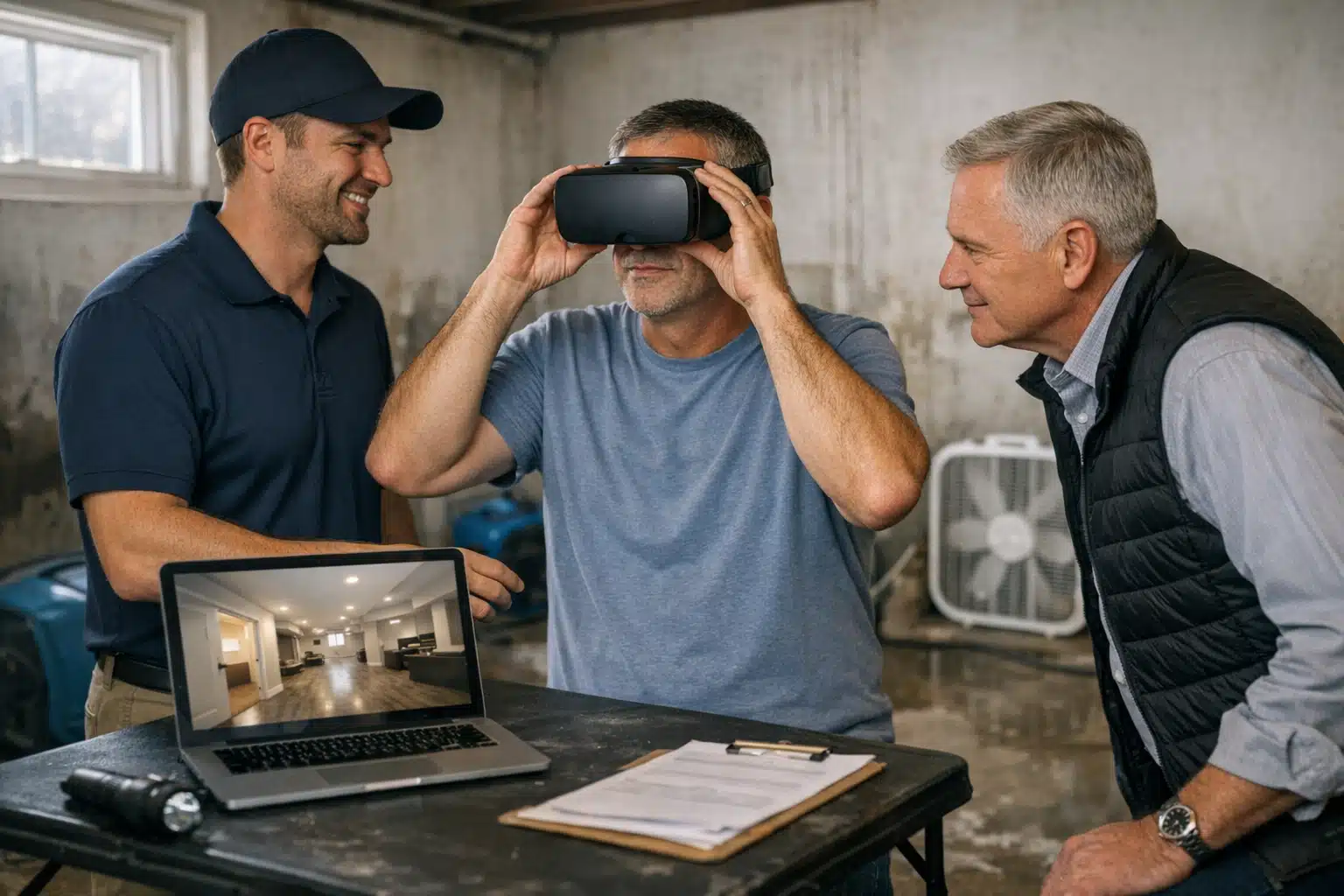
Restoration companies lose deals in the gap between a wet basement and a finished repair. Homeowners and insurance adjusters cannot picture the final result from a clipboard estimate. Virtual reality closes that gap by letting prospects walk a completed project before you lift a hammer.
This post breaks down how restoration owners can use virtual reality in sales pitches and marketing presentations. You will learn practical setups, real scenarios, and ways to measure whether the technology earns its keep.
The angle here is different from general home-services marketing. Restoration sales happen fast, under stress, and often depend on insurance approval — and VR speaks directly to that pressure.
What Virtual Reality Means for Restoration Sales
Virtual reality in restoration marketing means using headsets or 360° walkthroughs to show clients a project before, during, or after repair. Instead of describing water extraction and mold remediation, you place the viewer inside the space.
This matters because restoration buyers rarely make emotional purchases. They face damage, insurance claims, and disruption to their home. A VR walkthrough turns an abstract quote into a visible, believable result.
Why This Beats Photos and Written Estimates
Static photos flatten scope. A homeowner sees a moldy wall but cannot grasp what remediation and rebuild involve.
VR gives depth and scale. The viewer turns their head, looks up at a repaired ceiling, and sees the room restored to pre-loss condition.
- Adjusters understand the full scope of damage without a second site visit.
- Homeowners feel confident approving larger repair packages.
- Your crew aligns on the finished target from day one.
Three Restoration Scenarios Where VR Wins Jobs
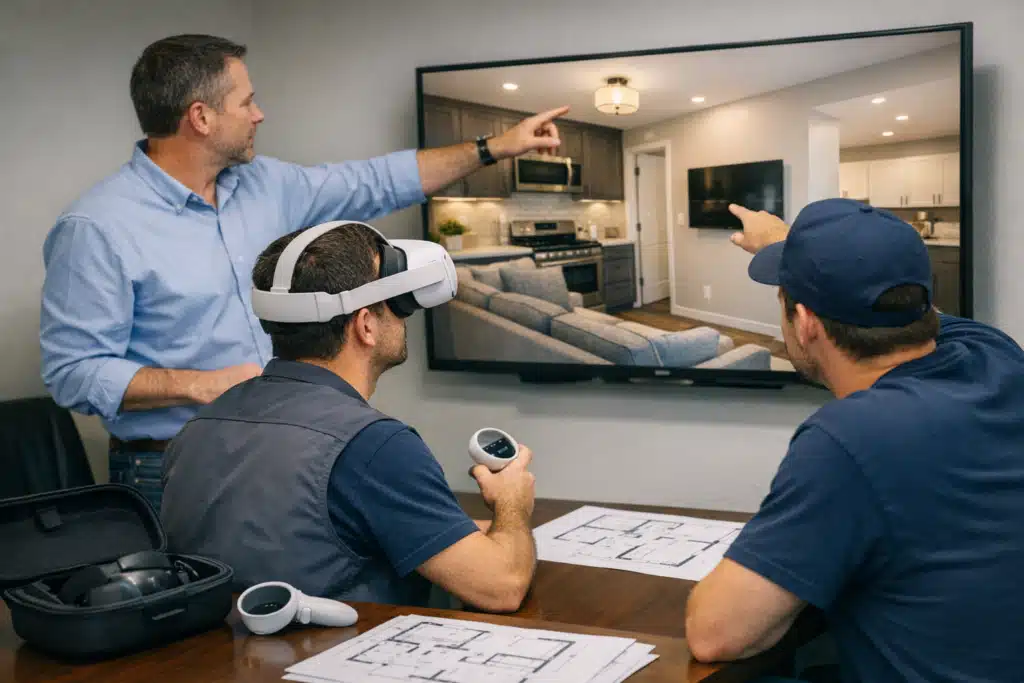
Virtual reality earns its cost in specific moments. Below are three situations restoration owners face where a headset changes the conversation.
1. Storm Season Backlog Pitches
When a hailstorm or flood hits a region, demand spikes overnight. Homeowners call five contractors and compare fast.
A 360° walkthrough of a similar past project sets you apart in minutes. During peak season, VR shortens the decision cycle when speed decides who gets the job.
Load your headset with a completed storm-restoration case from the same neighborhood. Familiarity builds trust when a customer recognizes the street or house style.
2. Insurance Adjuster Meetings
Insurance approval controls most restoration revenue. Adjusters approve what they can justify on paper.
A VR scope walkthrough documents damage room by room in one recorded session. The adjuster reviews it remotely, cutting delays that stall your cash flow.
One mitigation firm we advised recorded 360° captures at every water loss. Their supplement approval rate climbed because adjusters saw hidden damage behind walls.
3. Large Commercial Rebuilds
Commercial clients — property managers, hotels, offices — sign contracts by committee. Not everyone attends the site visit.
A VR file lets a regional manager tour the proposed rebuild from another state. VR removes the “I need to see it in person” delay that kills big commercial deals.
How to Build VR Into Your Marketing Presentations
You do not need a film crew to start. Follow these steps to add virtual reality to your sales calls without overspending.
- Buy a 360° camera. Entry models cost under $500 and capture full-room shots in seconds.
- Capture three project stages. Record the loss, the mitigation phase, and the finished rebuild for each showcase job.
- Get written client consent. Ask past customers to sign a release before using their property in pitches.
- Organize a walkthrough library. Sort captures by damage type: water, fire, mold, storm.
- Load a viewing tool. A standalone headset or a tablet-based 360° viewer both work for in-home sales.
- Match the pitch to the prospect. Show a fire client a fire rebuild, not a flooded basement.
Start with your three best completed jobs before scaling the library. A small, relevant collection beats a large, random one.
Pairing VR With Your Website and Ads
VR content works beyond the living room. Embed 360° walkthroughs on your service pages to lift time-on-page and conversions.
Use short clips from the captures as social proof in paid campaigns. A ten-second before-and-after reel stops the scroll during storm-season ad pushes.
This is where marketing presentations connect to lead generation. The same footage that closes a kitchen-table sale also fuels your Google and Facebook ads.
Measuring Whether VR Pays Off
Technology only matters if it moves revenue. Track these numbers before and after adding virtual reality to your pitches.
- Close rate on in-home estimates that use VR versus those that do not.
- Average job size — VR often lifts approval of full rebuild packages.
- Insurance supplement approval rate tied to recorded 360° damage scopes.
- Sales cycle length from first visit to signed contract.
Run a 90-day test. Have half your estimators use VR and half use standard pitches, then compare close rates.
If VR raises your close rate even five points, the camera pays for itself in one job.
Common Mistakes to Avoid
Overloading the headset with too many walkthroughs confuses buyers. Keep each pitch focused on one relevant project.
Skipping client consent creates legal risk. Never show a past customer’s home without a signed release.
Treating VR as a gimmick backfires. Tie every walkthrough to a clear point about scope, quality, or timeline.
How VR Supports Reputation Recovery
Restoration companies live and die by reviews. One angry customer after a delayed job can sink your local ranking.
VR documentation protects you in disputes. A recorded 360° scope proves the damage you found and the work you completed.
Time-stamped VR captures become evidence that defends your reputation and your invoices. That record helps when a homeowner or carrier questions your scope later.
Conclusion
Virtual reality helps restoration owners close faster, justify larger scopes, and speed insurance approvals. Start small with three showcase projects, track your close rate, and pair the footage with your website and ads. Restoration marketing rewards those who make the invisible visible before the work begins.
Want help building VR-driven pitches and lead campaigns for your restoration company? Call or text The Restoration Marketers at 720‑885‑0749, or visit https://restorationmarketers.com.