
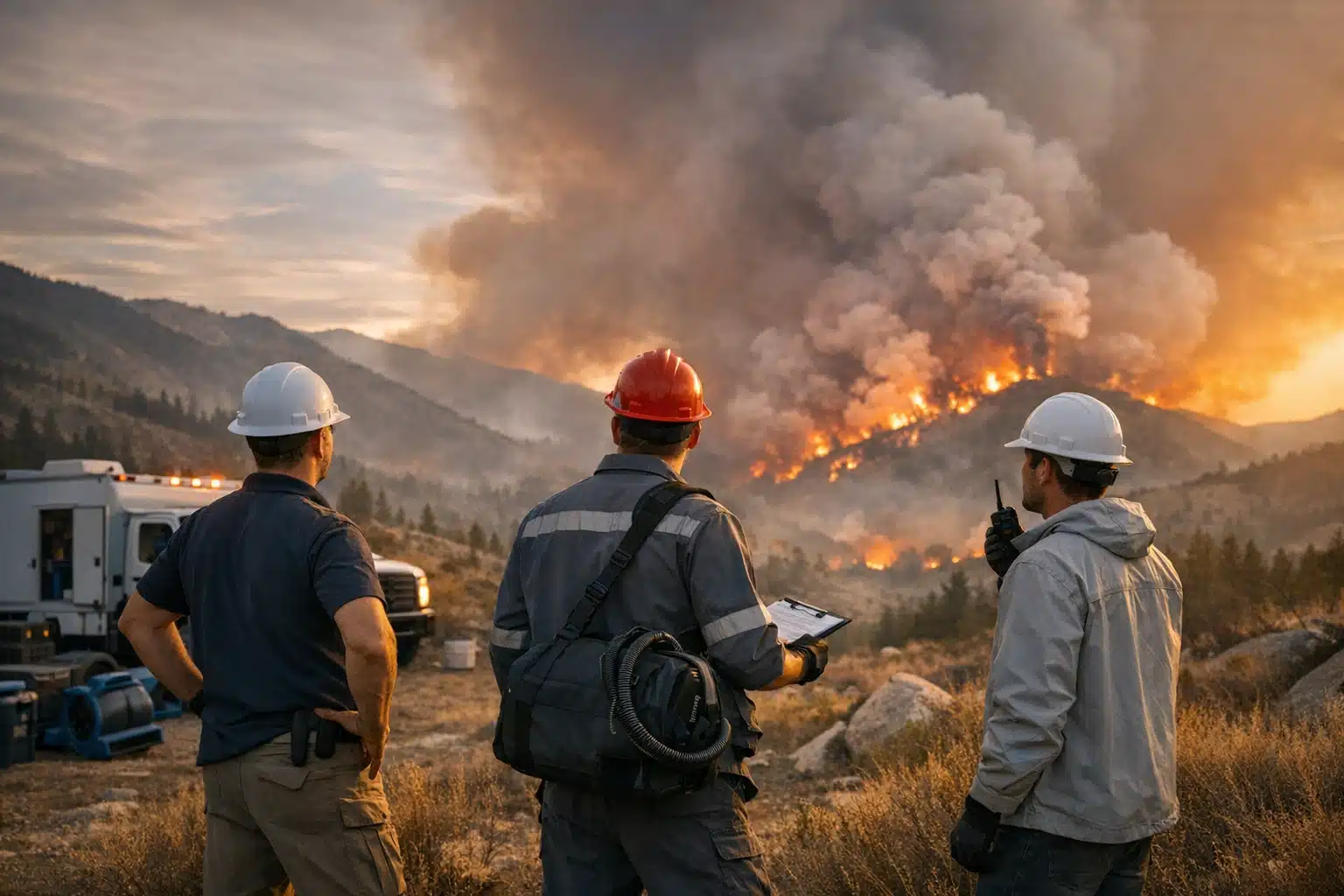
Why Wildfire Season Demands Marketing Preparation
Restoration companies in fire-prone regions see a 400% spike in service calls during wildfire season. Your competitors are already updating their Google Ads campaigns and optimizing their emergency response marketing.
Wildfire season preparation starts months before the first spark. Smart restoration business owners know that marketing readiness determines whether they capture emergency leads or watch them flow to better-prepared competitors.
This guide shows you how to position your restoration company for maximum visibility when wildfire damage creates urgent demand for your services.
Optimize Your Google Business Profile for Emergency Searches
Emergency searchers use different keywords than typical restoration customers. They search for “smoke damage repair near me” at 2 AM, not “fire restoration services” during business hours.

Update your Google Business Profile with wildfire-specific services. Add “smoke damage cleanup,” “fire damage restoration,” and “emergency board-up services” to your service list.
Post weekly updates during fire season. Share before-and-after photos of smoke damage projects, team availability updates, and emergency response times.
Emergency Hours and Response Time
List your 24-hour emergency availability prominently. Homeowners dealing with fire damage need immediate confirmation that help is available.
Add your average response time to your business description. “Emergency response within 2 hours” gives anxious property owners the specific information they need.
Enable Google Business messaging. Many fire victims will text before calling, especially late at night when fires typically spread.
Adjust Your Google Ads Strategy for Wildfire Season Preparation
Wildfire-related searches cost 60% more per click than standard restoration keywords. Budget accordingly by reducing spend on non-emergency services during peak fire season.
Create dedicated ad groups for fire-specific services. Separate campaigns allow you to control budgets and adjust bids based on fire danger levels in your area.
High-Intent Wildfire Keywords
Target these specific search terms that indicate immediate need:
- “Emergency smoke removal [city name]”
- “Fire damage cleanup tonight”
- “Smoke smell removal urgent”
- “Board up services fire damage”
- “Insurance fire damage restoration”
Avoid broad terms like “fire restoration” that attract tire-kickers and drain your budget during high-demand periods.
Location-Based Bid Adjustments
Monitor fire maps and adjust your geographic bid modifiers daily. Increase bids by 50-75% for areas with active fires or high fire danger ratings.
Expand your service radius during major fire events. Properties 20-30 miles from active fires often need smoke damage assessment and cleanup.
Prepare Landing Pages for Fire Damage Leads
Fire damage victims convert differently than water damage leads. They need immediate reassurance about availability, insurance coordination, and emergency response.
Create a dedicated wildfire landing page that loads in under 3 seconds. Anxious homeowners will abandon slow pages and call your competitor instead.
Essential Landing Page Elements
Lead with your emergency response time in the headline. “24/7 Fire Damage Response – On-Site Within 2 Hours” addresses their primary concern immediately.
Include a prominent phone number that bypasses your main line. Fire damage calls need immediate human contact, not automated phone trees.
Add insurance logos and certification badges above the fold. Homeowners dealing with fire damage worry about coverage and contractor legitimacy more than typical restoration customers.
Build Strategic Partnerships Before Fire Season
Insurance adjusters handling fire claims work with restoration companies they trust for quick response. Build these relationships during the off-season, not when fires are active.
Contact local adjusters who handle fire claims in January and February. Offer to provide emergency response time commitments and detailed documentation standards.
Property Management Company Outreach
Large apartment complexes and commercial properties need immediate board-up services during fire events. Property managers make these decisions based on existing vendor relationships.
Meet with property managers in March and April. Offer 24-hour response guarantees and specific protocols for multiple-unit damage scenarios.
Provide emergency contact cards with your direct line. Property managers keep these cards for crisis situations when they need immediate vendor response.
Monitor Local Fire Conditions for Marketing Timing
Red flag warnings and fire danger ratings directly impact search volume for restoration services. Adjust your marketing spend based on actual fire conditions, not calendar dates.
Subscribe to local fire department alerts and weather service notifications. Increase your Google Ads budget 24-48 hours before predicted high fire danger days.
Proactive Social Media Messaging
Post fire safety reminders when conditions are dangerous. These posts position your restoration business as a community resource while keeping your services top-of-mind.
Share evacuation preparation tips that include documentation advice. Homeowners who follow your preparation guidance will remember your company if damage occurs.
Avoid posting promotional content during active fire emergencies. Focus on helpful information and availability updates instead.
Inventory Management for Rapid Response
Fire damage projects require specific equipment and materials that differ from water damage jobs. Stock these items before fire season begins, not after demand spikes.
Secure extra HEPA filters, ozone generators, and thermal foggers in February and March. Suppliers run short during active fire periods when multiple contractors compete for limited inventory.
Staffing for Emergency Demand
Identify temporary staffing sources before you need them. Fire damage creates sudden demand spikes that require immediate crew expansion.
Cross-train existing employees on fire damage protocols. Water damage technicians need different skills for smoke remediation and fire damage assessment.
Establish overtime policies and emergency pay rates in advance. Clear compensation structures help you secure staff during high-demand periods when competitors are recruiting.
Track and Measure Fire Season Performance
Monitor cost-per-lead separately for fire damage campaigns. These metrics help you optimize spending for next year’s wildfire season preparation.
Track response time from initial call to on-site arrival. Fire damage customers expect faster response than standard restoration jobs, and reviews will reflect any delays.
Lead Source Analysis
Document how fire damage leads find your company differently than other restoration customers. This data guides future marketing budget allocation between Google Ads, SEO, and partnership development.
Record which keywords and ad copy generate the highest-quality fire damage leads. Use this information to refine campaigns for next season.
Measure customer lifetime value for fire damage clients versus other restoration customers. Fire damage often includes contents cleaning and reconstruction services that increase total project value.
Insurance Coordination and Documentation
Fire damage insurance claims require more documentation than water damage claims. Prepare systems and processes that demonstrate thoroughness to adjusters and homeowners.
Create fire damage assessment templates that exceed insurance requirements. Detailed documentation helps claims process faster and positions your company as the preferred restoration partner.
Train your estimators on fire damage scope considerations that differ from water damage. Smoke travels differently than water and requires different remediation approaches.
Conclusion
Wildfire season preparation determines whether your restoration business captures emergency leads or loses them to better-prepared competitors. Start optimizing your Google Ads campaigns, updating your emergency response protocols, and building adjuster relationships months before fire season begins.
The restoration companies that dominate fire damage work prepare their marketing systems before the first spark. They understand that emergency customers search differently, convert faster, and require immediate response capabilities.
Ready to prepare your restoration business marketing for wildfire season? The Restoration Marketers specializes in emergency response marketing strategies that help restoration companies capture more fire damage leads. Contact us at 123-456-7890 to discuss your wildfire season marketing preparation.