

Most restoration owners lose jobs before the phone rings. A homeowner with a flooded basement calls three companies in eight minutes. Whoever answers first, ranks highest, and shows the most Google reviews wins the job. Building a real competitive edge in the restoration business means controlling all three of those moments.
This post breaks down the exact marketing moves that separate busy restoration companies from ones fighting for scraps. You will learn how to time ad spend around storm season, how to answer emergency searches faster than rivals, and how to track which leads pay off.
Winning is less about spending more and more about being visible at the exact second disaster strikes.
Why the Restoration Market Rewards Speed Over Size
Restoration marketing works differently than plumbing or roofing. Your customers rarely plan. They search in a panic, at odd hours, with water rising or smoke still in the air.
That urgency changes everything about how you compete. A general contractor can nurture a lead for two weeks. A water damage caller decides in ten minutes.
The restoration company that responds within five minutes converts up to 8x more leads than one that waits an hour. Speed is your first differentiator, and it costs nothing to fix.
The Insurance Referral Trap
Many restoration owners lean hard on insurance adjuster referrals. That feels safe until a carrier changes its preferred vendor list overnight.
Owners who depend on one referral pipeline have no control over lead flow. A competitive edge comes from owning direct-to-homeowner demand you generate yourself.
Build your own lead channels so a single adjuster relationship never decides your revenue.
How Local SEO Builds a Competitive Edge for Water Damage Leads
Local SEO for restoration companies means ranking for emergency searches in your service area before competitors do. Think “water damage restoration near me” or “24 hour flood cleanup [city].”
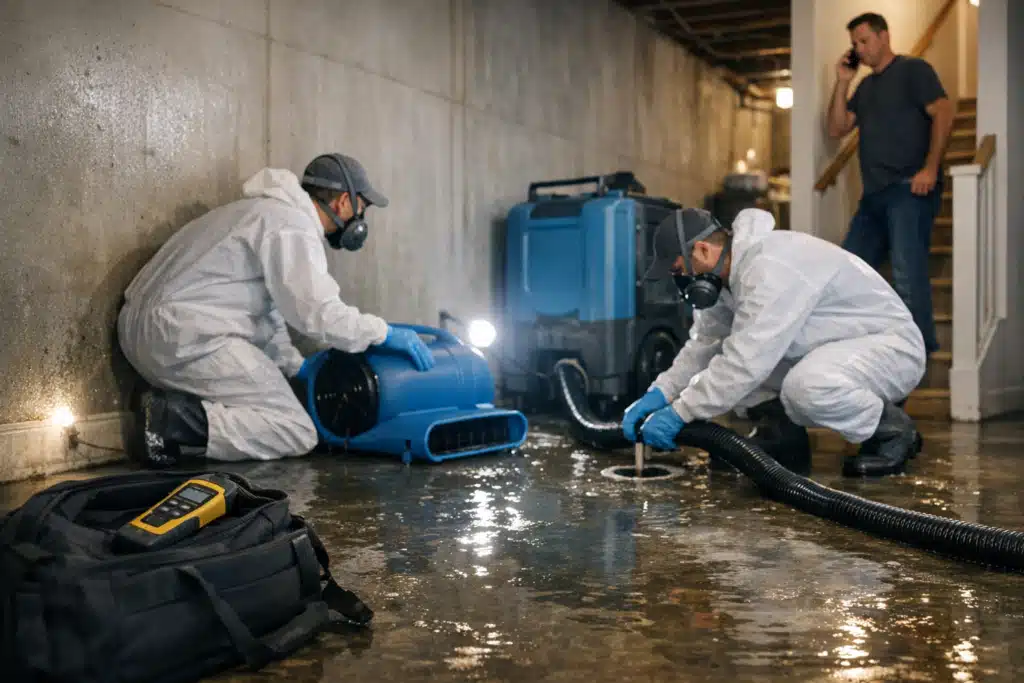
These searches carry buyer intent at its peak. The person typing them needs help right now, not next week.
Optimizing Your Google Business Profile for Emergencies
Your Google Business Profile decides whether you appear in the map pack. That three-result box captures most emergency clicks.
Follow these steps to make yours compete:
- Set your primary category to “Water Damage Restoration Service” or “Fire Damage Restoration Service.”
- List every service area city individually, not just your headquarters.
- Mark your hours as 24/7 if you answer emergency calls overnight.
- Post weekly with real job photos, before-and-after shots, and location tags.
- Reply to every review within 24 hours, positive or negative.
Restoration firms with 50+ recent reviews and 4.7+ stars dominate the map pack in most mid-size markets.
Building Location Pages That Rank
One homepage cannot rank you in twelve cities. Each service area needs its own page with local proof.
Name the neighborhoods you serve. Reference local storm events, like the hail season that hit that county last spring.
Pages with real local detail outrank thin, copy-pasted city pages every time.
Timing Paid Ads Around Storm Season and Demand Spikes
Restoration demand is not steady. It spikes with freezes, floods, hurricanes, and burst-pipe season.
Spending the same ad budget in July and January wastes money. A competitive edge comes from shifting dollars toward moments of peak search volume.
How to Budget Google Ads by Season
Match your spend to the weather and calendar in your region. Here is a practical framework:
- Winter freeze months: Raise budgets for “frozen pipe” and “burst pipe” keywords in cold climates.
- Spring and summer storms: Push “storm damage” and “water extraction” campaigns when forecasts turn severe.
- Wildfire season: Fund “smoke damage” and “fire cleanup” ads in high-risk zones.
- Slow stretches: Shift budget to mold remediation and reconstruction, which stay steady year-round.
Set rules to increase bids automatically when a major weather event hits your service area.
Google Ads vs Local SEO for Restoration
Owners frequently ask which channel to fund first. Both matter, but they serve different moments.
- Google Ads: Instant visibility, ideal for storm spikes and new markets. You pay per click and stop when budget runs out.
- Local SEO: Slower to build, but compounds over time. Once you rank, leads arrive without per-click cost.
Fund ads for immediate cash flow, then reinvest into SEO for lead flow that lasts.
Turning Emergency Clicks Into Booked Jobs
Traffic means nothing if the caller bounces. Restoration landing pages must convert panicked visitors in seconds.
Landing Page Rules for Emergency Calls
Your page has one job: get the phone to ring. Strip out anything that slows that down.
- Place a click-to-call button in the top corner, visible without scrolling.
- State your response time clearly, like “Crews on-site within 60 minutes.”
- Show your IICRC certification and license number for trust.
- Add two or three recent reviews near the call button.
- Cut long forms. A panicked homeowner will not fill out ten fields.
A page that loads in under three seconds and shows a phone number up top beats a prettier, slower competitor.
Answering the Phone Like It Matters
Marketing dies at a missed call. Every unanswered ring hands the job to a rival.
Route after-hours calls to a live answering service trained on restoration intake. Never send emergency callers to voicemail.
Track your missed-call rate weekly. It is the most expensive leak in most restoration businesses.
Tracking Leads by Source to Protect Your Budget
You cannot build a competitive edge on guesses. Knowing which channel produces paying jobs decides where to spend next.
Set up call tracking numbers for each source: Google Ads, Google Business Profile, and organic search. Tag every lead in your CRM by origin.
What to Measure Every Month
- Cost per lead by channel: Know what a water damage lead costs from ads versus SEO.
- Cost per booked job: Leads matter less than closed work.
- Average job value by source: Some channels bring bigger reconstruction jobs.
- Response time per lead: Slow follow-up kills conversion.
Kill the channels that drain money and double down on the ones booking real jobs.
Reputation Recovery After Negative Reviews
One angry review can cost you a month of leads. Restoration jobs run hot because customers are stressed and money is tight.
A steady review-generation habit protects you. Ask every satisfied customer for a review the day the job wraps.
Handling a Bad Review the Right Way
Respond publicly, calmly, and with facts. Owning a mistake in a measured reply builds more trust than a spotless record.
Companies that reply professionally to criticism win back on-the-fence buyers reading those reviews.
Putting Your Competitive Edge Into Motion
A real competitive edge in restoration comes from speed, local visibility, and seasonally timed ad spend. Answer faster, rank in the map pack, and track every lead by source to protect your budget.
The restoration companies winning right now are the ones treating marketing as an emergency system, not an afterthought.
The Restoration Marketers builds these systems for restoration firms every day. Call or text us at 720‑885‑0749, or visit https://restorationmarketers.com to get more booked jobs from your local market.
Sources
- IICRC – Institute of Inspection Cleaning and Restoration Certification
- Google – Improve Your Local Ranking on Google
- Ready.gov – Floods Preparedness and Response