

Storm season can flood your phone with calls one week and leave it silent the next. A single hail event in Denver can generate 200+ emergency water damage searches in 48 hours. Restoration owners who lack a crisis management strategy lose those leads to competitors who answer faster.
This post breaks down how to prepare your marketing before summer disasters strike. You will learn how to time campaigns, pre-write communication, and route leads before the first tornado warning.
The goal is straightforward: capture more calls when demand spikes, and protect your reputation when the pressure is on.
What a Crisis Management Strategy Means for Restoration Marketing
A crisis management strategy for restoration companies means having pre-built messaging, ad campaigns, and lead systems ready before a disaster hits. It is the difference between scrambling during a storm and responding within minutes.
General home service marketing runs on steady, year-round demand. Restoration marketing runs on unpredictable spikes tied to weather events.
Your marketing must be armed months before the first summer storm, not built during it.
Why Summer Disasters Demand Different Planning
Summer disasters hit fast and cluster geographically. A microburst can damage 40 homes on the same three streets in one afternoon.
That means your ads, phone lines, and follow-up must handle a surge in one ZIP code overnight. Waiting to react costs you the first-mover advantage.
- Hail and wind storms spike roof and water damage calls
- Flash flooding drives basement and mold remediation searches
- Heat and humidity raise mold growth calls in weeks, not months
- Wildfire smoke increases air quality and soot cleanup requests
How to Build Your Summer Crisis Communication Plan
A crisis communication plan is a set of pre-written messages and response rules you activate the moment a storm hits your service area. It removes guesswork when your team is busy on-site.
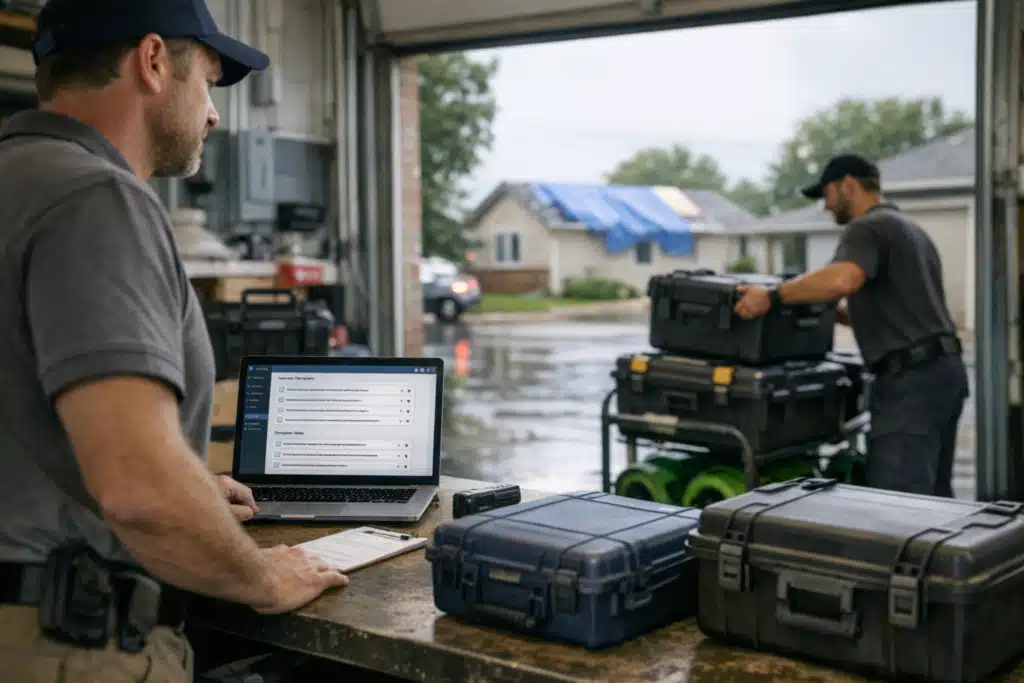
Write these assets in spring, before your first busy week. Store them where anyone on your team can grab them.
- Pre-written homeowner scripts for phone, text, and email intake
- Emergency social media posts ready to publish with one edit
- Google Business Profile updates announcing storm response availability
- Ad copy variants for hail, flood, and wind events
- Insurance-friendly messaging that references claim documentation
Draft Storm-Specific Ad Copy in Advance
Generic ads underperform during a specific event. A homeowner searching after a hailstorm wants to see the word “hail,” not “water damage.”
Prepare three to five ad variants matched to summer disaster types. When a storm hits, you swap in the right one within an hour.
Match your ad language to the exact disaster people just lived through.
Set Up Emergency Google Business Profile Posts
Your Google Business Profile is where local homeowners find you first. During a crisis, a fresh post signals you are open and responding.
Write a post like: “24/7 storm damage response active in Aurora after last night’s hail.” Update it the same morning the storm passes.
How Local SEO Prepares You for Summer Disaster Spikes
Local SEO for restoration companies means ranking in map results for emergency searches in your target ZIP codes. Before summer, your rankings decide who captures the surge.
You cannot build authority overnight. The company ranking on day one of a storm did the work in the months prior.
Optimize for Emergency Search Terms Now
Homeowners in crisis search with urgent, location-based phrases. Build pages that answer those exact queries before the season starts.
- “Emergency water extraction [city]”
- “Storm damage cleanup near me”
- “Flooded basement help [city]”
- “24 hour mold removal [city]”
Pages built in April rank when storms hit in July.
Collect Reviews Before You Need Them
Review volume drives map rankings and homeowner trust during a crisis. A company with 150 reviews wins calls over one with 12.
Ask every winter and spring customer for a review. Enter storm season with momentum, not a blank profile.
How to Route and Track Leads During a Surge
Lead routing during a crisis means every call, form, and text reaches a live person fast. A missed call during a storm is a lost job and a bad review waiting to happen.
Homeowners in a flooded basement call three companies. The one who answers first usually wins.
Set Response-Time Rules Your Team Follows
Fast response is your strongest competitive edge during summer disasters. Define exact rules before the busy week begins.
- Answer every call within three rings, day or night
- Reply to web forms within five minutes
- Send a text confirmation the moment a lead arrives
- Assign a backup person when call volume spikes
Track Every Lead by Source
You need to know which storms and channels produce paying jobs. Without tracking, you cannot decide where to spend during the next event.
Use call tracking numbers per campaign and per platform. Tag leads by disaster type to see which events drive revenue.
What you cannot measure, you cannot scale next season.
How to Protect Your Reputation After a Summer Crisis
Reputation management during a crisis means responding to reviews and questions faster than complaints spread. High demand raises the odds of a scheduling slip or unhappy homeowner.
One angry review after a busy storm week can sink your rankings for months. Plan your response before it happens.
Handle Negative Reviews Within Hours
A calm, specific reply to a bad review protects future callers’ trust. Address the concern, note the fix, and invite an offline conversation.
Assign one person to monitor reviews daily during peak weeks. Speed matters more than perfect wording.
Turn Storm Jobs Into Fresh Reviews
Every completed storm job is a chance to add a review before the season ends. Send a request the day after the work passes final inspection.
Reviews earned during summer fuel your rankings all fall and winter.
Budgeting Your Ad Spend Around Storm Season
Seasonal budgeting means holding ad reserves for the weeks when demand spikes, not spreading spend evenly. A flat monthly budget wastes money in quiet weeks and runs dry during storms.
Set aside a surge fund you can deploy within 24 hours of a major event. When a hailstorm hits, you outbid competitors while intent is highest.
- Keep a lean baseline budget in slow weeks
- Reserve 30 to 40 percent for storm-triggered spikes
- Raise bids on emergency terms during active events
- Pause spend once your schedule fills to protect margins
Conclusion
Effective restoration marketing starts with a crisis management strategy built before summer disasters arrive. Prepare your ads, local SEO, lead routing, and reviews in spring, then respond fast when storms hit. The companies that plan ahead capture the surge while others scramble.
The Restoration Marketers helps restoration companies build storm-ready campaigns that convert emergency searches into booked jobs. Call or text us at 720‑885‑0749, or visit https://restorationmarketers.com to prepare for your busiest season.
Sources
- National Weather Service – Weather Safety
- FEMA – Hazard Mitigation Planning
- Google Business Profile Help – Improve Your Local Ranking