

Most restoration owners chase insurance adjuster referrals restoration work the same way: a coffee drop-off, a business card, and a hopeful follow-up call. Then a storm hits, the adjuster gets buried in claims, and your name gets lost in the pile.
The problem is rarely your field work. The problem is that adjusters have no fast way to verify you before they send a homeowner your direction. This post shows you how to build an online proof stack that answers their questions before they ask.
You will learn the exact pages, documentation standards, and response commitments that turn a one-time job into repeat referrals — without paying for a single lead list.
Why Adjusters Stop Referring (Even When Your Work Is Good)
An adjuster’s reputation rides on every contractor they recommend. Send a homeowner to a company that misses a deadline or botches documentation, and that adjuster hears about it from their manager.
They are not avoiding you because your restoration work is weak. They avoid risk. A referral to an unverified vendor is a risk they cannot easily justify.
Adjusters refer companies they can defend in writing. Your online presence either gives them that proof or leaves them guessing.
What Adjusters Actually Check Before Referring
Based on how carriers vet vendor networks, adjusters look for a short list of signals fast:
- Proof of active licensing and insurance coverage
- Evidence you follow carrier documentation standards
- A clear, stated response time for emergency dispatch
- Photo and scope documentation that matches claim requirements
- Commercial capability for larger loss jobs
If your website skips any of these, the adjuster assumes the worst and moves to the next contractor.
The Online Proof Stack That Wins Insurance Adjuster Referrals Restoration Teams Keep
An online proof stack is a set of specific web pages built to answer an adjuster’s verification questions in under two minutes. It replaces the awkward “trust me” conversation with documented evidence.
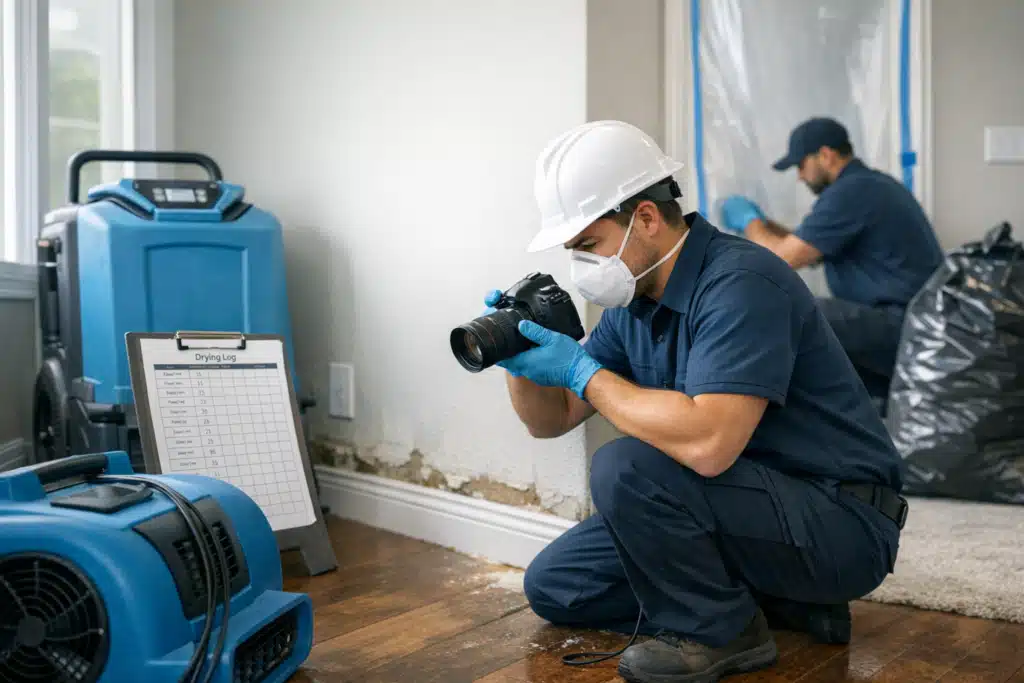
This is where restoration company credibility online either opens doors or closes them. Below are the five assets that carry the most weight.
1. A License and Coverage Proof Page
Build one page that lists your license numbers, general liability limits, and workers’ comp status. Add your IICRC certifications and any carrier-approved vendor memberships.
Include a downloadable certificate of insurance or a note that a current COI is available on request. An adjuster who finds this page can green-light you without a phone call.
One verification page removes the single biggest reason adjusters hesitate.
2. A Documentation Standards Page
Carriers reject claims when scope notes and moisture readings are sloppy. Publish a page that spells out how you document each loss.
Describe your moisture mapping method, drying logs, and daily photo cadence. State that you produce Xactimate-ready scopes and equipment logs.
This tells an adjuster your paperwork will not create rework on their desk. That single promise makes you easy to recommend.
3. A Response SLA Page
A response SLA page states your guaranteed dispatch times for emergency water and fire loss. It converts vague claims into a measurable commitment.
Use concrete numbers an adjuster can quote to a homeowner:
- Phone answered live 24/7 — no voicemail during storm surges
- On-site within 60–90 minutes for emergency mitigation
- Drying equipment placed same day to limit secondary damage
- Initial scope and photos to the carrier within 24 hours
When an adjuster knows you move fast, they stop worrying about mold complaints and angry homeowner calls.
4. A Photo and Scope Protocol Page
Photo standards separate contractors who get paid quickly from those who fight for every dollar. Show the adjuster you already work the way carriers want.
Outline how you shoot before, during, and after images with timestamps. Note that you label rooms, capture moisture readings in frame, and store files for claim audits.
Clean photo protocols cut claim disputes and make adjusters look good to their supervisors.
5. Commercial Capability Signals
Adjusters handling large losses need contractors who can staff a 20,000-square-foot warehouse flood. Prove you can scale.
List your air mover and dehumidifier counts, crew size, and past commercial project types. Add a case study describing a specific large-loss job you completed on schedule.
This signals you can absorb the big claims that make an adjuster’s quarter easier.
How to Connect the Proof Stack to Real Referral Conversations
These pages only work when adjusters find them at the right moment. Do not leave that to chance.
When you meet an adjuster, hand them a card that links straight to your license and coverage page. Follow up with a text that includes the same link.
Make verification a two-tap action, not a research project.
Reinforce Proof With Reviews That Mention Claims
Ask homeowners to name the specific loss in their review — “flooded basement,” “kitchen fire,” “burst pipe.” Reviews with claim language read as proof, not marketing.
Reply to each review noting how your team documented the loss for the carrier. Adjusters reading those replies see a contractor who understands their side.
Recover Fast After a Negative Review
One angry review can stall referrals for months. Respond within 24 hours, state the facts, and describe the resolution steps you offered.
A calm, documented reply often matters more than the complaint itself. Adjusters judge you by how you handle problems under pressure.
How This Differs From General Home Services Marketing
A remodeler markets to homeowners choosing a kitchen. A restoration company markets to three audiences at once: the homeowner in crisis, the agent, and the adjuster holding the claim.
General home services sites sell style and price. Your proof stack sells verifiability, speed, and clean claim documentation.
Restoration marketing wins on trust signals, not before-and-after galleries alone.
Time Your Proof Stack Before Storm Season
Build these pages during your slow months, not mid-storm. When a hail or freeze event hits, adjusters get slammed and refer whoever is easiest to verify.
A finished proof stack means you are the contractor they trust when volume spikes. That timing turns one season into a referral pipeline.
Conclusion
Repeat adjuster referrals come from documented credibility, not lead purchases or free coffee. Build a proof stack — license page, documentation standards, response SLA, photo protocols, and commercial signals — and make it easy to find. That system answers an adjuster’s questions before they ask and keeps your name at the top of their list.
The Restoration Marketers builds referral-ready credibility assets for restoration companies that want steady, insurance-driven work. Call or text 720‑885‑0749, or visit https://restorationmarketers.com to start building your proof stack.