
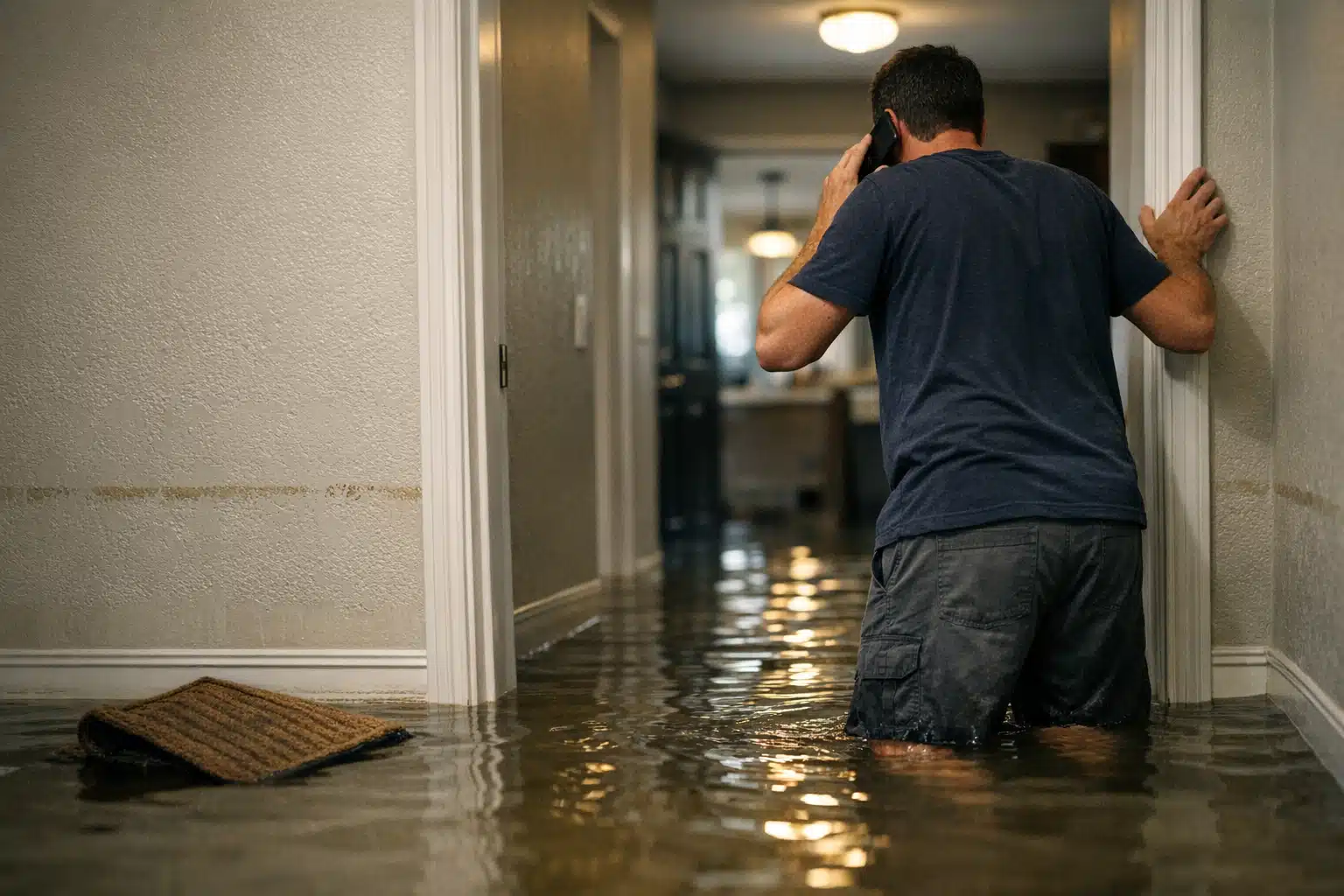
A homeowner standing ankle-deep in water does not scroll past your listing to compare five companies. They tap the first number they see. That single behavior explains why water damage near me keywords book jobs faster than almost any other search term in restoration marketing.
But panic searches are only half the picture. Some people search “water removal” hours or days later, once the emergency calms down. They compare price, reviews, and response time before calling.
This post breaks down how each search type behaves, which one converts better, and how to cover both with a page and ad structure that does not drain your budget.
Why “Water Damage Near Me” and “Water Removal” Attract Different Callers
The gap between water removal vs water damage search intent comes down to one thing: emotional state. One caller is in crisis. The other is doing research.
“Water damage near me” signals an active emergency. The person wants help now and will call within minutes of finding you.
“Water removal” leans more toward planning. The flood may be contained, or the person is a property manager sorting out a claim.
The Panic Search: High Intent, Fast Decisions
Panic searchers rarely read your full page. They scan for a phone number, a “24/7” badge, and a local address.
From accounts we handle, near-me emergency terms convert at 12–18% call rates when the landing page loads fast. That is roughly double what generic pages produce.
Speed and phone visibility matter more than copy for this group.
The Comparison Search: Slower, But Still Valuable
“Water removal” callers behave like shoppers. They check your Google reviews, look for insurance help, and compare two or three companies.
Their call rate is lower, around 5–9%. But they book larger jobs when they do call, since many involve full mitigation and reconstruction.
Do not ignore comparison searches. They fund your bigger tickets.
Which Keyword Type Converts Better for Restoration Jobs
Near-me emergency terms win on raw conversion rate. Comparison terms win on average job value. You need both, weighted by season.
Here is how the two compare in real campaigns we manage:
- Water damage near me: higher call volume, faster booking, smaller average ticket, higher click costs during storm season.
- Water removal: lower call volume, longer decision window, larger average ticket, steadier click costs year-round.
- Emergency water extraction: behaves like near-me terms, strong for after-hours ads.
- Flooded basement cleanup: mixed intent, spikes hard after heavy rain events.
Chase near-me terms for cash flow and comparison terms for margin.
How Seasonality Shifts the Answer
During storm season, near-me searches spike and click costs climb fast. A term at $18 per click in March can hit $40 after a regional flood.
In dry months, comparison terms carry your pipeline. People handle slow leaks, appliance failures, and insurance-driven repairs.
We shift budget monthly based on local weather patterns and past booking data. A fixed budget split wastes money in both directions.
A Simple Page and Ad Structure to Capture Both
You do not need ten landing pages. You need two well-built ones and a matching ad structure.
Page One: The Emergency Page
This page targets water damage near me keywords and every panic-driven term. Build it for one action: the phone call.
- Put your phone number in the header, sticky on mobile.
- Add a “We answer 24/7” line above the fold.
- Show your service area and response time in minutes, not hours.
- Keep the page under two seconds load time.
- Cut long paragraphs. Panic readers do not read them.
If a stressed homeowner needs more than five seconds to find your number, you lost the call.
Page Two: The Comparison Page
This page targets water removal and research terms. Give shoppers what they want to see.
- Recent Google reviews with the star count visible.
- Insurance billing help and direct-claim support.
- Before-and-after photos from real local jobs.
- A short form for non-urgent quotes.
- Clear pricing ranges when you can offer them.
Comparison callers trust proof more than promises. Show the receipts.
Matching Ads to Each Page
Split your Google Ads into two campaigns, not one blended mess. Route emergency keywords to the emergency page and comparison keywords to the comparison page.
Turn on call-only ads for near-me terms during peak hours. Use standard search ads for water removal terms with review extensions attached.
Sending both search types to one generic page is the fastest way to burn ad spend.
How to Track Which Keywords Book Real Jobs
Clicks lie. A campaign can look busy and book almost nothing. Track calls and jobs, not traffic.
Set up call tracking numbers for each campaign and each page. Then tie booked jobs back to the source that produced the call.
- Use separate tracking numbers for emergency and comparison campaigns.
- Record which calls turned into scheduled jobs, not just conversations.
- Note the average job value per keyword theme each month.
- Cut keywords that generate calls but no booked work.
- Reinvest that budget into terms that book real revenue.
Judge every keyword by booked job value, not cost per click.
Why Local SEO Feeds Both Search Types
Local SEO for restoration companies means ranking in the map pack for emergency and comparison searches alike. That free visibility protects you when ad costs spike.
Keep your Google Business Profile filled with recent photos, current hours, and steady review replies. Panic callers pick map results first, and shoppers read the reviews attached to them.
A strong profile lowers your cost per booked job across every campaign.
Handling Reputation After a Rough Job
One angry review during storm season can quietly kill your comparison conversions. Shoppers read that review and call the next company.
Respond to every negative review with a calm, factual reply. Then push happy customers to leave fresh reviews that bury the bad one.
Review recovery protects the exact callers who book your biggest jobs.
Putting It Together Without Overspending
Run two pages, two campaigns, and one tracking system. Shift budget toward near-me terms in storm months and comparison terms in slow ones.
Effective restoration marketing pairs fast emergency capture with proof-driven comparison pages, backed by call tracking that shows real bookings. That structure captures panic and research callers without paying for wasted clicks.
The Restoration Marketers builds this exact setup for restoration companies every day. Call or text us at 720‑885‑0749, or visit https://restorationmarketers.com to start capturing both search types.
Sources
- Google Search Central – Google Business Profile and Local Search
- Google Ads Help – About Call-Only Ads
- web.dev – Core Web Vitals and Page Load Performance