
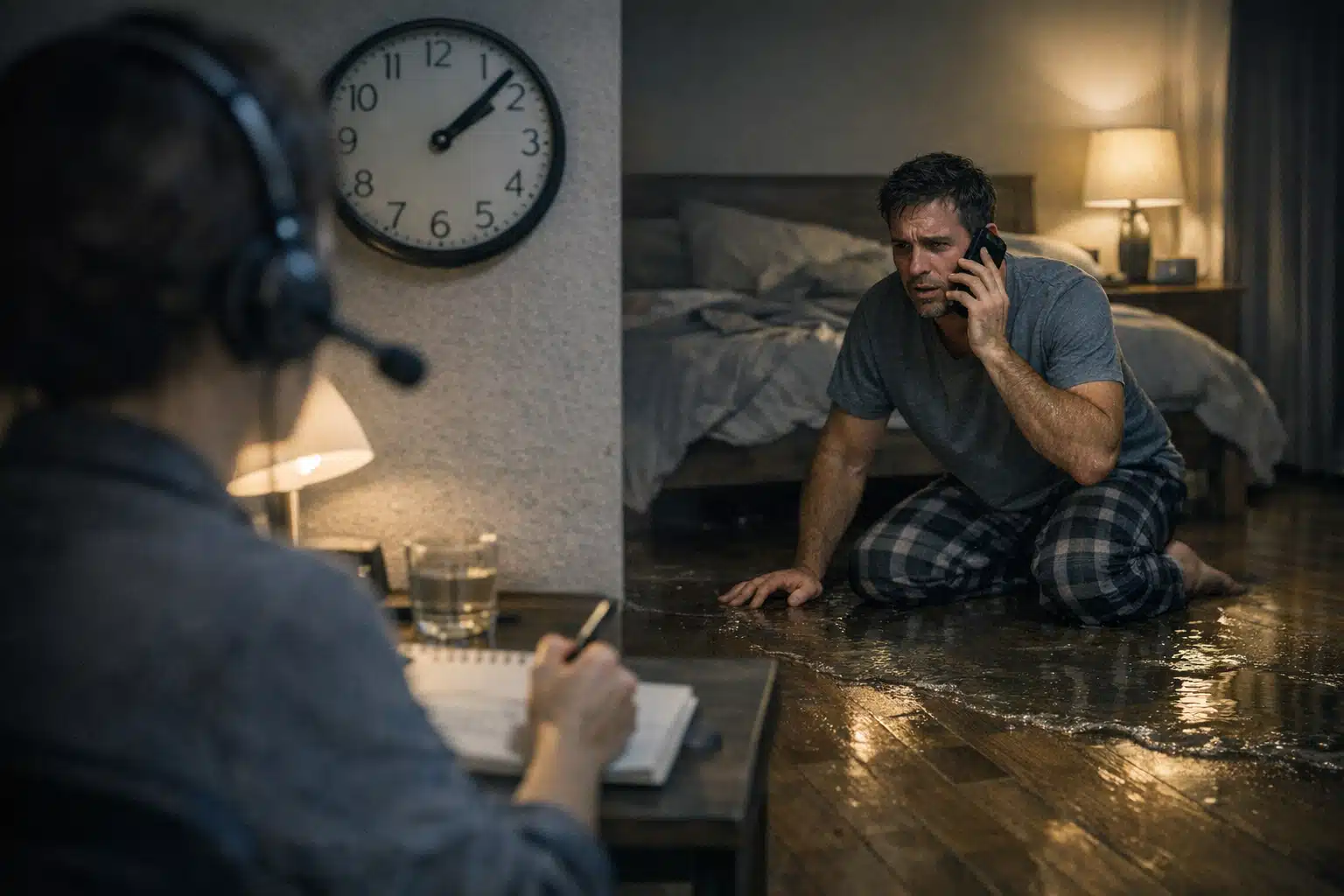
A burst pipe at 2 a.m. does not wait for business hours. Most water damage calls come in when your office is closed, your crews are asleep, and your competitors are missing the phone too. That gap is where call only ads restoration campaigns either win you the job or hand it to the next company on Google.
The question restoration owners keep asking is which ad format books more emergency work after dark. You will learn how call-only and search ads perform at night, on weekends, and during storm surges. You will get a scheduling and bidding plan built around one thing your competitors ignore: who is answering the phone.
This choice is not about clicks. It is about matching your ad spend to your actual after-hours staffing reality.
Call Only Ads vs Search Ads for Water Damage: The Real Difference
The google ads call ads vs search ads water damage debate comes down to what happens after the click. Both formats put you in front of a panicked homeowner. They route that person to two very different places.
What Call-Only Ads Do
A call-only ad shows only on mobile devices. Tapping it dials your number directly. There is no landing page, no form, no browsing.
Call-only ads skip the website and connect a homeowner to a live person in one tap. That speed matters when water is spreading across a hardwood floor.
- Best for pure emergency intent (flooding, sewage backup, fire)
- Filters out tire-kickers who want to compare five quotes
- Fails hard if nobody picks up the phone
What Search Ads Do
A standard search ad sends the click to a landing page. From there the homeowner can call, fill a form, or read your reviews.
Search ads capture people who want proof before they dial. They work for both mobile and desktop searchers.
- Best for planned work (mold inspection, insurance-related restoration)
- Captures leads even when your phone lines are full
- Lets homeowners submit a form at 3 a.m. for a morning callback
Why After-Hours Staffing Decides the Winner
The right format depends on one honest answer: can a human answer the phone right now? This is where restoration marketing splits from general home services advertising.
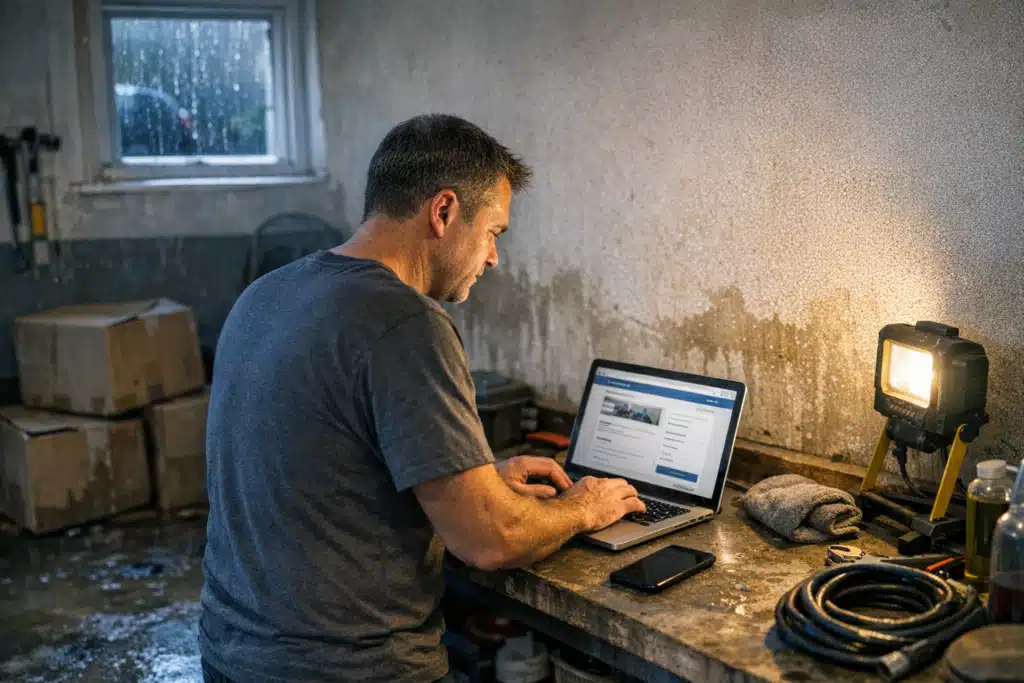
A plumber can let a call go to voicemail and return it Monday. A homeowner with three inches of standing water will not wait. They tap the next ad within 90 seconds.
Call-only ads only pay off when you have live coverage during the hours the ad runs. An unanswered call-only click is money burned with zero chance of recovery.
The Missed-Call Math
Say your average water damage job is worth $3,200. A missed after-hours call is not a lost click. It is a lost ,200 job that a competitor now owns.
We have seen restoration companies pay $28 to $60 per call-only click in storm markets. Miss four of those on a Saturday night and you burned real budget for nothing.
The Hold-Time Problem
Long hold times kill call-only performance faster than anything. A homeowner in crisis will hang up after 20 seconds of ringing.
If your after-hours line routes to a general voicemail, call-only ads work against you. Route to an answering service or on-call tech first.
A Nights-and-Weekends Bidding Playbook
Match your ad format to your phone coverage hour by hour. Here is a schedule that restoration owners can run without touching complicated bid math.
- Business hours, staffed office (Mon–Fri, 8–5): Run both formats. Push most budget to call-only since someone answers instantly.
- Evenings with on-call coverage (5–10 p.m.): Keep call-only live but lower daily caps. Confirm the on-call tech answers within three rings.
- Overnight, no live answer (10 p.m.–6 a.m.): Pause call-only. Switch to search ads pointing at a form-first landing page.
- Weekends with an answering service: Run call-only at full bids. An answering service that dispatches beats any form.
- Weekends without coverage: Search ads only. Let homeowners request a first-thing-Monday callback.
The rule is brutal and simple: never run call-only ads during hours nobody answers. Flip to search with a form during dead-air windows.
Adjusting Bids for Storm Surges
Storm season breaks these normal patterns. A hailstorm at 11 p.m. can drive more calls than a full Tuesday.
Set a storm protocol before the season starts:
- Pre-schedule higher weekend budgets during your region’s known storm months
- Have an answering service on standby you can activate same-day
- Raise call-only bids 24–48 hours after a major weather event, when insurance-driven calls peak
Landing Pages That Convert Overnight Search Clicks
When call-only pauses overnight, your search landing page carries the load. A weak page wastes every after-hours click.
Build the emergency page around one action per situation. During staffed hours, feature a tap-to-call button. During overnight hours, feature the form.
What the Overnight Form Needs
Keep the overnight form to three fields: name, phone, and problem type. Every extra field drops completion at 3 a.m.
Add one line that sets expectations plainly: “We call every overnight request by 7 a.m.” That promise stops the homeowner from filling out five competitor forms.
Tracking Which Format Actually Books Jobs
Clicks and calls mean nothing if you cannot tie them to booked work. Track leads by format and by hour to see the truth.
- Use a distinct tracking number for call-only ads
- Use a second tracking number on the search landing page
- Tag every form submission with its arrival time
- Review which format books jobs during which hours each month
Most restoration companies find call-only wins staffed hours and search wins overnight. Your own numbers may shift the line by an hour or two. Let the data set your schedule, not a guess.
Watching Cost Per Booked Job, Not Cost Per Call
A $22 call that never books is worse than a $70 call that lands a $4,000 mitigation job. Judge each format by cost per booked job.
Run this math monthly by format. You will often see call-only earns its higher click cost during hours you answer live.
Protecting Reputation While You Chase After-Hours Calls
Fast answers build reviews. Missed calls quietly build resentment that shows up in your ratings later.
A homeowner who taps your call-only ad and reaches voicemail may still leave a one-star review. They felt abandoned during a crisis.
Answering after-hours calls is reputation protection, not just lead capture. The company that picks up at midnight earns the five-star review and the insurance referral.
Which Format Should Your Restoration Company Run?
There is no single winner. The winner changes by the hour based on your phone coverage.
- Choose call-only when a live person answers within three rings
- Choose search ads when no one can answer and a form must catch the lead
- Run both during staffed hours to capture every intent type
Restoration marketing rewards companies that align spend with staffing. General home services advice ignores this because their leads can wait. Yours cannot.
Conclusion
The better ad format is the one that matches who is answering your phone right now. Run call-only ads during staffed and covered hours, flip to search ads during dead-air windows, and track every lead by format and time. Do this and you stop burning budget on calls nobody answers.
The Restoration Marketers builds after-hours campaign schedules around your real staffing so you win the 2 a.m. jobs your competitors miss. Call or text us at 720‑885‑0749, or visit https://restorationmarketers.com to map your nights-and-weekends ad plan.
Sources
- Google Ads Help – About Call Ads
- Google Ads Help – About Ad Scheduling
- Insurance Information Institute – Facts + Statistics: Homeowners Insurance