

Fire calls climb once furnaces and space heaters switch on in fall, but most restoration companies keep running summer storm ads that miss those homeowners. That gap costs you high-intent phone calls to competitors who adjusted first. Strong fire damage restoration marketing in late summer means changing your ad copy, keywords, and landing pages before the heating season demand arrives.
This post shows what to swap in your ads and website right now. You will learn how to retarget keywords, rewrite emergency landing pages, and add the trust proof fire jobs demand.
Why Late Summer Is the Setup Window for Fall Fire Leads
Home fires spike in the cold-weather months when heating equipment runs hardest. December, January, and February lead the calendar for heating-related fires. Your marketing needs a head start on that curve.
Late August and September are your prep window, not your peak. Search demand for fire cleanup rises as temperatures drop and heating systems fire up. Waiting until October to adjust means paying premium ad costs against competitors already ranking.
Restoration demand swings hard by season. Summer skews toward flood, storm, and water damage. Fall and winter pull toward smoke, soot, electrical faults, and appliance fires.
What Changes About the Homeowner’s Mindset
A fire caller is often more shaken than a water damage caller. The loss feels total, even when the fire was contained to one room. Your messaging has to meet that emotional weight with calm, direct language.
Smoke and soot also confuse homeowners. Many do not know that soot residue spreads far beyond the burn area. That knowledge gap is your opening to educate and win the call.
Swap Your Ad Messaging From Storm to Smoke and Soot
Your summer ads probably lead with flooding, storm cleanup, and standing water. That copy goes stale as fall approaches. Rewrite it around the fire scenarios homeowners face once heating season starts.
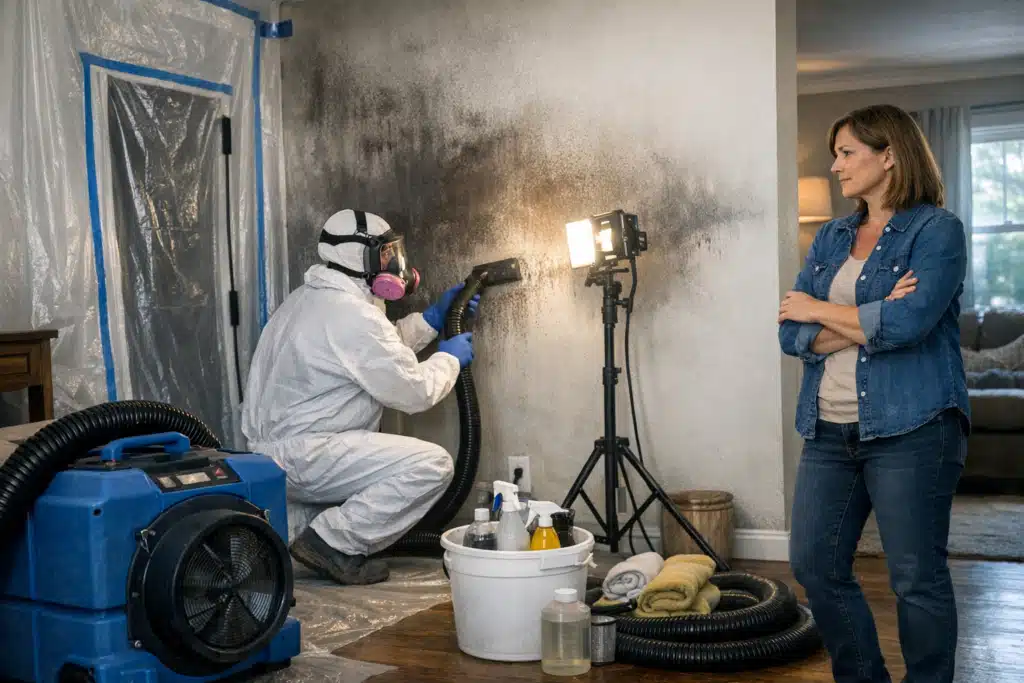
Match your ad copy to the actual causes of fall fires. Homeowners search using the situation they just lived through, not clinical terms.
- Furnace and heating system fires — target searches like “furnace puffback cleanup” and “soot from furnace.”
- Space heater fires — a leading cause of home heating fires each winter.
- Electrical fires — older wiring strains under heavier fall and winter loads.
- Kitchen and appliance fires — cooking fires stay the top cause of home fires year-round.
- Chimney and fireplace fires — creosote buildup ignites when wood-burning starts up again.
Puffback is a specific, high-value scenario worth its own ad group. An oil furnace misfire coats an entire home in oily soot. Homeowners rarely know the word, but they search “black soot everywhere in house.”
Rework Your Fire Restoration Google Ads Strategy for Seasonal Keywords
Your fire restoration google ads strategy should pause water-heavy keywords and fund fire terms by early fall. Shift budget where fall intent actually lives.
- Lower bids on storm and flood keywords by mid-September.
- Raise bids on smoke, soot, and puffback terms.
- Add heating-cause keywords: “furnace fire cleanup,” “space heater fire damage.”
- Build a separate ad group for “smoke smell removal after fire.”
- Set call-only ad schedules for evenings and weekends when fires get discovered.
Fire callers convert fast and rarely price-shop the first company that answers. Speed and message match beat broad reach here.
Rebuild Your Fire Damage Landing Pages for Emergency Intent
A fire landing page is not a water damage page with the word “fire” swapped in. The proof points and reassurances differ. Build a dedicated page that speaks to smoke, soot, and structural fire concerns.
Every fire landing page needs a click-to-call button above the fold on mobile. Most fire searches happen on a phone, standing in a damaged home.
Trust Proof That Matters for Fire Jobs
Fire work is higher-stakes than a wet carpet. Homeowners want proof you handle full-loss and insurance-heavy jobs. Generic five-star badges do not carry that weight.
- Insurance claim support — state plainly that you bill insurance directly and document losses.
- Before-and-after fire photos — soot-covered rooms restored to livable space.
- Smoke odor removal proof — name your deodorization method, like thermal fogging or ozone.
- Certifications — display IICRC Fire and Smoke Restoration credentials.
- Contents cleaning — mention textile, electronics, and document restoration for sentimental items.
Add a short section explaining soot spread. Tell homeowners why the smell lingers and why DIY cleaning smears residue. That education builds authority and pushes the call.
Speak to the Insurance Reality Early
Fire jobs lean heavily on insurance claims. A homeowner’s first worry is often cost and coverage. Address it on the page before they have to ask.
State that you work with all major insurers and handle documentation. That single line removes the biggest reason a fire caller hesitates.
Track Fire Leads by Source So You Fund What Works
Seasonal ad shifts only pay off if you measure them. Many restoration owners cannot say whether a fire lead came from Google Ads, local search, or a referral. Fix that before fall volume hits.
- Use a dedicated call-tracking number on every fire ad and landing page.
- Tag form submissions by damage type: fire, smoke, water.
- Record which keyword or campaign drove each booked job.
- Compare cost-per-lead between fire and water campaigns weekly.
- Shift budget toward the sources booking real fire jobs, not just clicks.
A cheap lead that never books is more expensive than a costly lead that does. Judge campaigns by booked fire jobs, not raw call volume.
Update Your Google Business Profile for Fire Searches
Your Google Business Profile drives emergency map-pack calls. Refresh it for fall the same way you refresh ads. Post fire-specific updates and photos as the season turns.
- Add fire and smoke damage as listed service categories.
- Post recent fire restoration project photos monthly.
- Request reviews from fire clients that mention smoke or soot cleanup.
- Answer questions about insurance and odor removal in the Q&A section.
Reviews that name “fire” and “smoke” help you rank for those exact searches. Ask fire clients to describe the specific work you did.
How Fire Restoration Marketing Differs From General Home Services
General home services marketing chases steady, planned demand. Fire restoration marketing chases sudden, emotional, insurance-driven emergencies. The playbook is not the same.
A homeowner booking a kitchen remodel compares three quotes over two weeks. A fire caller books whoever answers with confidence within minutes. Your marketing must win that first phone moment.
Response speed is your strongest ranking and conversion lever in fire work. A 24/7 answered line beats a prettier website every time.
Your Late-Summer Fire Marketing Checklist
Put the pieces together before heating season peaks. Work down this list through September.
- Rewrite ad copy from storm to smoke, soot, and heating-cause fires.
- Shift Google Ads budget toward fall fire keywords.
- Build a dedicated fire landing page with click-to-call up top.
- Add insurance support and IICRC certification proof.
- Set up call tracking by damage type.
- Refresh your Google Business Profile with fire photos and reviews.
Conclusion
Fire leads peak in cold months, but the companies that win them adjust in late summer. Swap storm messaging for smoke and soot, rebuild landing pages with insurance and certification proof, and track every lead by source. That seasonal shift turns higher-intent fall fire calls into booked jobs.
The Restoration Marketers builds fire damage restoration marketing campaigns that match seasonal demand and convert emergency callers. Call or text us at 720‑885‑0749, or visit https://restorationmarketers.com to get your fall campaigns ready.