

Mold calls spike right after every storm season, and most restoration owners field the same panicked question: “Is my family in danger?” That fear is real, but marketing built on it backfires. When you answer mold remediation homeowner questions with facts instead of scare tactics, you turn anxious callers into calm, qualified leads.
This post breaks down what homeowners search for before they call, how to structure mold pages that reduce panic, and why calm content converts better than fear.
You get a page framework, real examples, and a lead-tracking method built for mold jobs.
Why Fear-Based Mold Marketing Costs You Money
Mold fear marketing means using alarming language and worst-case images to push homeowners into fast decisions. It drives clicks, but it attracts the wrong callers.
Fear-driven visitors call in a panic, demand instant answers, and price-shop three competitors in an hour. They rarely book, and they leave harsh reviews when quotes surprise them.
Homeowners who read calm, factual pages arrive pre-educated. They understand testing, containment, and rough cost ranges before the phone rings.
Calm content filters out tire-kickers and pre-sells your expertise. That shift alone raised booked-consultation rates for mold pages we rebuilt from fear-heavy templates.
What Fear Marketing Looks Like on a Site
- Black mold photos as the hero image before any explanation
- Headlines like “Mold Is Poisoning Your Family Right Now”
- Countdown timers pressuring same-day booking
- Vague “toxic mold” claims with no source or context
Google’s helpful-content signals reward pages that answer questions, not pages that manufacture alarm. Fear pages tend to see high bounce and low dwell time.
Mold Remediation Homeowner Questions People Actually Search
Before a homeowner calls, they type their worry into Google. Answering those exact queries wins the click and the trust.
Here are the searches we see drive mold leads, grouped by intent:
- Symptom checks — “black spots on bathroom ceiling,” “musty smell in basement”
- Health worries — “can mold make you sick,” “mold and allergies in kids”
- Cost questions — “how much does mold remediation cost,” “does insurance cover mold”
- DIY vs. pro — “can I remove mold myself,” “when to call a mold company”
- Testing — “do I need a mold test,” “mold inspection near me”
Build one clear page section for each intent above. Each section answers the question in the first two sentences, then adds detail.
Answer the Cost Question Honestly
Homeowners fear a blank check more than the mold itself. Hiding prices sends them to a competitor who lists ranges.
Publish a range: “Most residential mold jobs in our area run $1,500 to $6,000, depending on square footage and moisture source.” A stated range builds trust and screens out zero-budget callers.
The Calm Clarity Page Structure That Reduces Panic Calls
A calm clarity mold page moves a worried reader from symptom to next step without spiking fear. It answers questions in the order a homeowner asks them.
Use this four-part structure on your main mold remediation page:
- Symptoms vs. myths — describe what real household mold looks like and correct common misbeliefs
- Next steps — tell the homeowner exactly what to do in the first hour
- Containment basics — explain how pros stop spread, in plain language
- When testing matters — clarify when a test helps and when it wastes money
This order matches how a scared person thinks, which keeps them reading instead of bouncing.
Symptoms vs. Myths
Start with what homeowners see: discoloration, a musty smell, or spreading spots after a leak. State plainly that most household mold is common and treatable.
Then correct the myths that fuel panic. Not all dark mold is “toxic black mold,” and a small patch does not mean the house is unsafe overnight.
Myth-busting sections earn featured snippets because they use question-and-answer phrasing AI engines quote directly.
Next Steps in the First Hour
Give a short action list a homeowner can follow before you arrive:
- Stop the water source if one is active
- Keep the area dry and avoid disturbing visible mold
- Turn off HVAC to limit spore spread
- Photograph the damage for insurance
- Call for a professional assessment
Concrete steps signal competence and lower the caller’s stress before they dial.
Containment Basics in Plain Language
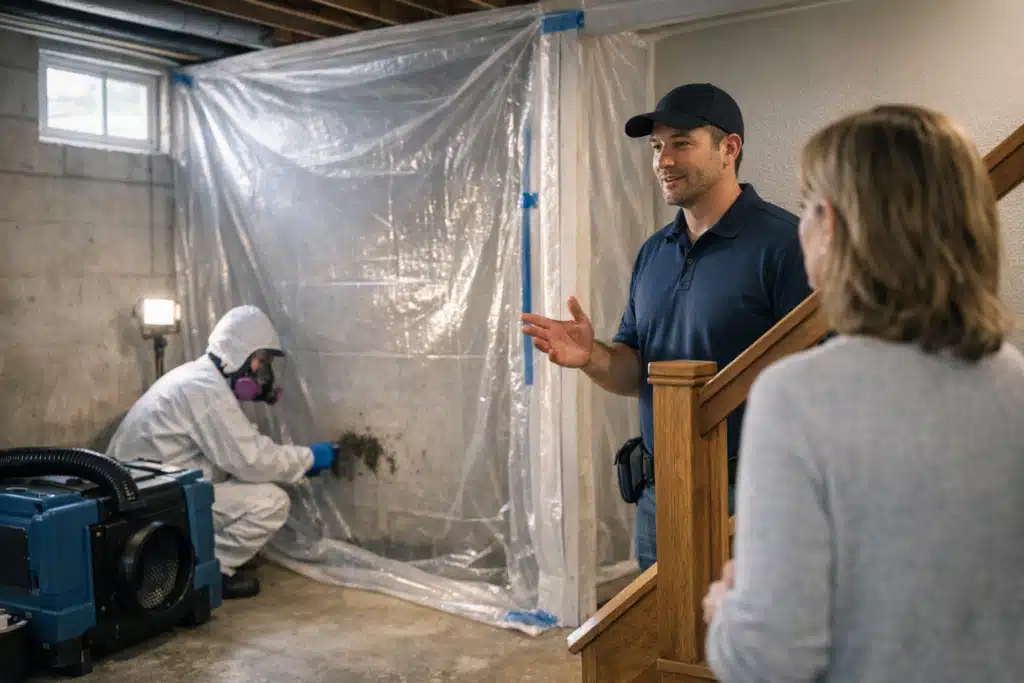
Explain containment without jargon: plastic barriers, negative air pressure, and HEPA filtration keep spores from spreading during removal. Two sentences beat a technical wall of text.
When homeowners grasp your method, they view the price as skilled work, not a markup.
When Mold Testing Matters
Tell the truth: visible mold rarely needs a test before removal. Testing helps when mold is hidden, when a sale is pending, or when a health complaint needs documentation.
Honesty here sets you apart from firms that upsell every caller a test. That candor shows up in reviews and referral calls.
How to Track Which Mold Content Drives Booked Jobs
Calm content only pays off if you can measure it. Most restoration owners lump all mold leads together and miss which page earns the call.
Set up source tracking so every mold consultation ties back to a page or ad:
- Add a call-tracking number to your mold remediation page only
- Tag your Google Business Profile mold posts with UTM links
- Create a separate form for mold inquiries with a hidden source field
- Review which section visitors scroll to before converting
Track mold leads separately from water and fire, because their sales cycles differ. Mold callers research longer and compare more.
Seasonal Timing for Mold Campaigns
Mold demand climbs after heavy rain, spring thaw, and summer humidity peaks. Basements flood, then mold appears two to three weeks later.
Raise ad budgets in that lag window rather than during the flood itself. Homeowners search for mold help once the standing water is gone and the smell sets in.
Front-load your mold content and ad spend three weeks after major regional rain events.
Turning Anxious Visitors Into Consultations
The goal of a calm mold page is a low-pressure next step, not an emergency demand. Offer an assessment or a phone consult instead of a hard sell.
Use a clear, reassuring call to action near each section: “Send us a photo and we’ll tell you if it needs a pro.” That reduces friction for the hesitant homeowner.
Fast response still wins the job. Answer within five minutes of a form or missed call, since mold callers rarely wait.
Conclusion
Answering mold remediation homeowner questions with calm, factual content converts more anxious visitors than fear ever will. Structure your page around symptoms, next steps, containment, and honest testing advice, then track mold leads on their own to prove what works.
The Restoration Marketers builds mold pages that reduce panic and book consultations. Call or text us at 720‑885‑0749, or visit https://restorationmarketers.com to get started.