
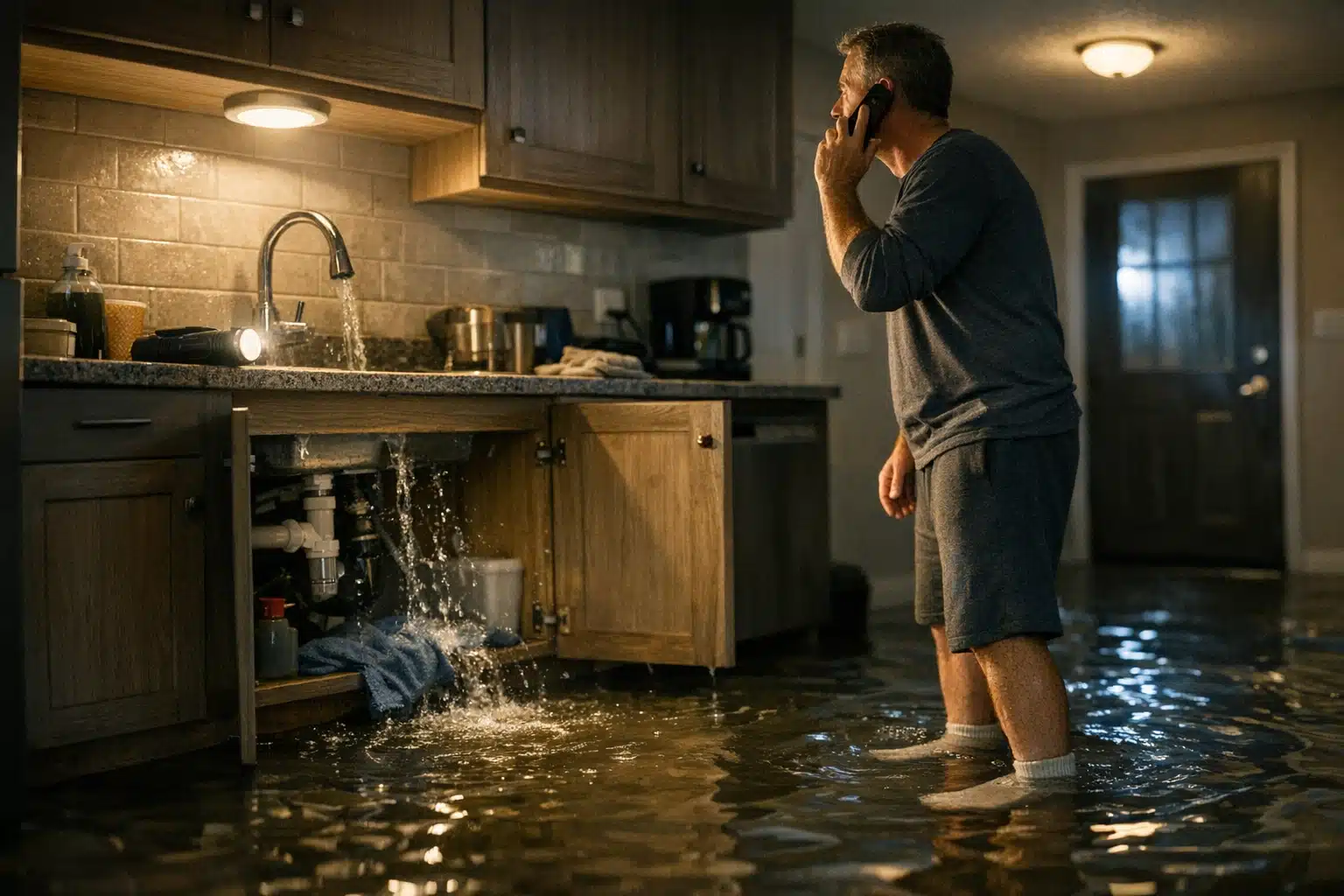
A burst pipe at 2 a.m. does not wait for business hours, and neither does the homeowner calling three competitors in a row. The first restoration company to respond wins the job roughly 78% of the time. Picking the best contact method restoration website 2026 is the difference between booking that flood job and watching it go to the shop down the street.
Most owners ask a simple question: what should we add to our website to catch more emergencies without burying our staff in noise? The answer depends on your crew size, after-hours setup, and how fast you dispatch.
Below, you get a head-to-head comparison of website chat, text-back, and phone-only, judged by restoration-specific constraints. A decision tree by company size wraps it up.
Why Contact Method Matters More for Restoration Than Other Trades
Restoration marketing runs on urgency that most home improvement trades never face. A kitchen remodeler can return a call tomorrow. A water damage lead that sits for 20 minutes is already gone.
Three constraints shape which contact method books jobs for restoration firms:
- After-hours coverage: Over half of emergency water and fire calls land outside 9-to-5.
- Dispatch speed: Insurance-driven homeowners shop fast and commit to the first responder.
- Claim qualification: You need to know if it is an insurance job, a cash job, or a tire-kicker before rolling a truck.
The method you choose must handle all three, not just one. A flashy chat widget that nobody staffs at midnight fails the same test as a phone line that rings out.
Phone-Only: The Baseline That Still Books Emergencies
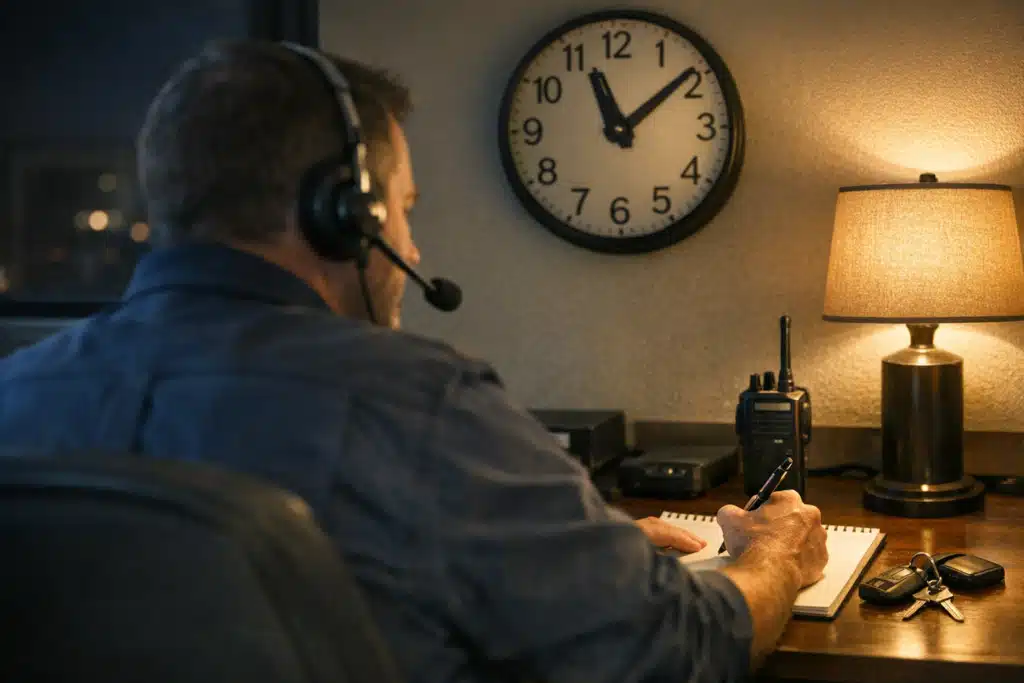
Phone-only means a single click-to-call number as your primary conversion point. No chat box, no text form. For a panicked homeowner standing in two inches of water, a phone call feels fastest.
Where Phone-Only Wins
Voice calls carry intent. Someone who dials is further along than someone typing a message. A call lets your intake person qualify the claim in 90 seconds.
You can confirm the loss type, ask about insurance, and dispatch a crew in one conversation. That speed matters most during storm season spikes, when call volume triples overnight.
Where Phone-Only Falls Short
Phone-only leaks leads after hours if calls roll to voicemail. A homeowner who hits voicemail hangs up and dials the next company.
Younger property managers and some commercial clients avoid calls entirely. If your only path is a phone call, you lose every lead who prefers to type.
Website Chat: Capturing the Researchers
Website chat is a widget that lets visitors type questions and get answers in real time or near-real time. It catches people in research mode who are not ready to call yet.
For restoration, chat shines on daytime mold and reconstruction inquiries. Someone comparing companies for a non-urgent job will chat before they dial.
Live Chat vs AI Chat for Restoration Leads
Live chat staffed by a human qualifies claims well but demands coverage. Nobody on your team wants to monitor a chat box at 1 a.m.
AI chat answers common questions and collects contact details around the clock. The risk: a poorly set-up bot frustrates a stressed homeowner and kills trust fast.
If you run chat, route after-hours conversations straight to a text or call handoff. A chat that ends with “we will get back to you Monday” loses the emergency.
Text-Back: The Quiet Workhorse for Chat vs Text for Restoration Leads
Text-back means a visitor enters their number and your system texts them immediately. The conversation moves to SMS, where most people reply within minutes. In the chat vs text for restoration leads debate, text usually wins on response rate.
Text messages see open rates near 98%, far above email. A homeowner who ignores a callback will answer a text from the road or the flooded basement.
Why Text-Back Fits Restoration Workflows
Text lets your crew leader respond between jobs without stopping work. A quick “On our way, ETA 40 minutes” reassures the customer and locks the job.
Text also creates a written record for claim qualification. You can ask “Is this covered by insurance?” and keep the answer on file.
Missed-call text-back is the single highest-ROI add for most small restoration crews. When a call goes unanswered, an automatic text fires: “Sorry we missed you — reply here and we will dispatch now.”
The Overwhelm Risk
Text channels flood fast during storm events. Without a system that tags and sorts messages, your team drowns in threads.
Use a lead inbox that assigns each conversation to one person. That keeps dispatch clean when 40 texts hit in an hour.
Head-to-Head: Scoring Each Method by Restoration Constraint
Here is how the three stack up against what restoration owners care about:
- After-hours coverage: Text-back wins, chat (AI) ties, phone-only loses unless you pay an answering service.
- Dispatch speed: Phone wins for live qualification, text close behind, chat slowest.
- Claim qualification: Phone and text tie with a written trail; chat depends on setup.
- Staff overwhelm: Text-back is easiest to batch, phone is hardest during spikes.
- Lead capture rate: Offering all three beats any single channel by a wide margin.
The winning setup is rarely one method — it is a stacked system with a clear fallback order.
Best Contact Method Restoration Website 2026: A Decision Tree by Company Size
Your right answer depends on headcount and after-hours capacity. Match your situation below.
Solo Operator or Two-Person Crew
- Lead with a big click-to-call button above the fold.
- Add missed-call text-back so no voicemail lead escapes.
- Skip live chat — you cannot staff it. Use a simple AI form at most.
This keeps you reachable without a chat box you ignore all day. Text-back alone can recover 20-30% of calls you would otherwise miss.
Mid-Size Firm (3-10 Trucks)
- Keep phone as the primary emergency path.
- Run text-back on every form and missed call.
- Add AI chat for daytime research traffic, with after-hours text handoff.
- Route all three into one shared inbox tied to dispatch.
At this size, an office coordinator can monitor chat during business hours. After 6 p.m., everything funnels to text and the on-call phone.
Large or Multi-Location Operation
- Use a 24/7 answering service or trained intake team for phone.
- Deploy AI chat that qualifies claims and books appointments live.
- Run text-back with automated routing by franchise or zip code.
- Track every lead by source to see which channel books the most jobs.
Multi-location firms should measure cost-per-booked-job per channel, not just total leads. A chat lead that never converts costs more than a phone lead that signs same day.
How to Track Which Channel Books the Most Jobs
You cannot pick the best channel without measuring where booked jobs come from. Most owners track leads but not closed work.
Set this up in four steps:
- Assign a tracking number to your phone line for call attribution.
- Tag every chat and text lead by source in your CRM.
- Mark each lead as booked, quoted, or lost.
- Review booked-job rate by channel every month.
After one storm season, the pattern gets clear. Many firms find text-back books the cheapest jobs and phone books the biggest insurance claims.
Conclusion
The best contact method restoration website 2026 is a layered one: phone for live emergencies, text-back to catch every missed call, and chat sized to your staff. Match the stack to your crew size, cover after-hours with text, and track booked jobs by channel to see what truly pays.
Ready to turn more website visitors into dispatched jobs? Call or text The Restoration Marketers at 720‑885‑0749, or visit https://restorationmarketers.com to build a contact system that fits your crew.