

Heating season triggers a predictable spike in soot and odor calls, yet most restoration websites lump every burn job into one vague “fire damage” page. That mismatch costs you leads and confuses adjusters who already know the difference. Strong smoke damage restoration marketing separates these job types clearly, which raises conversion rates and shortens the gap between the first call and an approved claim.
This post breaks down how to position smoke odor, soot cleanup, and HVAC contamination jobs distinctly from structural fire damage. You will learn how to split your pages, write fire damage lead messaging that matches each homeowner’s panic level, and track which channel feeds which job.
Why Smoke Damage and Fire Damage Need Separate Marketing
Smoke damage and fire damage are different problems with different buyers, different claim sizes, and different urgency. Treating them as one service dilutes your message and your ad spend.
A kitchen grease fire that scorches cabinets is a fire damage job. A furnace puff-back that coats an entire home in oily soot is a smoke damage job. The homeowner’s search language, panic level, and insurance path differ for each.
Mixing both on one page forces every visitor to self-diagnose before they trust you. Most will bounce before they do that work.
How Homeowners Actually Search in Fall
Fall searches lean heavily toward odor and air-quality problems, not visible flames. People smell something before they see damage.
- Smoke odor: “burnt smell in house won’t go away,” “smoke smell after furnace turned on”
- Soot cleanup: “black dust on walls,” “oily film after fireplace”
- HVAC contamination: “furnace puff back cleanup,” “smoke in air vents”
- Structural fire: “house fire cleanup,” “fire damage repair company”
Each phrase signals a different job and a different dollar amount. Your site should answer each one on its own page.
Building a Page Structure That Routes Leads Correctly
Create four distinct landing pages instead of one catch-all fire page. Each page targets a specific search intent and offer.
- Smoke odor removal page: speaks to the homeowner who smells smoke but sees little damage. Offer a same-day odor assessment.
- Soot and surface cleanup page: targets puff-back and fireplace soot jobs. Show before-and-after photos of walls and ceilings.
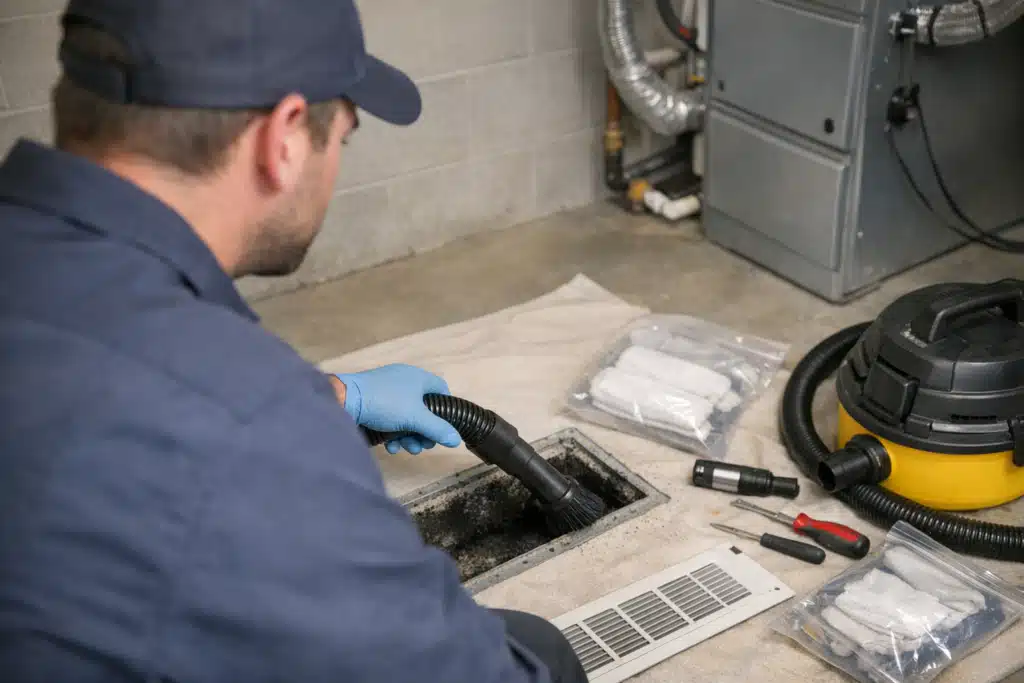
- HVAC smoke contamination page: explains why ductwork spreads odor and soot. Offer duct inspection as the entry point.
- Structural fire damage page: addresses visible burn damage and full rebuilds. Lead with insurance claim support.
Each page should name the exact problem in its headline. A homeowner searching “furnace puff back” should land on a page that uses those words in the first line.
Match the Offer to the Panic Level
A full house fire victim needs reassurance and claim help. A puff-back victim needs fast soot removal before stains set.
Your fire damage lead messaging on the structural page should lead with “we work directly with your adjuster.” Your smoke odor page should lead with “we can be there today to find the source.”
Different fear, different promise. One generic form cannot carry both.
Writing Fire Damage Lead Messaging That Adjusters Respect
Adjusters refer work to companies that use precise scope language. Vague copy signals an operator who will fight over line items later.
Use terms that match Xactimate categories and IICRC standards on your pages. This builds credibility with both homeowners and the carriers who pay you.
- Name the job as smoke and soot remediation, not just “cleanup”
- Reference thermal fogging and ozone or hydroxyl treatment for odor
- Mention HVAC cleaning and sealing for puff-back contamination
- State that you document with photos and moisture or particulate readings
Adjusters trust restorers who speak their language before the job starts. Put that language on your site, not just in the field.
Avoid the Scope Confusion That Delays Claims
When your intake form asks “fire or smoke?” and the homeowner picks wrong, your estimate starts off-scope. That triggers supplements and slows payment.
Build intake questions around symptoms, not categories. Ask “do you see black residue, smell odor, or have visible burn damage?”
Route the answer to the right crew and the right line items automatically. This cuts the back-and-forth that frustrates adjusters.
Seasonal Ad Budgeting for Smoke Damage Restoration Marketing
Smoke and soot demand climbs when furnaces and fireplaces fire up. Shift budget to match that curve instead of spreading it flat all year.
From October through February, weight your paid search toward odor and puff-back keywords. These convert faster because the problem is active in the home right now.
- September: raise bids on “furnace smoke smell” and “puff back” terms before first cold snap
- October–December: run separate ad groups for odor, soot, and structural fire
- January–February: add fireplace and chimney soot keywords as usage peaks
- March: scale back smoke spend, shift toward water and storm terms
Separate ad groups let you send each click to its matching page. A puff-back searcher landing on a generic fire page wastes your money.
Track Leads by Job Type, Not Just Source
Knowing a lead came from Google Ads is not enough. You need to know it was a soot job worth $8,000 versus a $400 odor assessment.
Tag each call and form by job category inside your CRM. Then compare cost-per-lead and close rate across smoke odor, soot, HVAC, and structural fire.
This tells you where to move budget next season. Most restorers find odor jobs are cheap to acquire and feed larger soot and HVAC work later.
Reputation Management During Fire Season
Soot jobs go wrong when homeowners feel odor lingers after you leave. One “they couldn’t get the smell out” review can sink your fall lead flow.
Set odor expectations in writing before the job. Explain that thermal fogging and HVAC cleaning may need a second pass for stubborn cases.
Ask for the review after you confirm the odor is gone, not the day you finish cleaning. Timing your review request to the result protects your rating.
Putting It Together
Split your fire page into smoke odor, soot, HVAC, and structural pages, each with matching copy and offers. Weight ad budget toward odor and puff-back terms from fall into winter, and track every lead by job type.
Clear fire damage lead messaging that respects adjuster language will close more claims with fewer supplements. Precise smoke damage restoration marketing turns a confused search into a booked job.
The Restoration Marketers builds these page structures, ad campaigns, and lead tracking systems for restoration firms before the heating season spike hits. Call or text 720‑885‑0749, or visit https://restorationmarketers.com to get your fall campaign ready.