

Why Local Service Ads Matter for Emergency Restoration Marketing
Water damage calls spike at 2 AM. Fire damage leads come in during holiday weekends. Your restoration company needs visibility exactly when disasters strike, not when your SEO rankings decide to cooperate.
Local Service Ads place your restoration business at the top of Google search results with a Google Guarantee badge. When homeowners search “water damage repair near me” during an emergency, your company appears first with verified credentials and instant contact options.
Unlike traditional Google Ads where you pay for clicks that might not convert, Local Service Ads charge only when potential customers call or message your restoration company directly. This pay-per-lead model makes emergency marketing budgets predictable and measurable.
How Local Service Ads Work for Restoration Companies
Google’s Local Service Ads platform operates differently from standard search advertising. The system prioritizes verified businesses with strong review profiles and quick response times.
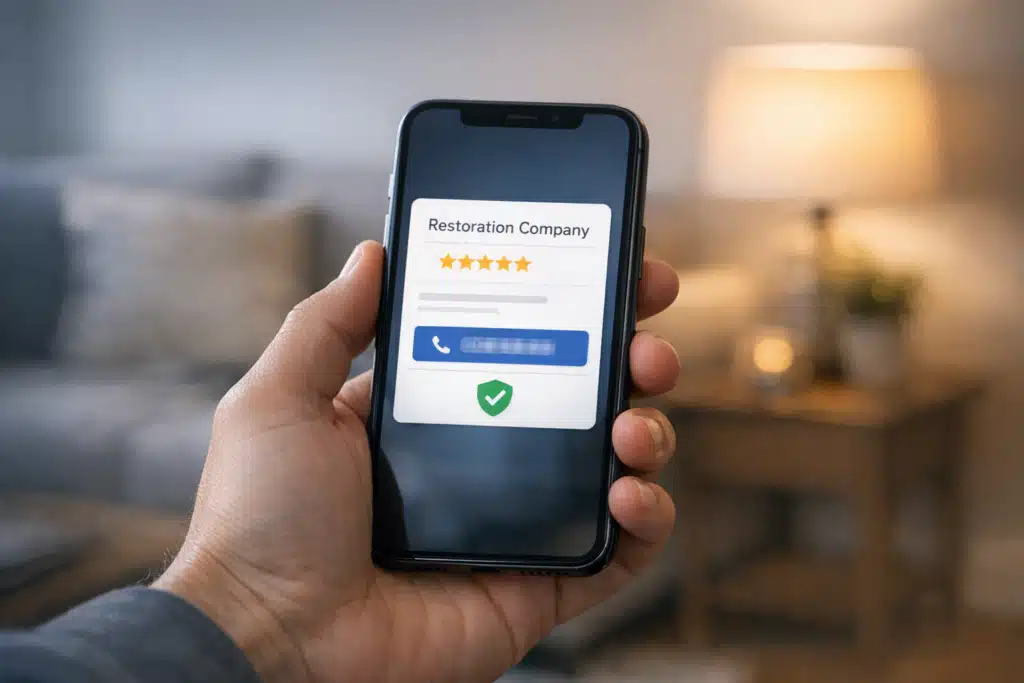
Your restoration company appears in a dedicated section above regular search results and Google Ads. Each listing shows your business name, star rating, phone number, and the Google Guarantee badge that builds immediate trust with emergency callers.
The algorithm considers proximity to the searcher, your response speed, and review quality when determining which restoration companies to display. This means a well-optimized Local Service Ads profile can outrank larger competitors who neglect these factors.
Verification Requirements for Restoration Businesses
Google requires extensive verification before activating Local Service Ads for restoration companies. The process typically takes 5-10 business days and involves multiple checks.
License verification comes first. Upload your contractor’s license, business license, and any specialized restoration certifications like IICRC credentials. Google contacts licensing boards directly to confirm validity.
Background checks follow for all technicians who enter customer properties. Each employee needs a clean criminal background check completed through Google’s system. This verification builds customer confidence when choosing emergency restoration services.
Setting Up Local Service Ads Account Structure
Account setup determines your restoration company’s visibility and lead flow. Start by selecting the correct business categories that match your actual services.
Choose specific restoration categories rather than general contracting options. Select “Water damage restoration,” “Fire damage restoration,” and “Mold remediation” as separate services if your company handles these emergencies.
Service area configuration impacts which calls you receive. Set realistic travel distances based on your actual coverage zones, not wishful thinking about expanding territories.
Geographic Targeting for Maximum Lead Quality
Map your service areas using ZIP codes rather than broad city selections. This precision prevents leads from locations you cannot serve effectively during emergencies.
Consider drive times during peak traffic when setting boundaries. A 30-mile radius might take two hours during rush hour, making emergency response impossible and customer satisfaction poor.
Urban restoration companies often perform better with tighter geographic focus. Rural operators can expand coverage areas since competition decreases with distance from major population centers.
Optimizing Lead Response for Higher Rankings
Response speed directly affects your Local Service Ads ranking position. Google tracks how quickly your restoration company answers calls and responds to messages.
Answer calls within two rings whenever possible. Response times under 30 seconds significantly improve your visibility for future searches in your service area.
After-hours coverage becomes crucial for emergency restoration marketing. Consider call forwarding to mobile devices or answering services that can schedule emergency appointments immediately.
Message Response Best Practices
Text message leads require responses within 15 minutes for optimal ranking factors. Set up mobile notifications or automated initial responses acknowledging emergency situations.
Include estimated arrival times in your first response. “We can be there within 2 hours for emergency water extraction” provides immediate value and reduces customer anxiety during disasters.
Follow up missed calls with text messages. Many homeowners dealing with emergencies prefer texting for initial contact while coordinating with insurance companies and family members.
Budget Management for Seasonal Demand
Restoration leads fluctuate dramatically based on weather patterns and seasonal factors. Storm seasons can increase lead volume by 400% in affected regions within days.
Weekly budget limits prevent overspending during disaster surges while maintaining consistent visibility during slow periods. Start with conservative budgets and increase based on actual lead quality and conversion rates.
Monitor weather forecasts for budget adjustments. Increase spending limits before predicted storms hit your service area to capture emergency leads when competition intensifies.
Lead Cost Expectations by Service Type
Water damage restoration leads typically cost $50-150 per qualified call depending on market competition and emergency severity. Fire damage leads often cost more due to lower volume and higher project values.
Mold remediation leads fall in the $40-100 range but convert at higher rates since customers have time to research and compare options without immediate emergency pressure.
Track cost-per-acquisition rather than cost-per-lead for accurate budget planning. A $100 lead that converts to a $5,000 project provides better return than five $30 leads that never close.
Review Management for Local Service Ads
Your Google review profile directly impacts Local Service Ads visibility and customer trust. Restoration companies need consistent 4.5+ star ratings to maintain competitive positioning.
Request reviews immediately after job completion while customer satisfaction remains high. Send follow-up texts or emails with direct links to your Google business profile review section.
Negative reviews require immediate responses that demonstrate professionalism and problem-solving focus. Address specific concerns and offer to resolve issues privately through direct contact.
Handling Emergency Service Reviews
Emergency restoration reviews often reflect high-stress situations rather than actual service quality. Acknowledge the emotional impact of property damage while highlighting your company’s response and results.
Document review requests in your standard operating procedures. Train technicians to mention review requests during final walkthroughs when customers can see completed restoration work.
Respond to all reviews within 24 hours. Quick responses show potential emergency callers that your restoration company stays engaged and communicative throughout projects.
Tracking Performance and Lead Quality
Local Service Ads reporting focuses on lead volume rather than traditional marketing metrics like impressions or click-through rates. Monitor leads per week, cost per lead, and conversion rates by service type.
Conversion tracking requires connecting leads to actual project bookings. Use unique phone numbers or lead tracking systems to identify which Local Service Ads calls result in signed contracts.
Weekly performance reviews help identify trends and optimization opportunities. Look for patterns in lead quality based on search terms, time of day, and geographic locations within your service area.
Integration with CRM Systems
Connect Local Service Ads leads directly to your restoration business management software. Automatic lead import prevents manual data entry errors and ensures quick follow-up during emergencies.
Tag leads by source for accurate attribution reporting. Local Service Ads leads often convert differently than website inquiries or referral calls, requiring different sales approaches and timeline expectations.
Monthly ROI analysis should include average project values by lead source. Local Service Ads typically generate smaller emergency jobs initially but often lead to larger reconstruction projects and insurance referrals.
Common Optimization Mistakes to Avoid
Overbidding on lead limits wastes budget without improving lead quality. Higher spending does not guarantee better positioning if your response times and review ratings lag behind competitors.
Accepting leads outside your actual service capabilities damages your ranking and wastes money. Decline leads for services you cannot perform rather than disappointing customers and earning negative reviews.
Inconsistent business hours hurt emergency lead flow. Keep your Local Service Ads profile updated with current availability, especially during storm seasons when extended hours become necessary.
Local Service Ads provide restoration companies with direct access to emergency leads when customers need help most. The platform rewards responsive businesses with strong reputations while charging only for qualified prospect contacts. Start with focused service areas and conservative budgets, then scale based on actual lead quality and conversion rates.
Ready to optimize your restoration company’s Local Service Ads performance? The Restoration Marketers specializes in emergency lead generation strategies that convert disaster situations into profitable business growth. Contact us at 123-456-7890 to discuss your restoration marketing goals.
Sources
- Google Support – About Local Services Ads
- IICRC – Industry Standards and Certifications
- U.S. Small Business Administration – Business Licensing Requirements