

Roughly half of your website form leads describe a problem that “can wait”—a faint musty smell, a small ceiling stain, or a past flood they never fully addressed. Restoration web form conversion depends on how you treat these lukewarm leads, not just the 2 a.m. burst-pipe emergencies. Miss the follow-up window and that “not urgent” lead calls a competitor next week.
Most restoration owners pour attention into emergency phone calls and let form submissions sit in an inbox. That gap costs booked inspections every single month.
Below is a field-tested method to convert non urgent restoration leads into scheduled visits—starting with your form fields and ending with a follow-up rhythm built for water leaks, odor complaints, and past-loss scenarios.
Why “Not Urgent” Form Leads Slip Away
A non-urgent lead is anyone who submits a form describing a problem they believe can wait days or weeks. They are shopping, not panicking.
Emergency callers convert on the phone in minutes. Form leads convert on a timeline—and that timeline punishes slow responders.
Speed still wins. Research on lead response shows contacting a web lead within five minutes makes them far more likely to book than a reply an hour later. For restoration, the same rule applies even when the customer sounds calm.
The problem is rarely the lead. It is a form that captures too little, a confirmation message that says nothing, and follow-up that stops after one voicemail.
Fix Your Form Fields to Improve Restoration Web Form Conversion
Your form is a qualification tool, not a contact-us box. The fields you request decide how fast you can book the right inspection.
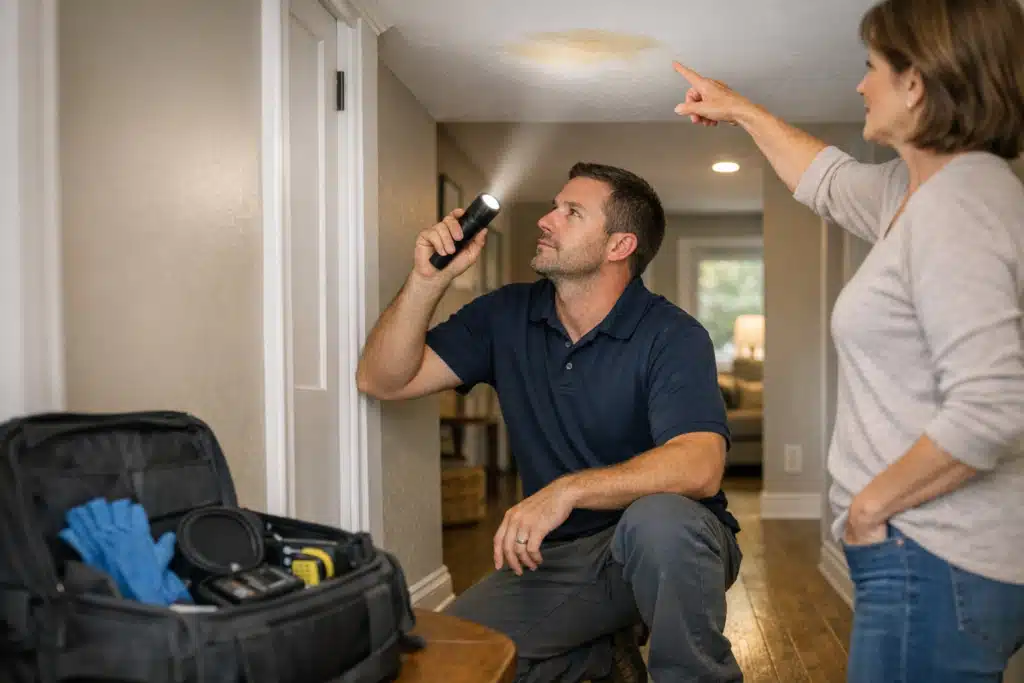
Long forms scare off casual browsers. But forms that ask only for name and email leave your team blind on the callback.
The Five Fields That Book Inspections
Keep the form short, but capture what your intake team needs to prioritize the lead. Use these five:
- Name and phone — phone first, since restoration bookings close by voice.
- Property address or ZIP — confirms you serve the area before you call.
- Problem type — a dropdown: water leak, musty odor/mold, past water damage, fire/smoke, storm.
- How long has this been happening? — “today,” “a few days,” “weeks or longer.”
- Best time to reach you — lets you match a callback to their schedule.
That fourth field is your secret weapon. A leak from “weeks ago” signals hidden moisture and possible mold—a higher-value inspection you can flag on the callback.
Add a Micro-Commitment Checkbox
Place a small checkbox above the submit button: “I’d like to schedule a free inspection.” Checking a box is a tiny yes that primes the lead to accept a booking later.
Leads who check it get routed to a same-day call. Leads who skip it enter your slower nurture track.
Rewrite Your Auto-Confirmation Message
The confirmation screen and email are the most wasted assets in restoration marketing. Most say “Thanks, we’ll be in touch”—a dead end that lowers a lead’s guard right when you want it raised.
Your auto-confirmation should set an expectation and reduce anxiety. Tell them exactly what happens next and when.
Confirmation Copy That Holds the Lead
Swap the generic thank-you for language that names the next step:
- Set a time promise: “A specialist will call you within 30 minutes during business hours.”
- Name the person: “Ask for Maria when we call—she handles your area.”
- Give a reason to answer: “We’ll confirm your inspection window on that call.”
- Address the odor case directly: “Musty smells rarely clear on their own. We’ll explain what to check before we arrive.”
A confirmation that names a person and a timeframe cuts no-answer callbacks. The lead now expects your number instead of ignoring it.
Build a 3-Touch Follow-Up Cadence for Convert Non Urgent Restoration Leads
One voicemail is not follow-up. To convert non urgent restoration leads, you need a three-touch cadence spread across channels and days.
The message changes based on the problem type they selected. A water leak, an odor complaint, and a past loss each need different framing.
Touch 1: Call Within 30 Minutes, Then Text
Call first. If no answer, leave a short voicemail and send a text immediately after.
The text should mirror their problem. For a water leak: “Hi, it’s Maria from [Company]. Standing water spreads fast—can I lock in an inspection today?”
For an odor lead: “Hi, it’s Maria. That musty smell usually points to moisture behind a wall. Want us to take a look this week?”
Touch 2: Next Morning, Reframe the Risk
If they went quiet, follow up the next morning. Restoration risk grows with time, and that is your honest angle.
- Water leak: mention that drywall wicks moisture within 24–48 hours.
- Past loss: note that untreated water damage can hide mold long after surfaces look dry.
- Odor: explain that smells worsen in humidity and rarely resolve without a source fix.
You are not pressuring—you are informing. Restoration owners who explain the “why now” book more inspections than those who chase with “just checking in.”
Touch 3: Day Three or Four, Offer an Easy Out
The final touch removes friction. Give a booking link or a two-option choice.
“Would Thursday morning or Friday afternoon work better for a free inspection?” A this-or-that question converts better than an open “let me know.”
End the sequence with a soft close: “If now isn’t the right time, I’ll leave your file open for 30 days.” That respects the lead and keeps the door open for a past-loss customer who acts later.
Track Every Lead by Source and Problem Type
You cannot improve what you do not measure. Tag every form lead with its source and the problem type they selected.
This tells you which channels send bookable leads versus tire-kickers. It also reveals which problem types convert—and how fast.
- Route form leads into a CRM automatically—no copy-paste from email.
- Log the problem type and “how long” answer on every record.
- Track time-to-first-contact for each lead in minutes.
- Measure booking rate by problem type monthly to spot patterns.
Odor and past-loss leads take more touches but carry higher inspection value. Once you see that in your data, you stop treating them as low priority.
Match Your Cadence to Seasonal Lead Behavior
Storm season floods your form with urgent leads. Off-season fills it with odor and past-loss inquiries that need patient nurture.
During spikes, prioritize speed and same-day booking. During slow months, lean harder on the three-touch cadence to keep your crews scheduled.
Adjust the message tone by season. A slow-month odor lead responds to education. A storm-week leak lead responds to availability.
Turn Lukewarm Leads Into Booked Inspections
Better restoration web form conversion comes from three moves: sharper form fields, confirmation copy that names the next step, and a three-touch cadence built around water, odor, and past-loss scenarios. Track every lead by source and problem type, then adjust your timing by season.
The Restoration Marketers builds these systems for restoration companies that want more inspections from the leads they already get. Call or text us at 720‑885‑0749 to turn “not urgent” form fills into scheduled jobs.