

Why Email Marketing Drives More Restoration Bookings Than Other Channels
Most restoration companies lose 60% of potential customers because they fail to follow up after the initial emergency call. Email marketing fills this critical gap by nurturing leads who aren’t ready to book immediately but will need services later.
Unlike social media or paid ads, email campaigns let you stay connected with property managers, insurance adjusters, and homeowners who experienced water damage or fire loss. These contacts become valuable referral sources when positioned correctly.
Building conversion-driven email campaigns requires understanding your restoration audience’s unique buying patterns. Emergency jobs convert fast, but maintenance and restoration projects need careful nurturing over weeks or months.
Setting Up Your Restoration Email Campaign Foundation
Start with clear campaign goals tied to your business revenue. Restoration email campaigns should target three main outcomes: emergency job bookings, repeat customer retention, and referral partner relationships.
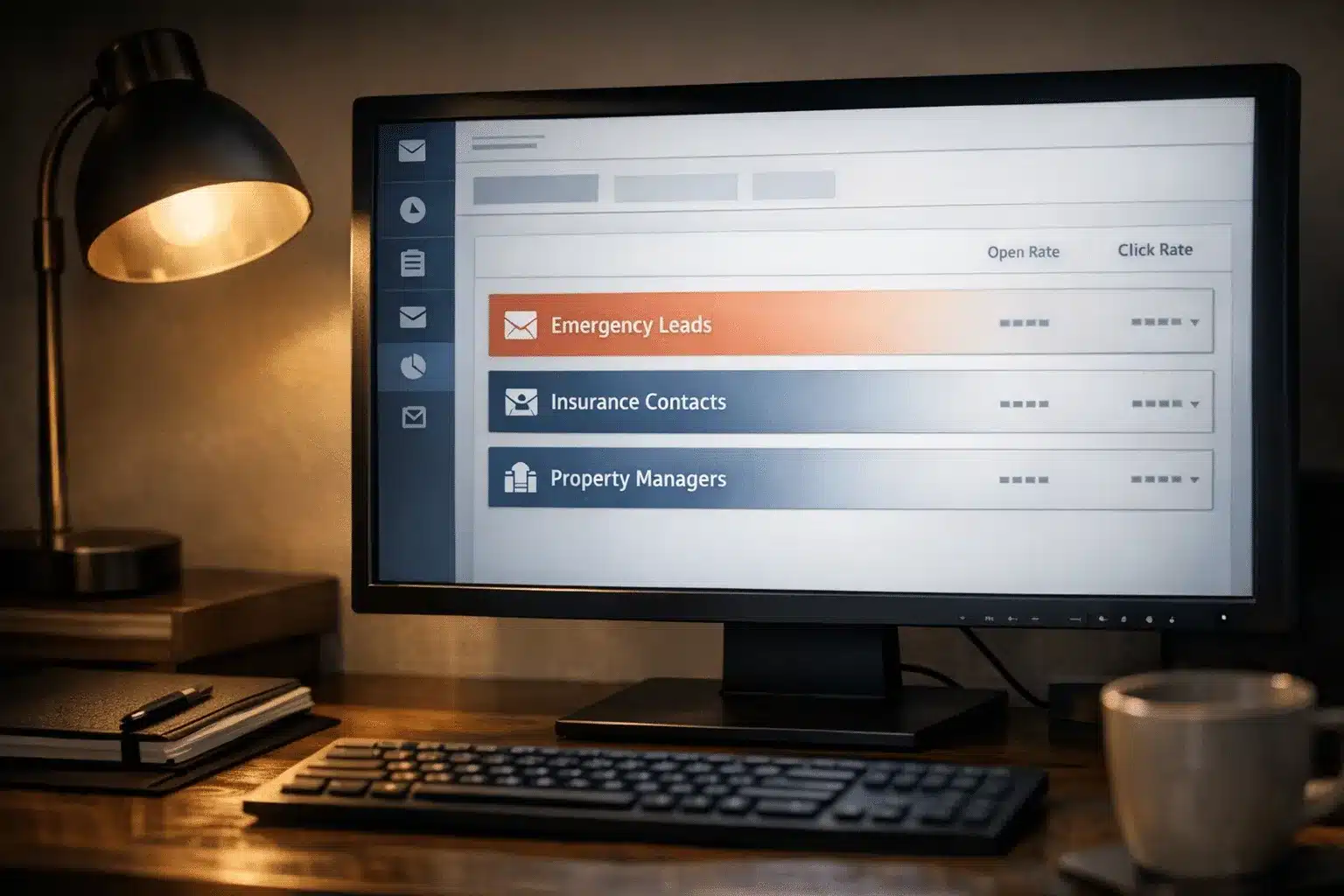
Choose an email platform that handles automation and segmentation well. Your restoration business needs different message sequences for emergency leads versus routine maintenance inquiries.
Essential Email List Segments for Restoration Companies
Segment your contacts based on their relationship to your restoration services:
- Emergency leads – People who called about active water damage, fire damage, or mold issues
- Insurance contacts – Adjusters, agents, and claims managers who refer restoration jobs
- Property managers – Commercial contacts who handle multiple properties
- Past customers – Homeowners and businesses you’ve helped before
- Maintenance prospects – Contacts interested in preventive services like duct cleaning or water damage prevention
Each segment gets different message timing and content. Emergency leads need immediate response sequences, while maintenance prospects respond better to educational content over time.
Compliance Requirements for Restoration Email Marketing
Follow CAN-SPAM regulations by including your physical business address and clear unsubscribe options. Never add someone to your list without permission, especially insurance professionals who receive high email volumes.
State licensing boards may have additional requirements for restoration contractor communications. Check your local regulations before launching campaigns.
Creating High-Converting Email Content for Restoration Services
Your email content must address the specific concerns restoration customers face. Fear, urgency, and trust are the main emotional drivers in your market.
Emergency response emails should emphasize speed and availability. Use subject lines like “24-Hour Water Damage Response Available” or “Your Storm Damage Assessment – Next Steps.”
Subject Line Formulas That Work for Restoration Emails
Test these proven subject line approaches:
- Urgency-based: “Mold can spread in 24-48 hours – Here’s what to do”
- Helpful information: “Insurance claim tips for your fire damage”
- Seasonal relevance: “Storm season prep checklist for property managers”
- Personal reference: “Following up on your water damage inquiry”
Avoid spam triggers like excessive capitalization or phrases like “free estimate” in subject lines. Insurance contacts especially filter these aggressively.
Email Body Content That Converts Restoration Leads
Keep emails focused on one main action. Emergency response emails should drive phone calls, while educational emails can link to helpful resources on your website.
Start each email by acknowledging the recipient’s situation. “Dealing with water damage is stressful” connects better than generic greetings.
Include your phone number prominently. Many restoration customers prefer calling over email replies, especially during emergencies.
Automation Sequences for Different Restoration Customer Types
Automated email sequences let you nurture leads without constant manual work. Set up different sequences based on how contacts entered your system.
Emergency Lead Follow-Up Sequence
This sequence targets people who called about active damage but didn’t book immediately:
- Day 1: Immediate response confirming their inquiry, your availability, and next steps
- Day 2: Educational content about their specific damage type (water, fire, mold)
- Day 4: Insurance claim guidance and documentation tips
- Week 2: Check-in about their situation and continued availability
- Month 3: Preventive maintenance tips to avoid future damage
Each email should include your emergency contact number and emphasize that damage worsens over time. Create urgency without being pushy.
Insurance Professional Nurture Sequence
Insurance contacts need different messaging focused on your reliability and communication:
- Welcome email: Introduction to your company, certifications, and communication process
- Week 1: Case study showing detailed documentation and timeline
- Week 3: Information about your emergency availability and response times
- Monthly: Industry updates, new certifications, or relevant restoration news
Keep insurance professional emails concise and professional. They care about your ability to complete jobs on time and communicate clearly with their customers.
Measuring and Optimizing Email Campaign Performance
Track metrics that connect directly to restoration job bookings. Open rates matter less than phone calls and booked appointments.
Monitor these key performance indicators for restoration email campaigns:
- Click-to-call rates: How many people click your phone number in emails
- Website form submissions: Leads who complete contact forms after email clicks
- Response time: How quickly you follow up when someone replies to emails
- Job booking rate: Percentage of email subscribers who eventually hire you
Set up call tracking numbers for your email campaigns. This shows which email sequences generate the most phone leads.
A/B Testing Email Elements for Better Conversion
Test one element at a time to identify what drives more restoration bookings:
- Send times: Emergency leads may respond better to evening sends, while property managers prefer business hours
- Email length: Short vs. detailed educational content
- Call-to-action placement: Phone number at top vs. bottom of email
- Images: Before/after photos vs. text-only emails
Run tests for at least two weeks to account for differences in weekly response patterns. Insurance referrals often spike mid-week while homeowner responses stay more consistent.
Seasonal Email Strategies for Restoration Companies
Your restoration business faces predictable seasonal demand changes. Adjust email frequency and content to match when different damage types peak in your area.
Storm season requires more frequent emergency preparedness content. Winter focuses on frozen pipe prevention and heating system safety.
Pre-Season Preparation Campaigns
Send preparedness content before peak damage seasons:
- Spring: Storm damage preparation for property managers
- Summer: Air conditioning maintenance to prevent water damage
- Fall: Gutter cleaning and roof inspection reminders
- Winter: Frozen pipe prevention and heating safety
These campaigns position you as a helpful resource before emergencies happen. When damage occurs, recipients remember your proactive communication.
Building Long-Term Value Through Email Relationships
The most profitable restoration companies use email to build ongoing relationships, not just chase immediate jobs. Property managers and insurance professionals who trust you will send multiple referrals over years.
Share industry knowledge that helps your contacts prevent problems or handle situations better. This builds credibility beyond your restoration skills.
Effective restoration email marketing creates a systematic approach to nurture leads and build referral relationships. Start with clear segmentation, focus on helpful content, and measure results based on actual job bookings.
The Restoration Marketers specializes in building conversion-driven email campaigns that generate more restoration jobs. Our team understands the unique challenges restoration companies face and creates marketing systems that work during both busy and slow seasons. Contact us at 123-456-7890 to learn how we can help grow your restoration business through strategic email marketing.